
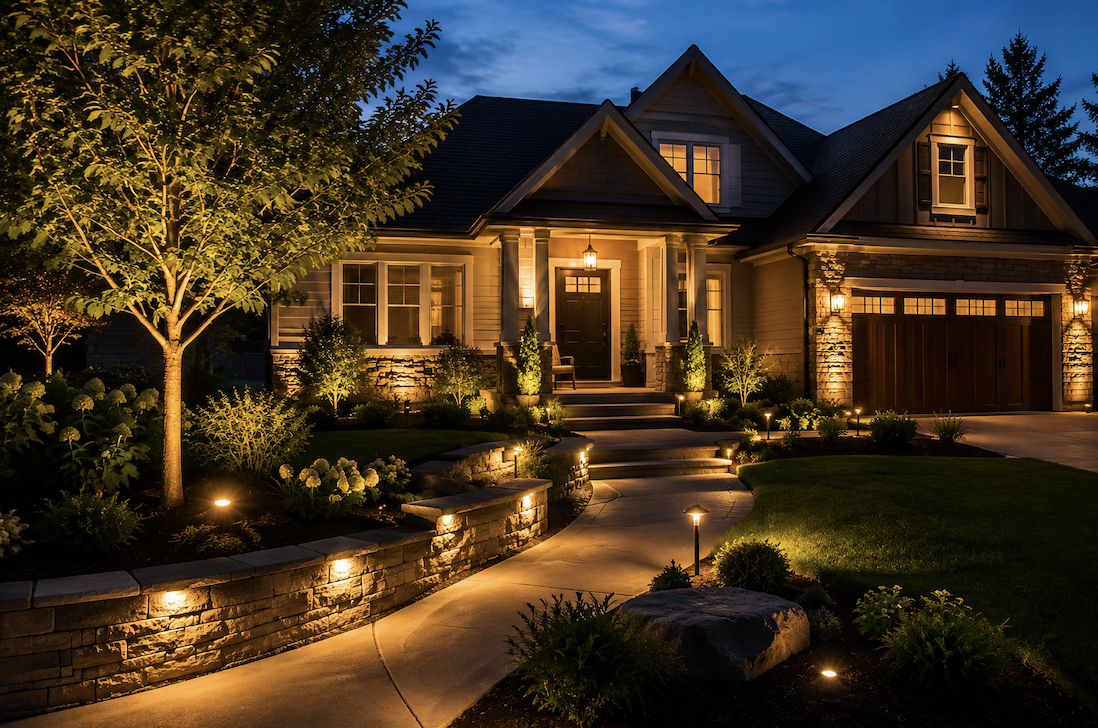
Outdoor lighting is one of the more overlooked elements of curb appeal, often addressed only as an afterthought once landscaping and exterior paint decisions are already finalized. Done well, it extends how long a home looks welcoming into the evening hours and can meaningfully improve both safety and first impressions, without requiring a large renovation budget.
Why Outdoor Lighting Matters for Curb Appeal
A home that looks well cared for during the day can look flat, dark, or even unwelcoming after sunset without adequate exterior lighting, which is particularly relevant for evening visitors, prospective buyers viewing listings, or simply anyone arriving home after dark. Layered outdoor lighting extends a home’s presentable appearance into the evening rather than letting it disappear once natural light fades.
Path Lighting Along Walkways
Low, evenly spaced path lights along a front walkway both guide visitors safely to the door and create a welcoming visual line leading toward the home’s entrance. Spacing lights roughly six to eight feet apart generally provides adequate illumination without looking like an airport runway, and staggering them slightly rather than placing them in a perfectly rigid line often looks more natural against typical landscaping.
Uplighting Trees and Architectural Features
Uplighting, placing fixtures at ground level and angling them upward, draws attention to mature trees, textured stone or brick facades, and other architectural features that would otherwise go unnoticed after dark. This technique adds visual depth and drama to a home’s exterior at a relatively modest cost per fixture, and works particularly well on homes with distinctive architectural details worth highlighting.
Highlighting Garden Beds and Landscaping
Beyond trees and architecture, well-placed lighting along garden beds or a distinctive landscaping feature adds another layer of visual interest without requiring a large number of additional fixtures. Small, low-profile spotlights tucked among plantings can highlight seasonal blooms or structural landscaping elements like ornamental grasses that would otherwise disappear into darkness after sunset.
Porch and Entry Lighting
The front entry deserves the most deliberate lighting attention, since it’s the focal point most visitors and passersby naturally look toward. A pair of matching sconces flanking the door, combined with an overhead or pendant fixture if the porch has coverage, creates a well-lit, symmetrical focal point that reads as intentional and welcoming rather than an afterthought single bulb.
Driveway and Garage Area Lighting
A well-lit driveway improves both safety and the overall sense of a cared-for property, particularly for homes where the driveway is a prominent part of the street-facing view. Wall-mounted fixtures near the garage, combined with subtle path or bollard lighting along the driveway edge for longer driveways, extend the same layered lighting principle beyond just the walkway to the front door.
String Lights for Ambiance
String lights along a porch, pergola, or fence line add a softer, more ambient layer of light that works well for evening outdoor entertaining, though they’re generally better suited as a supplementary layer rather than a home’s primary functional lighting source, given their softer, more diffuse output compared to dedicated path or entry fixtures.
Solar vs Wired Lighting Options
Solar-powered fixtures require no wiring or electrician involvement, making them the most accessible DIY option, though their brightness and reliability depend heavily on adequate daily sun exposure and generally can’t match the consistent output of wired fixtures. Wired lighting, whether low-voltage landscape lighting or standard household voltage fixtures, offers more consistent, controllable brightness and generally a longer fixture lifespan, but requires either DIY electrical work within your skill level or hiring a licensed electrician for installation.
Choosing Bulb Types for Efficiency and Longevity
LED bulbs have become the practical standard for outdoor fixtures, offering significantly longer lifespan and lower energy consumption than traditional incandescent bulbs, which matters particularly for fixtures left running for extended evening hours. The higher upfront cost of LED bulbs is generally offset within a year or two through reduced energy use and far less frequent replacement compared to older bulb types.
Motion-Sensor Security Lighting
Beyond aesthetic lighting, motion-activated fixtures near entry points, side yards, and driveways add a practical security layer, illuminating the area when movement is detected rather than staying on continuously. This dual-purpose approach improves both safety and visibility for anyone approaching the home unexpectedly after dark, while keeping energy use lower than fixtures left on all night.
Seasonal Adjustments to Outdoor Lighting
Shorter winter days mean outdoor lighting runs for more hours, making energy-efficient LED fixtures and automated timers particularly valuable during colder months. Seasonal decor, like holiday lighting, is worth planning around your permanent lighting layout rather than competing with it, positioning temporary lights to complement rather than visually clash with existing path and entry fixtures.
Choosing Warm vs Cool Color Temperature
Warmer color temperatures, generally in a soft yellow-white range, tend to read as more inviting and traditional for residential exteriors, complementing most home styles and landscaping. Cooler, bluer-white light can look more modern or commercial in a residential context, and while it offers better visibility for security-focused fixtures, it’s generally worth reserving for functional security lighting rather than primary ambiance lighting near the entry.
Coordinating Fixture Style With Home Architecture
Fixture finish and style, whether matte black, aged bronze, or brushed nickel, should generally coordinate with existing exterior hardware like the front door handle, house numbers, and mailbox, rather than being chosen in isolation. This kind of coordinated detail is a relatively low-cost way to make the overall exterior feel more deliberately designed rather than assembled piecemeal over time.
Layering Different Light Levels
The most polished outdoor lighting setups combine several layers rather than relying on a single light source: low path lighting for wayfinding, mid-level uplighting for architectural and landscaping features, and higher entry lighting at the door. This layered approach creates depth and visual interest, similar to how professional interior lighting design avoids relying on a single overhead fixture to light an entire room.
Smart Lighting and Timers
Smart plugs or smart bulb systems allow outdoor lighting to turn on and off automatically based on sunset and sunrise times, or on a manually set schedule, removing the need to remember to manually switch fixtures on each evening. This is a relatively low-cost addition to an existing wired lighting setup and adds meaningful convenience without requiring a full smart home system investment.
Considering Wildlife and Insect Attraction
Standard white outdoor lighting attracts insects more readily than warmer, amber-toned bulbs, which is worth considering for lighting installed near seating areas or windows where insect attraction would be a genuine nuisance during warmer months. Some manufacturers specifically market insect-reducing amber LED bulbs for exactly this purpose.
Dark Sky Friendly Lighting Considerations
For homeowners concerned about light pollution or living in areas with dark sky ordinances, choosing fixtures that direct light downward rather than allowing it to spill upward into the sky reduces glare and light pollution while still effectively illuminating the intended area. This is worth checking specifically if your area has any relevant lighting regulations, which some municipalities and neighborhoods do enforce.
Installation: DIY vs Hiring an Electrician
Solar fixtures and low-voltage landscape lighting kits, which typically run on a safer, reduced voltage through an included transformer, are generally approachable DIY projects for most homeowners. Standard household voltage fixtures, particularly anything requiring new wiring run through walls or underground, are worth hiring a licensed electrician for, both for safety and because this type of work often requires permits depending on your location.
Ongoing Maintenance
Outdoor fixtures accumulate dirt, spider webs, and debris over time, which noticeably reduces output even from an otherwise functioning bulb. A quick cleaning of fixture lenses every few months, along with periodic bulb replacement as needed, keeps the overall lighting scheme looking as intended rather than gradually dimming without an obvious single cause.
A Reasonable Budget Breakdown
Solar path lights represent the most budget-friendly starting point, allowing a homeowner to test and refine placement before committing to a larger wired system. A modest low-voltage landscape lighting kit covering path lights, a few uplights, and basic entry fixtures represents a moderate investment with a considerably more polished, consistent result than solar alone. A fully professional design and installation, particularly for larger properties or homes with more elaborate architectural features to highlight, represents the highest end of the range but often includes more sophisticated fixture placement and control options.
Weighing DIY Time Against Professional Installation
A DIY low-voltage lighting project typically takes a weekend for a modest front-yard installation, while a licensed electrician handling standard-voltage fixtures usually completes the work within a day. Considering both the time investment and your comfort level with basic outdoor wiring helps determine which approach makes more sense for your specific situation and property size.
A Simple Planning Sketch Before Buying Fixtures
Before purchasing any fixtures, walking the property after dark with a flashlight to identify which areas genuinely need illumination, and roughly sketching fixture locations on a simple diagram of the property, prevents both under-lighting key areas and over-buying fixtures for spots that don’t actually need dedicated lighting once the overall layered plan comes together.
Common Outdoor Lighting Mistakes
Over-lighting a property, with too many fixtures at similar brightness and no layering, tends to look flat and can create harsh, unflattering shadows rather than the intended welcoming effect. Choosing fixtures based purely on price without considering weather resistance ratings is another common mistake, leading to premature fixture failure from moisture exposure that a properly rated outdoor fixture would have avoided.
Conclusion
Layered outdoor lighting combining path lighting, entry fixtures, and selective uplighting does more for a home’s evening curb appeal than any single dramatic lighting choice. Starting with an accessible, low-cost option like solar path lighting and gradually expanding into a wired system as budget allows is a reasonable, low-risk way to build toward a fully polished result over time.