
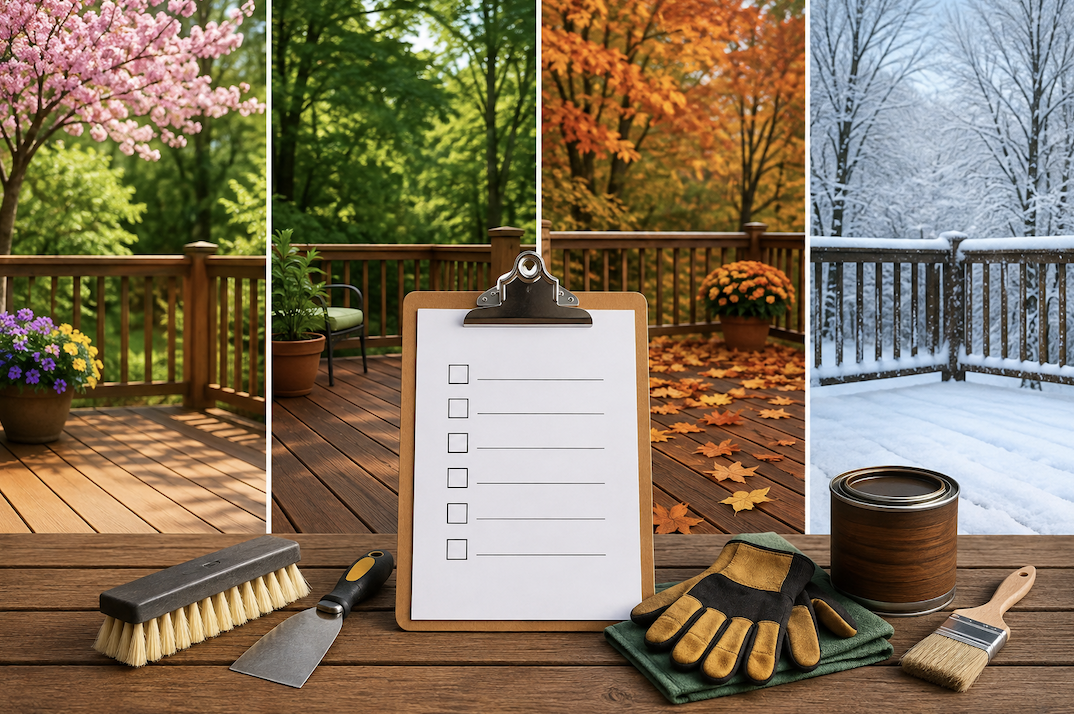
A deck exposed to weather year-round needs more than an occasional glance to stay structurally sound and visually appealing. Most major deck repairs trace back to small maintenance tasks that were skipped for a season or two, allowing moisture damage or wear to progress further than it needed to. Here’s a practical, season-by-season approach to keeping a deck in good condition.
Why Seasonal Maintenance Matters More Than a Once-a-Year Check
Wood and composite decking both react to seasonal changes in temperature and moisture, and catching small issues a loose board, an early sign of rot, a failing sealant early in a season prevents them from worsening into a larger, more expensive repair by the time the next season arrives. A single annual inspection often misses problems that develop and progress within just a few months.
Spring Tasks
Spring is the right time for a thorough clean after winter, removing debris, leaves, and any mildew that accumulated during colder, wetter months. This is also the ideal time to inspect for any damage that occurred over winter, particularly in climates with freezing temperatures, since freeze-thaw cycles can crack sealant or shift structural components in ways that aren’t always immediately obvious.
If your deck is due for staining or sealing, spring, with its moderate temperatures and lower humidity than summer in many regions, is often the best season to do it, since most sealants need a specific temperature range to cure properly.
Summer Tasks
Summer maintenance is largely about monitoring rather than major work, given the season’s dry heat in most regions. Check periodically for any signs of the wood drying out excessively or the sealant wearing thin, particularly in areas that receive the most direct sun exposure throughout the day. This is also a good season to check outdoor furniture placement, since prolonged contact between furniture and decking (especially with non-breathable furniture feet) can trap moisture underneath and lead to localized damage over time.
Fall Tasks
Before winter arrives, clear away fallen leaves regularly rather than letting them accumulate, since wet leaves left sitting on decking can trap moisture against the surface and accelerate wood decay or staining. Fall is also a good time for a final inspection of any loose boards, railings, or fasteners before winter weather makes outdoor repair work less practical.
Winter Tasks
In snowy climates, use a plastic shovel rather than a metal one to clear snow, since metal edges can scratch and damage the decking surface or sealant. Avoid using rock salt for ice removal directly on wood decking, as it can damage both wood and composite materials over repeated use; calcium chloride or sand are generally gentler alternatives for traction and ice management.
Wood Deck Maintenance Specifics
Wood decking generally needs resealing or restaining every one to three years, depending on climate and sun exposure, with decks in sunnier, harsher climates typically needing more frequent maintenance than those in milder regions. A simple water test sprinkling a small amount of water on the deck surface — can indicate whether resealing is due: if water beads up, the sealant is still working; if it soaks in quickly, it’s time to reseal.
Composite Deck Maintenance Specifics
Composite decking generally requires less maintenance than wood, since it doesn’t need staining or sealing, but it still benefits from regular cleaning to prevent mildew and surface staining, particularly in shaded, damp areas. Most composite manufacturers recommend a simple soap-and-water cleaning a few times a year, and specifically advise against pressure washing at high settings, which can damage the surface texture over time.
Cleaning Techniques That Won’t Cause Damage
For wood decks, a deck-specific cleaner combined with a stiff brush handles most dirt and mildew effectively without needing a pressure washer, which can damage wood fibers and strip sealant if used incorrectly or at too high a pressure setting. If pressure washing is used, keeping the nozzle at a wider angle and maintaining distance from the surface reduces the risk of gouging the wood.
Inspecting for Structural Issues
Beyond surface-level cleaning and sealing, periodically check the structural elements that aren’t always visible from the top: support posts for signs of rot near ground contact, joist hangers for rust or loosening, and railings for any wobble that suggests loosening fasteners. These structural checks matter more for safety than cosmetic maintenance and are worth doing at least once a year, typically in spring before heavy outdoor use begins.
Common Deck Maintenance Mistakes
Skipping resealing because the deck still “looks fine” is a common mistake — sealant failure often isn’t visually obvious until water damage has already begun underneath the surface. Using the wrong cleaning product, particularly bleach-based cleaners not specifically formulated for decking, is another common issue that can discolor wood or degrade composite material faster than intended.
Ignoring small loose boards or protruding fasteners is also common, but these small issues are both a safety hazard and, if left unaddressed, can lead to larger structural problems as moisture works its way into the resulting gaps.
DIY vs Hiring a Professional
Routine cleaning, resealing, and minor fastener tightening are reasonable DIY tasks for most homeowners with basic tools. Structural repairs, such as replacing support posts, addressing significant rot, or any repair involving the deck’s connection to the house, are worth hiring a professional for, both for safety and because structural work often requires permits depending on your location.
Regional Climate Considerations for Maintenance Schedules
Homeowners in coastal areas need to account for salt air, which accelerates corrosion of metal fasteners and hardware faster than inland climates, making more frequent hardware inspection worthwhile. Homeowners in consistently humid, shaded climates should watch more closely for mildew and algae growth between cleanings, since these conditions accelerate that kind of surface buildup compared to drier regions.
Recognizing When Deck Boards Need Full Replacement
Not every issue can be solved with cleaning and resealing. A board that feels soft, spongy, or visibly crumbles when pressed, particularly near ground contact or in areas that stay damp longest, has likely progressed past the point where sealant alone will help, and replacing that individual board before the surrounding structure is affected is more cost-effective than waiting until the damage spreads further.
Choosing Fasteners and Hardware
Over time, standard fasteners can rust or corrode, particularly in wetter climates, leading to staining around each fastener point and eventual weakening. When replacing fasteners during maintenance, choosing corrosion-resistant hardware specifically rated for outdoor decking use prevents this recurring issue rather than simply replacing a rusted fastener with another one that will corrode the same way within a similar timeframe.
Choosing Sealant vs Paint for Wood Decks
A transparent or semi-transparent sealant lets the natural wood grain show through and generally needs more frequent reapplication, while solid stain or deck paint offers longer-lasting color coverage and better hides imperfections in older wood, but requires more surface preparation to apply correctly and is more work to change later if you want a different look. For newer decking with an attractive wood grain, a transparent or semi-transparent option is usually preferred; for older, weathered wood, solid stain often gives a more finished, uniform appearance.
Budgeting for Ongoing Deck Care
Routine seasonal maintenance costs relatively little, mostly cleaning supplies and, every couple of years, sealant or stain. Setting aside a modest annual budget for this ongoing care is far less expensive over time than deferring maintenance for several years and then facing a large repair or full replacement bill once damage has progressed significantly.
Preparing the Deck Surface Before Sealing
Applying new sealant over a dirty or improperly dried surface is one of the most common reasons a fresh sealing job fails prematurely. The deck should be thoroughly cleaned, allowed to dry completely typically 24 to 48 hours, depending on humidity and lightly sanded if the previous coating was flaking or uneven before any new sealant or stain is applied. Skipping this preparation step to save time often means redoing the work much sooner than expected.
Keeping a Simple Maintenance Log
Noting the date of each major maintenance task cleaning, resealing, any repairs somewhere easy to reference, even just a note on your phone, takes the guesswork out of deciding when the next task is due. This is particularly useful for resealing schedules, since the right timing depends on climate and usage rather than a fixed universal number, and a log built from your own deck’s actual history is more reliable than a generic estimate.
Protecting Furniture and Rugs From Weather Damage
Outdoor furniture, rugs, and cushions left on a deck year-round can trap moisture underneath and contribute to staining or mildew on the decking surface below. Rotating or removing furniture periodically, particularly before extended wet weather, and choosing furniture with breathable feet or risers rather than flat, non-breathable contact points, reduces this kind of hidden, localized damage that’s easy to overlook since it happens directly underneath something that rarely gets moved.
Conclusion
A deck that receives consistent, season-appropriate attention rarely needs major repair work, while one that’s only checked once a year is far more likely to develop problems that go unnoticed until they’ve become serious. Building a simple seasonal routine cleaning, monitoring, resealing on schedule, and periodic structural checks is the most reliable way to extend a deck’s lifespan without a major financial investment.
- Read more about Newolt!