Apartment living often means working with fixed, limited storage that can’t be expanded through renovation the way a homeowner might add built-ins or reconfigure a closet. The good news is that a surprising amount of usable storage exists in most small apartments once you start thinking vertically and choosing furniture deliberately, rather than accepting the space as fully maxed out.
Choosing Furniture With Storage in Mind From the Start
When furnishing a new apartment from scratch, prioritizing storage-integrated pieces, a bed with drawers, a storage ottoman, a bench with a lift-top seat over purely decorative equivalents pays off considerably more over time than retrofitting storage into an already-furnished space later, since it avoids needing to replace furniture that turns out not to serve double duty.
Why Apartment Storage Requires a Different Approach
Unlike a house, most apartments come with fixed closet sizes, no basement or attic overflow space, and lease restrictions that limit permanent modifications like built-in shelving or wall-mounted cabinetry requiring significant drilling. This makes vertical space, furniture choice, and renter-friendly temporary solutions the primary levers available, rather than the structural changes a homeowner might consider.
Vertical Garden and Plant Storage
For apartment dwellers who want plants without sacrificing floor space, wall-mounted planters or a hanging shelf near a window apply the same vertical-space principle to greenery, keeping windowsills and floor areas clear while still allowing for a meaningful plant collection in even a small apartment.
Thinking Vertically First
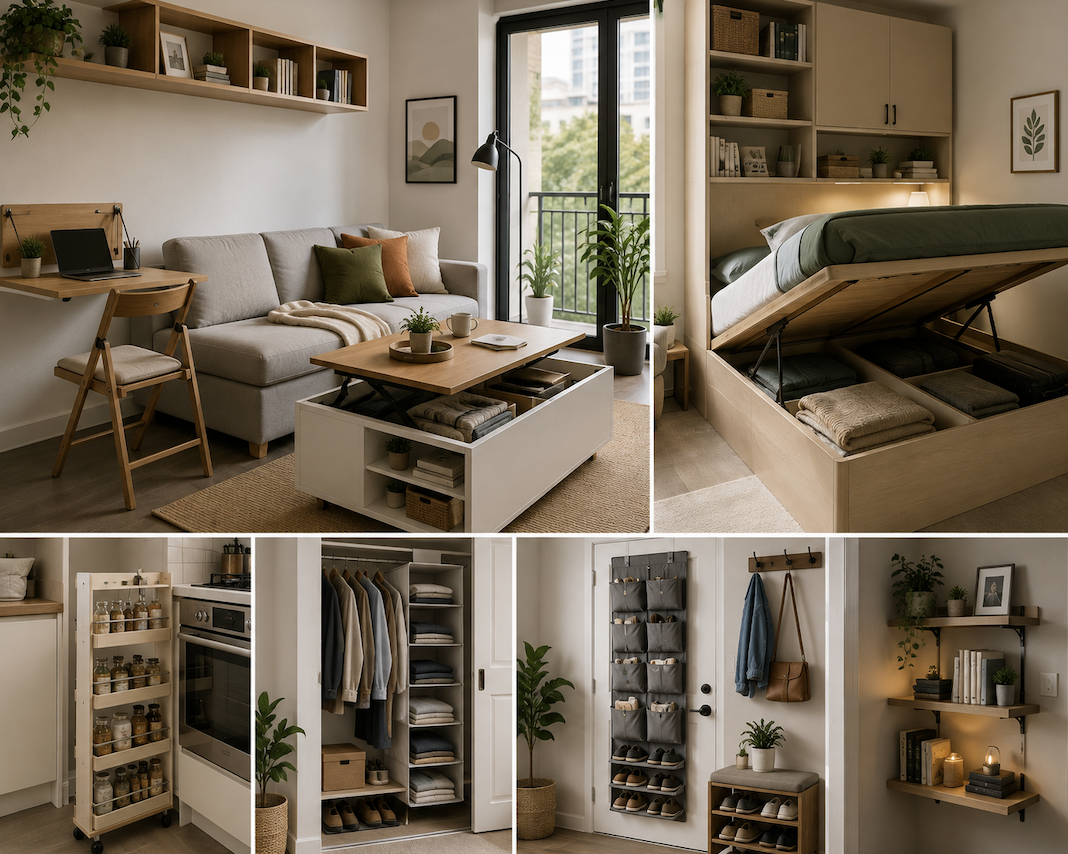
Wall space above furniture, doors, and even windows represents largely untapped storage potential in most apartments, where floor space is the most constrained resource. Tall, narrow bookshelves and wall-mounted shelving units make use of vertical space that a single low dresser or side table leaves completely unused, often doubling functional storage within the same floor footprint.
Corner and Awkward Space Solutions
Corners, the space beside a refrigerator, or a narrow gap between furniture pieces often go completely unused in a small apartment, despite being able to accommodate a narrow rolling cart, a corner shelf unit, or a slim vertical storage tower specifically designed for tight gaps. Measuring these overlooked spaces before assuming they’re too small for any storage solution often reveals more usable width than expected.
Under-Bed Storage
The space under a bed frequently goes entirely unused, despite representing one of the largest single storage opportunities in a typical bedroom. Storage bins specifically designed for under-bed use, or a bed frame with built-in drawers, can hold out-of-season clothing, extra linens, or rarely-used items without consuming any additional visible floor space in the room.
Using a Room Divider With Built-In Storage
In a studio or open-concept apartment, a bookshelf or shelving unit used as a room divider accomplishes two goals simultaneously: creating a visual separation between living and sleeping areas while adding substantial storage capacity along the way, making it a particularly efficient choice for studio apartments specifically.
Multi-Functional Furniture
An ottoman with hidden interior storage, a coffee table with drawers or a lower shelf, and a bed frame with built-in drawers all serve their primary function while quietly adding storage capacity that a purely decorative equivalent wouldn’t provide. Prioritizing multi-functional pieces when furnishing a small apartment, rather than choosing furniture based on appearance alone, compounds meaningfully over the course of furnishing an entire apartment.
Storage Solutions for Entryways
A small apartment entryway often lacks a dedicated closet, making a slim console table with drawers, a wall-mounted key and mail organizer, and a compact shoe rack particularly useful for corralling the small items keys, mail, shoes that otherwise accumulate in a pile just inside the front door.
Over-the-Door Organizers
Over-the-door organizers, whether for shoes, pantry items, or bathroom supplies, require no installation and no damage to walls, making them one of the most renter-friendly storage solutions available. These work particularly well for small, frequently used items that otherwise clutter a closet floor or bathroom counter, like shoes, cleaning supplies, or grooming products.
Maximizing a Small Closet
Adding a second, lower hanging rod beneath the existing one instantly doubles hanging capacity for shorter items like shirts and folded-length pants, similar to the double-rod approach discussed in earlier custom closet guides, though on a smaller, apartment-appropriate scale. Slim, matching hangers also meaningfully increase how much fits on a single rod compared to a mismatched assortment of bulkier hangers.
Vacuum-Sealed Storage for Bulky Items
Bulky items like winter coats, comforters, and pillows take up disproportionate space relative to their actual usefulness at any given moment, making them ideal candidates for vacuum-sealed storage bags that compress them significantly for the off-season. This pairs particularly well with the under-bed and high-shelf storage zones discussed elsewhere in this guide.
Kitchen Storage in Small Spaces
Magnetic strips for knives, hanging racks for pots and pans, and stackable, uniform food storage containers all reduce cabinet clutter in a small apartment kitchen. Adding a small rolling cart, which can be tucked away when not needed, provides flexible additional counter and storage space without permanently committing floor space the way a fixed island or cart would in a larger kitchen.
Storage Solutions for Small Home Offices
For anyone working from a small apartment, a wall-mounted fold-down desk paired with a compact filing cart on wheels provides a functional workspace that can be tucked away or rolled out of sight when not in use, addressing one of the more common modern apartment storage challenges that didn’t exist as prominently in apartment living a decade ago.
Bathroom Storage Solutions
Apartment bathrooms are often among the smallest, most storage-constrained rooms in the unit. A tension-mounted shelf that fits above the toilet, over-the-door hooks and organizers, and a small cart that fits in the gap beside the toilet or vanity all add meaningful storage without any permanent installation, working within the same renter-friendly constraints discussed throughout this guide.
Checking Your Lease Before Installing Anything
Before installing even renter-friendly adhesive solutions, quickly reviewing your lease for any specific restrictions on wall attachments avoids potential deposit deductions at move-out, since some leases have more specific restrictions than a general assumption of “no permanent damage” might suggest.
When in doubt, a quick message to your landlord or property manager confirming a specific product is acceptable is a small effort that prevents a larger problem later.
Renter-Friendly Wall Solutions
Removable adhesive hooks and strips, rated for a range of weights depending on the product, allow wall-mounted storage without drilling, and most remove cleanly without damaging paint when applied and removed correctly. Command-style strips specifically designed for shelving can even support lightweight floating shelves in apartments where drilling isn’t permitted, offering a middle ground between no wall storage at all and permanent, drilled installation.
Hidden Storage Within Existing Furniture
Beyond ottomans and coffee tables mentioned earlier, storage cubes doubling as both seating and concealed storage, and a headboard with built-in shelving, extend this same multi-functional principle throughout the apartment rather than limiting it to just the living room.
Seasonal Rotation for Limited Space
Rather than trying to store every season’s clothing and gear simultaneously in a small space, rotating out-of-season items into vacuum-sealed storage bags or bins, kept under the bed or on a high closet shelf, frees up meaningful everyday storage space that would otherwise stay occupied by items not currently in use.
Decluttering Before Adding More Storage
Before buying additional storage furniture or organizers, a genuine declutter pass identifying items that haven’t been used in the past year and aren’t likely to be needed soon often reveals that the apartment has more usable storage than it initially seemed, simply hidden behind accumulated items that don’t need to be stored at all.
Labeling and Organizing Small Storage Zones
In a small apartment, storage tends to be spread across many small zones rather than a few large ones, making a consistent labeling approach, similar to the digital file organization principle covered in earlier guides, particularly useful for remembering what’s stored where across bins, under-bed storage, and closet shelving.
Choosing Storage That Matches Your Decor
Since storage solutions in a small apartment are often more visible than in a larger home with dedicated closets and storage rooms, choosing baskets, bins, and organizers that coordinate with the apartment’s overall decor style keeps necessary storage from feeling like visual clutter itself, blending function with the room’s appearance rather than working against it.
Coordinating Storage Purchases Before Moving In
Measuring closets, cabinet interiors, and awkward spaces before move-in day, where possible during a walkthrough, allows storage solutions to be purchased and ready to install immediately rather than living out of boxes longer than necessary while measurements and purchases happen after the fact.
Storing Cleaning Supplies Efficiently
A caddy or bin specifically for cleaning supplies, kept under the sink or in a designated closet shelf, keeps frequently used items grouped together and easy to carry room to room, rather than scattered across multiple cabinets where they’re harder to locate quickly when needed.
Common Small-Space Storage Mistakes
Buying storage furniture before decluttering, resulting in more furniture to navigate around without actually solving the underlying volume problem, is one of the most common mistakes. Overlooking vertical space in favor of only floor-level storage solutions is another frequent oversight, missing out on some of the most valuable, underused storage potential a small apartment actually has available.
The Bottom Line
Small apartment storage comes down to thinking vertically, choosing multi-functional furniture deliberately, and using renter-friendly, no-damage solutions rather than assuming a small footprint means limited storage options. A genuine declutter pass before adding new storage furniture often reveals more usable space than most people expect from an apartment that initially feels maxed out.