Foundation shade matching is one of the more frustrating parts of building a makeup routine, particularly when shopping online or under store lighting that doesn’t reflect how a shade will actually look at home. Understanding the factors that actually determine a good match makes the process considerably more reliable.
Why Foundation Matching Is Genuinely Difficult
Foundation shade involves two separate variables depth (how light or dark) and undertone (the underlying warm, cool, or neutral cast), and a shade can be the right depth while having the wrong undertone, or vice versa. Most shade-matching frustration comes from focusing only on depth while overlooking undertone, which is often the more important factor for a shade actually looking natural on skin.
How Undertone Differs From Overall Skin Color
It’s worth distinguishing undertone from the more visible, surface-level color of skin, which can shift with tanning, sun exposure, or seasonal changes as discussed later in this guide. Undertone, by contrast, remains relatively stable over time regardless of these surface-level color shifts, which is why identifying it correctly provides a more durable, long-term foundation for future shade matching, even as your exact depth shifts slightly throughout the year.
Understanding Undertones vs Shade Depth
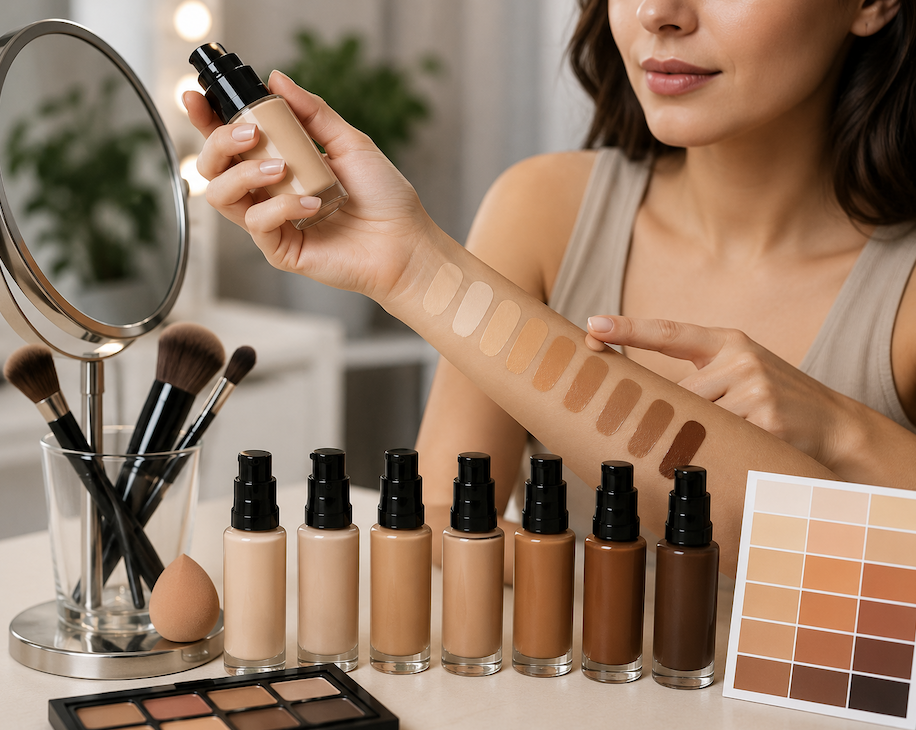
Depth refers to how light or dark a shade is, generally described using terms like fair, light, medium, tan, or deep. Undertone refers to the underlying hue beneath the surface color — warm (yellow or golden), cool (pink or red), or neutral (a balance of both). Two people can have the exact same depth but completely different undertones, which is why a shade that looks correct on one person can look visibly off on another person with a similar overall skin depth.
Neutral Undertones and Why They’re Trickier to Match
Neutral undertones, sitting between warm and cool, can sometimes be the most difficult to shop for, since a shade formulated with even a slight warm or cool lean can look noticeably mismatched despite being marketed as neutral. For anyone with a genuinely neutral undertone, testing a slightly warmer and slightly cooler option side by side, rather than assuming any “neutral” labeled shade will work automatically, often produces a better final match.
Identifying Your Own Undertone
Checking the veins on your inner wrist offers one commonly used clue: veins that appear more green suggest a warmer undertone, while veins that appear more blue or purple suggest a cooler undertone; veins that are hard to categorize either way often indicate a neutral undertone. This isn’t a perfectly precise method on its own, but combined with how gold versus silver jewelry looks against your skin (gold generally flattering warmer undertones, silver flattering cooler ones), it gives a reasonable starting point before testing actual products.
Testing Multiple Shades at Once
Rather than testing one shade at a time across separate store visits, applying two or three candidate shades in thin stripes along the jawline simultaneously allows for direct comparison under the same lighting and at the same time, making it much easier to spot subtle differences than trying to remember how a previous shade looked from an earlier visit.
The Jawline Test: Still the Most Reliable Method
Testing foundation along the jawline, rather than on the back of the hand or inner wrist, remains the most reliable way to judge a shade match, since the jawline shows how a shade blends between the face and neck, which often differ slightly in tone. A correctly matched shade should become nearly invisible once blended into this transition area, rather than creating a visible line of demarcation at the jaw.
How Screen Lighting Affects Online Shade Selection
When browsing swatches or shade-matching photos online, be aware that screen brightness and color calibration vary significantly between devices, meaning a shade that looks accurate on one screen may appear noticeably different on another. This is one more reason to treat online shade selection as a starting estimate rather than a final decision, confirming with an in-person or sample test wherever possible before committing to a full-sized purchase.
Testing in Natural Light
Store and bathroom lighting frequently distort how a foundation shade actually looks, either casting an unflattering tone or making a mismatch harder to notice under artificial light. Stepping outside, or at minimum near a window, to check a tested shade in natural daylight before committing to a purchase catches mismatches that indoor lighting alone would miss.
Considering Foundation Alongside Concealer Shade
Since concealer is often applied on top of or blended with foundation, choosing a concealer shade that complements rather than clashes with your matched foundation matters more than treating the two as entirely separate purchases. Many brands design their concealer and foundation shade ranges to correspond directly, making it worth staying within the same brand’s range, at least initially, before mixing across brands with potentially different undertone mapping.
Foundation Formulas by Skin Type
Oily skin generally does best with oil-free, matte, or long-wear formulas that resist breaking down throughout the day. Dry skin benefits from hydrating, dewy, or satin-finish formulas, since matte formulas can emphasize dry patches and settle unevenly into texture. Combination skin often does well with a satin finish, which balances between the two without over-mattifying dry areas or over-hydrating oily ones.
Adjusting Coverage for Different Occasions
The same foundation shade doesn’t need to be used at the same coverage level every day — diluting a full-coverage formula with a drop of moisturizer for lighter everyday wear, or building up a sheer formula in specific areas for a special occasion, offers flexibility without needing to own multiple different foundations for different coverage needs.
Understanding Coverage Levels
Sheer or light coverage evens out mild tone variation while still allowing natural skin texture to show through, suiting anyone wanting a more natural, “my skin but better” look. Medium coverage conceals moderate redness, discoloration, or blemishes while still looking like skin rather than a mask. Full coverage provides the most complete concealment, useful for significant discoloration or special occasions, but can look heavier or less natural in everyday daylight if applied without care.
Finish Types: Matte, Dewy, and Satin
Matte finishes minimize shine and suit oily skin or anyone preferring a more polished, photo-ready look, though they can emphasize texture and fine lines on drier skin. Dewy finishes add a natural-looking glow and suit dry or normal skin, though they can look excessively shiny on oily skin without setting powder in targeted areas. Satin finishes sit between the two, offering a versatile, natural-looking sheen that works reasonably well across most skin types.
Shopping for Foundation Online
When shade matching online without the ability to test in person, checking whether the brand offers shade-matching tools, reading reviews from people who describe their own skin depth and undertone alongside which shade worked for them, and ordering two adjacent shades to compare directly at home reduces the risk of an online purchase turning out to be a poor match.
The Value of Requesting Samples
Many beauty retailers and brands offer small sample sizes specifically for shade testing before committing to a full-sized purchase. Taking advantage of this, particularly for a more expensive foundation, avoids the frustration and cost of an incorrect full-sized purchase that then sits unused.
Seasonal Shade Adjustments
Skin tone shifts somewhat with seasonal sun exposure for many people, meaning a shade that matched perfectly in winter may run slightly light by late summer. Keeping two adjacent shades on hand, or a bit of a deeper bronzer to blend for warmer months, accommodates this natural seasonal shift without needing an entirely new foundation for part of the year.
Building a Personal Shade Reference Over Time
Keeping a simple note of which specific shades and brands have worked well for you in the past, including the season or context (indoor winter skin versus tanned summer skin), builds a personal reference that speeds up future foundation shopping considerably compared to starting the identification process from scratch with every new purchase.
Understanding Foundation Oxidation
Some foundation formulas oxidize slightly after application, meaning the shade can appear a bit darker or warmer 15 to 30 minutes after applying compared to how it looked straight out of the bottle. Testing a shade and waiting this short window before making a final judgment, rather than deciding immediately upon application, accounts for this common but often overlooked shift.
Application Tools and Technique
A damp makeup sponge tends to create a more natural, skin-like finish by absorbing excess product, while a brush allows for more buildable, precise coverage in specific areas. Fingers, while the most basic tool, can work well for a light, natural application, particularly with cream or liquid formulas that blend easily with body heat. The right tool depends more on your desired finish and coverage level than any single tool being objectively superior.
Foundation for Special Skin Concerns
For skin with visible texture, enlarged pores, or significant redness, a formula specifically marketed as blurring or color-correcting can address these concerns more effectively than coverage level alone, since coverage refers to opacity while blurring formulas use light-diffusing technology to soften the appearance of texture regardless of how much pigment is actually applied.
Common Foundation Matching Mistakes
Matching shade based on the back of the hand rather than the jawline is one of the most common mistakes, since hand skin tone often differs noticeably from facial skin tone. Testing shades only under store lighting, without checking in natural light before purchasing, is another frequent source of foundation mismatches discovered only after getting the product home.
Conclusion
A good foundation match depends on correctly identifying both shade depth and undertone, tested along the jawline and confirmed in natural light rather than store lighting alone. Taking advantage of samples where available, and allowing for the brief oxidation window before judging a shade, meaningfully reduces the trial and error that foundation shopping often involves.