Okay so picture this. You walk into a living room and it just feels right. Not too fancy. Not too plain. Just warm, cozy, and somehow perfect. That is exactly what a modern farmhouse living room does — and honestly, once you fall for this style, there is no going back.
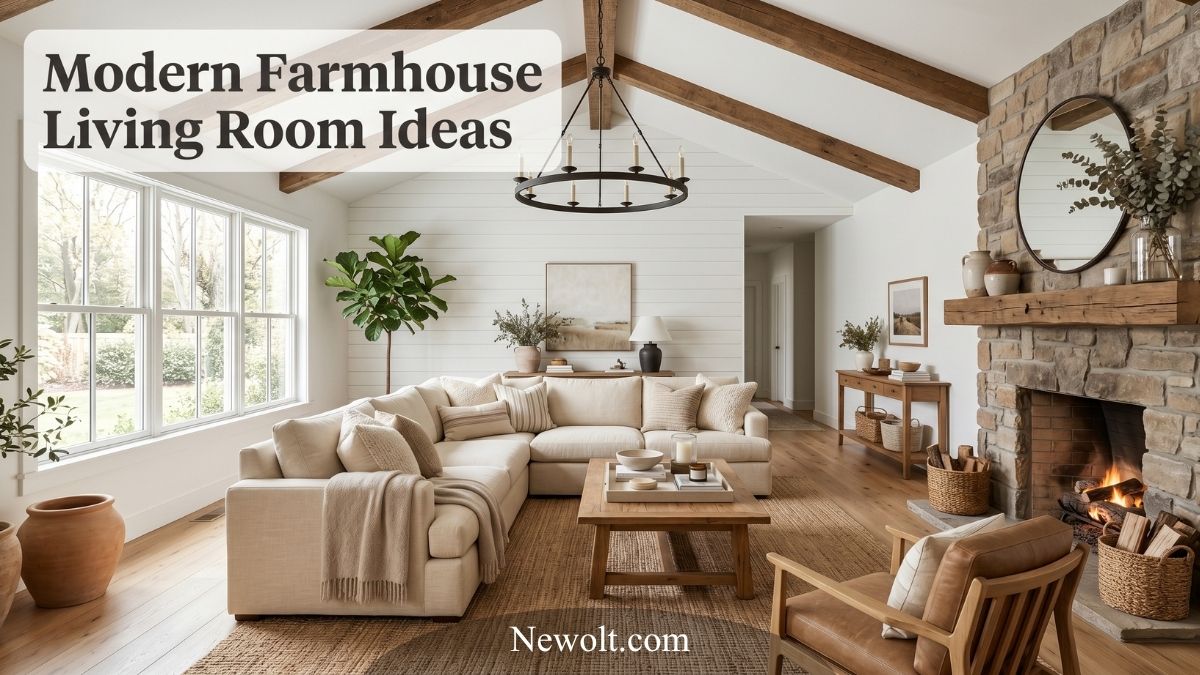
The modern farmhouse living room is basically the best of both worlds. You get the warmth and soul of a rustic farmhouse mixed with the clean lines and calm of a contemporary farmhouse. The result? A space that feels warm inviting, genuinely lived-in, and totally welcoming — without trying too hard.
Whether you are starting fresh or just want to refresh what you already have, these modern farmhouse living room ideas will help you create a space that actually feels like home. Not a showroom. A home.
Quick Summary: The best modern farmhouse living room combines a neutral color palette, natural textures, shiplap cladding or exposed wood beams, an oversized rug, a fireplace focal point, vintage pieces, and indoor plants. Comfortable seating and warm lighting tie everything together perfectly.
Start With the Right Colors — Neutrals Are Your Best Friend
Before you buy a single piece of furniture, sort out your walls. This is where every great farmhouse design begins.
Go for a neutral color palette. Think warm neutral tones like beige, greige, and soft whites with a slightly creamy undertone. These shades do something magical — they make a room feel bigger, calmer, and cozier all at once. No one ever walked into a beautifully done cozy farmhouse living room painted in warm neutrals and felt stressed. It just does not happen.
White walls are a classic choice for good reason. They act as a blank canvas that lets everything else — your textures, your furniture, your plants — do the talking. If you want a tiny bit more personality, go for greige or soft beige instead of a stark white. Much warmer. Much better.
The secret here is to keep it simple. A neutral color palette does not mean boring. It means smart. And in farmhouse decor, smart always wins.
Pro Color Tip
Popular farmhouse paint choices include soft oaty whites, warm greige tones, and muted putty shades. Test paint swatches on your actual wall in both daylight and evening light before committing. Colors shift dramatically depending on the natural light in your room.
The Floor and Ceiling — The Two Things People Always Forget
Most people spend hours picking sofas and zero minutes thinking about their floors and ceilings. Big mistake. In farmhouse style, these two things carry enormous weight.
Wide Plank Wood Floors — The Foundation of Everything
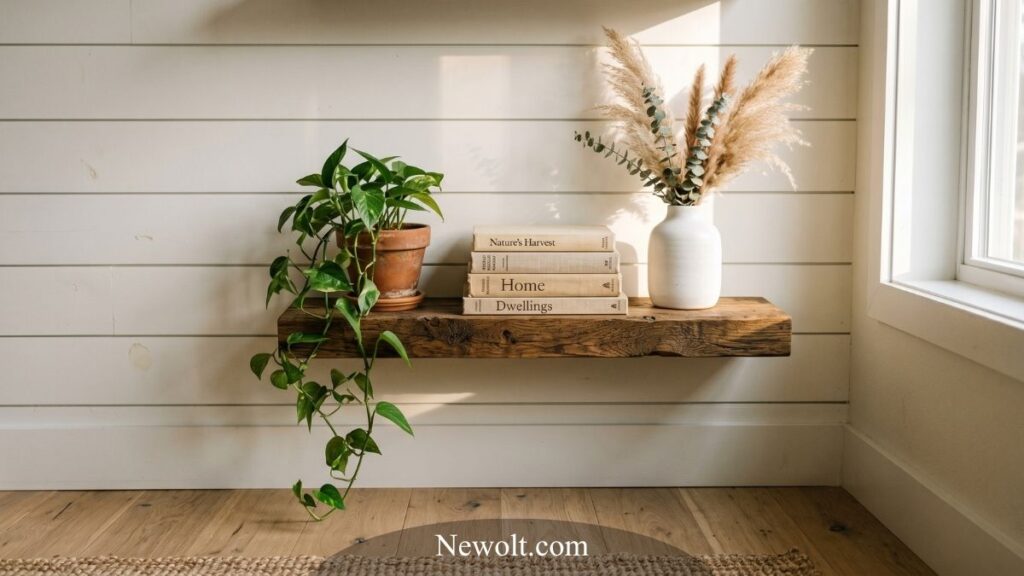
If you can swing it, go for wide plank wood floors. We are talking proper wide boards — nothing skinny. Wide boards have this incredible quality of making a room feel less formal and more relaxed. Like the house has been there forever. That is exactly the lived-in feel that rustic farmhouse design is built on.
Lighter oak tones work brilliantly in a modern farmhouse living room. They keep things light and airy and stop the room from feeling heavy or dark. Strip dark floors and refinish them lighter if needed. Seriously, it is one of those changes that makes a room feel instantly more contemporary farmhouse and less stuffy.
Exposed Wood Beams — Character You Cannot Fake
Now look up. Are there exposed wood beams up there? If yes — celebrate. If not — consider adding salvaged beams or ceiling beams because they add more personality to a room than almost any other single element.
Exposed wood beams bring that signature rustic charm that makes farmhouse aesthetic rooms so irresistible. Use reclaimed wood beams from old barns or warehouses for maximum authenticity. They have history and texture that new timber simply cannot replicate.
Got a vaulted ceiling? Even better. Pair those tall ceiling beams with a dramatic iron chandelier hanging down the center and you have yourself a proper great room moment.
Walls That Work — Shiplap, Paneling, and Stone
Plain walls are fine. But farmhouse design walls? They tell a story.
Shiplap Cladding — The Ultimate Farmhouse Wall
If there is one thing people associate with farmhouse decor, it is shiplap cladding. And the hype is totally deserved. Shiplap cladding adds texture, depth, and that unmistakable rustic farmhouse feel to any wall.
You can paint it white for a crisp, light airy finish or leave it natural for a more raw, organic finishes look. Shiplap wainscoting — where the shiplap covers only the lower half of the wall — is a brilliant option if you want the look without committing to a full wall treatment. Works especially well in a family room or great room setting.
Use reclaimed materials for extra character. Old wood shiplap that has been repurposed has a texture and warmth that fresh timber simply cannot match.
Wood Paneling — The Underrated Option
Wood paneling gets a bad reputation — people immediately think of dark, gloomy 1970s dens. But done right, wood paneling in a modern farmhouse living room is absolutely stunning.
Keep it light. Paint it white or off-white. Or choose natural timber tones that complement your wide plank wood floors. The key is balance. Wood paneling on one wall paired with white walls on the other three creates depth without overwhelm.
Stone Accents — Bring the Outside In
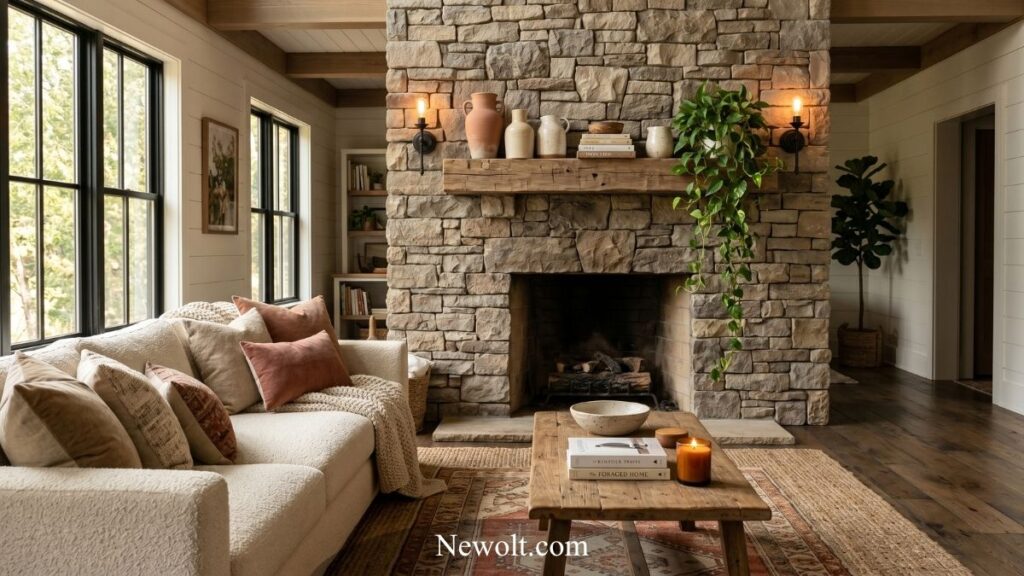
Stone accents add a raw, natural element that fits farmhouse style perfectly. The most effective use is around a fireplace focal point — a stone fireplace creates an immediate anchor for the whole room.
If you used stone on the exterior of your home, bring it inside. Especially on the fireplace wall. You can wash it with lime or paint it a soft color from your room palette to make it feel more refined. Stone accents paired with warm neutral tones on the surrounding walls is a combination that never fails.
The Furniture — Comfortable, Character-Filled, and a Little Bit Mismatched
Furniture is where farmhouse design gets really fun. Because the rules are delightfully loose.
Sofas and Seating — Sink In and Stay
The golden rule of cozy farmhouse furniture? If you would not want to sit on it for three hours, do not buy it. Comfortable seating is non-negotiable.
A large sectional sofa is perfect for families and people who like options. Cover it in linen, boucle fabric, or velvet for that layered, textural look that farmhouse aesthetic is famous for. Linen and boucle fabric are especially great because they look casual and feel amazing at the same time.
Add swivel chairs on either side of a conversation area for extra seating and that pulled-together look. Swivel chairs are genuinely underrated in living room design — they are practical, they look good, and they make people feel like they are in a proper family room rather than a hotel lobby.
Leather is always a great addition too. A leather club chair or leather sofa adds warmth and age. Leather gets better looking over time — it develops character the more you use it. Very on-brand for farmhouse decor.
Coffee Tables — Rustic Wooden Accents Done Right
Your coffee table is the centerpiece of the conversation area and it deserves proper thought. Rustic wooden accents work brilliantly here. A chunky reclaimed wood coffee table, a wood and iron piece, or even a vintage butcher block all fit the farmhouse style perfectly.
Go big. An oversized coffee table looks more intentional and works better with a sectional sofa anyway. Stack some books on it, put a terracotta bowl in the center, and call it done.
| Furniture Piece | Best Material | Why It Works |
|---|---|---|
| Main Sofa | Linen, boucle fabric, velvet | Adds texture and that casual farmhouse feel |
| Accent Chairs | Leather, velvet, woven | Creates layered, eclectic conversation area |
| Coffee Table | Reclaimed wood, wood and iron | Rustic wooden accents anchor the seating area |
| Side Tables | Wood, metal, stone | Mix materials for eclectic farmhouse look |
| Storage | Wicker, reclaimed wood | Natural materials stay true to farmhouse aesthetic |
Rugs — The Thing That Pulls Everything Together
No modern farmhouse living room is complete without a proper rug. This is not optional. A rug grounds the whole conversation area and makes the space feel finished and intentional.
Go oversized rug — always. Every chair and sofa should have its front legs resting on the rug. If your rug is too small, it looks like you ran out of money halfway through decorating. Not the style we are aiming for.
For texture and a natural feel, a jute rug or sisal rug is perfect. Both are durable, affordable, and genuinely beautiful in a rustic farmhouse setting. If you want a bit more color and pattern, a kilim rug adds gorgeous warmth and personality — very farmhouse aesthetic without being predictable.
Want to go maximalist? Try layered rugs — a large jute rug or cowhide rug on the bottom with a smaller kilim rug layered on top. It is one of those tricks that looks effortlessly cool and adds so much texture to a room.
Rug Sizing Rule
As a general rule, the front legs of all seating pieces should comfortably sit on the rug. If your rug does not quite fit that requirement, layer a smaller rug atop a larger sisal rug. This trick works brilliantly for farmhouse living room decorating on a budget.
The Fireplace — Your Room’s Best Feature
If you have a fireplace focal point in your modern farmhouse living room, build the entire room around it. Seriously. Everything else should support and frame it.
A stone fireplace is the ultimate farmhouse style choice. Grand, warm, textural, and absolutely timeless. A fieldstone fireplace with a rough, natural surface has incredible character. A cleaner, more minimal fireplace with simple lines works better for a contemporary farmhouse vibe.
Position your sectional sofa or main seating directly facing the fireplace. Add sconces on either side of the mantel for soft, warm light. Hang something meaningful above — a large mirror, a piece of art, or some collected objects displayed at varying heights.
Stone accents around the fireplace, combined with reclaimed wood on the mantel, and soft warm neutral tones on the surrounding walls — that is the combination that makes people walk into a room and immediately feel at home.
Lighting — Set the Mood Right
Lighting in a modern farmhouse living room should feel warm, layered, and slightly dramatic. Not bright and clinical. Think cozy pub, not operating theatre.
An iron chandelier hanging from exposed wood beams or a vaulted ceiling is the statement piece your room needs. Go for something with visible hardware, raw finishes, and a bit of visual weight. A tiered iron chandelier over the main conversation area is the perfect choice.
Add sconces on the walls for secondary lighting that creates warmth and depth. Sconces beside the fireplace or flanking a large mirror work incredibly well. Floor lamps in the corners create that layered, lived-in lighting effect that no overhead light alone can achieve.
Natural light is your best friend during the day. Keep window treatments minimal — or go bare entirely — to let natural light pour in and bounce off your white walls and wide plank wood floors.
Texture and Natural Materials — The Secret Sauce
Here is something the best modern farmhouse living room designers understand deeply. Texture is what makes a room feel real. Without it, even a beautifully furnished room feels flat and cold.
Layer your natural textures everywhere. Woven elements like baskets, jute rug accents, and linen throws add warmth at zero cost. Boucle fabric on a chair, velvet on cushions, leather on a club chair — each material adds a different quality to the space and together they create something genuinely rich and interesting.
Natural materials like reclaimed wood, raw stone, linen, and jute all have something in common — they are imperfect. And that imperfection is exactly what gives a farmhouse aesthetic room its soul. Slightly uneven edges, natural grain variations, a bit of wear — all of this is good. Do not fight it.
Open Shelving and Built-Ins — Display With Purpose
Open shelving is a staple of modern farmhouse living room design. Done well it looks amazing. Done badly it looks like a jumble sale.
The key is to display with intention. Mix books with objects. Add a plant or two. Include some vintage pieces and a few natural elements like a piece of driftwood or a woven basket. Keep some breathing room between items — do not pack every shelf to the edge.
Built-in bookshelves flanking a fireplace are particularly stunning in a farmhouse design context. They add rustic charm, create symmetry, and give you enormous storage and display space. Fill them thoughtfully and they become one of the most talked-about features in the room.
Plants and Indoor Greenery — Bring the Outside In
A modern farmhouse living room without plants is like a fireplace without a fire. Technically sound, yet a crucial component is absent.
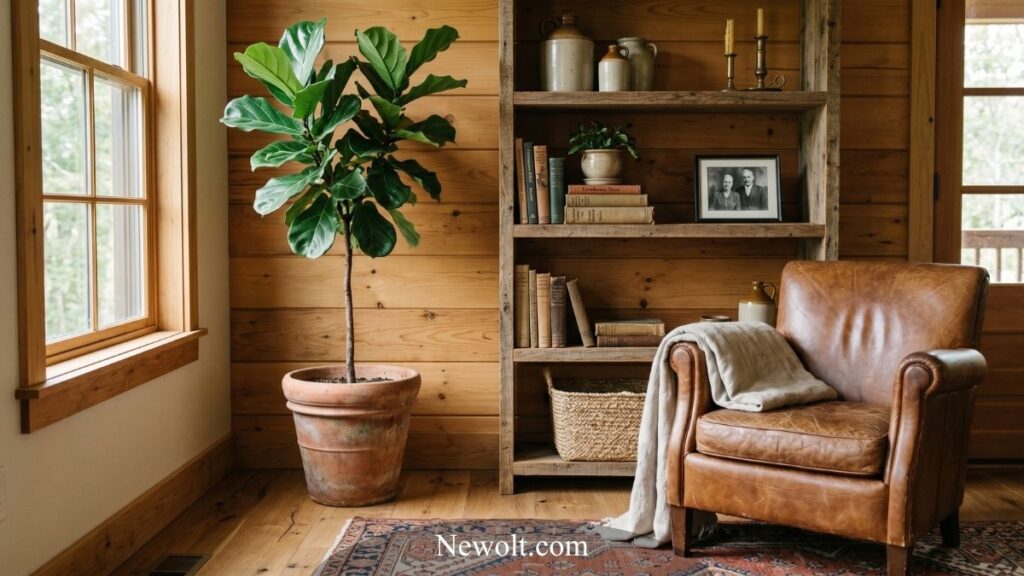
Indoor plants add life, color, and that connection to nature that farmhouse style is built on. Fiddle leaf figs are the classic choice — tall, sculptural, and absolutely perfect against white walls or shiplap cladding. If you have good natural light, an olive tree in an oversized terracotta pot looks stunning in a corner.
For smaller touches, lavender in terracotta pot arrangements on open shelving adds color, fragrance, and that cottage-garden feel that pairs so beautifully with farmhouse aesthetic design.
Vintage Pieces and Antiques — Because New Is Boring
The fastest way to make a modern farmhouse living room feel genuinely special is to include things with a past. Vintage pieces and antiques bring a sense of history and narrative that brand-new furniture simply cannot replicate.
It could be anything. Antiques like old farm benches, vintage mirrors, eclectic accessories with no matching partner, or a piece of original art picked up at a market. The mix of old and new is what makes farmhouse decor feel curated rather than catalog-perfect.
Mix your vintage pieces with modern furniture confidently. A sleek sectional sofa paired with a genuinely old wooden side table is a combination that looks incredibly intentional. Eclectic accessories displayed on open shelving or built-in bookshelves add personality and depth. Accent colors can be introduced through these accessories — a deep terracotta pot, a kilim rug, a set of colorful cushions and pillows — without committing to a bold wall color.
Where to Find Vintage Pieces
Great sources for farmhouse-style vintage pieces and antiques include estate sales, flea markets, online marketplaces, salvage yards, and antique shops. Look for items with visible wear, interesting history, or unusual shapes. The more character, the better.
Frequently Asked Questions
What trend is replacing modern farmhouses?
Okay so this is actually a great question and the honest answer might surprise you. Modern farmhouse style is not exactly being replaced — it is evolving. The new direction people are moving toward is something called “organic modern” or “new country” design. Think of it as modern farmhouse’s slightly more grown-up, earthy cousin. Where modern farmhouse living room design leaned on shiplap cladding, white walls, and that classic rustic farmhouse look, organic modern goes deeper into raw natural materials, curved furniture shapes, earthy terracotta and clay tones, and a warmer, more tactile approach to the neutral color palette. You still get the natural textures, the woven elements, the reclaimed wood accents, and the cozy farmhouse feeling — but with softer edges and less of the formulaic barn door and shiplap combination that became everywhere at once. Japandi design — a blend of Japanese minimalism and Scandinavian warmth — is also gaining serious ground as a complement to farmhouse aesthetic rooms. It shares the love of natural materials, organic finishes, and light airy spaces but strips things back even further. The good news is that if you already have a modern farmhouse living room you love, you are not suddenly out of style. Good design never goes fully out of fashion. Just evolve your space gradually — swap some accent colors, add more curved pieces alongside your rustic wooden accents, and keep the comfortable seating and lived-in feel that made farmhouse style so popular in the first place.
Is farmhouse still in style in 2026?
Yes — and actually, it is doing just fine. Farmhouse style has proven to be one of those design movements that does not crash and burn the way trend-driven styles do. Why? Because it is built on things that never go out of fashion — warmth, comfort, natural materials, and a genuinely welcoming feel. Nobody gets tired of a cozy farmhouse living room that feels like a hug. What has changed in 2026 is how farmhouse design is being executed. The more predictable elements — heavy shiplap cladding on every wall, matching barn doors, and that overly curated modern farmhouse aesthetic — are being dialled back in favor of something more personal and layered. People are mixing vintage pieces and antiques more freely. They are choosing a neutral color palette that leans warmer and earthier rather than bright white. Exposed wood beams and wide plank wood floors are still very much in — those never left and probably never will. Stone accents, fireplace focal points, indoor plants in terracotta pot displays, oversized rug layering, and comfortable seating built for actual living are all firmly on trend in 2026. The key shift is that farmhouse style is less about following a formula and more about creating a space that feels genuinely homey and lived-in. That shift is actually making it better. So yes — farmhouse is very much still in style in 2026. Just wear it more loosely.
How do I make my house look modern farmhouse?
This is the practical one — and the good news is that creating a modern farmhouse living room is more achievable than most people think. You do not need a full renovation or a massive budget. Start with your walls. A neutral color palette of warm beige, greige, or soft white immediately sets the tone. White walls work as a blank canvas for everything else you bring in. If you can add shiplap cladding to one accent wall or install shiplap wainscoting along the lower half of a wall, that one move does enormous work for the farmhouse aesthetic. Next, look at your floors. Wide plank wood floors in a lighter oak tone instantly give a room that relaxed, lived-in feel that is central to farmhouse design. If new floors are not in the budget, a large oversized rug in jute rug or kilim rug style does a surprisingly similar job of anchoring the space. Add exposed wood beams if you can — or salvaged beams fitted to your ceiling for that rustic farmhouse ceiling character. Then focus on furniture. A comfortable sectional sofa in linen or boucle fabric, paired with leather or velvet accent chairs, creates the cozy layered seating that farmhouse style is known for. Layer in natural textures through cushions and pillows, woven elements like baskets, and throw blankets. Add a stone fireplace or at least build up the existing fireplace focal point with reclaimed wood on the mantel and sconces on either side. Bring in indoor plants — especially fiddle leaf figs in a terracotta pot — and mix in some vintage pieces and antiques for character. Finally, hang an iron chandelier overhead and add natural light wherever possible. That combination of elements, done thoughtfully, transforms almost any room into a genuinely beautiful modern farmhouse living room.
What is a modern farmhouse style living room?
A modern farmhouse style living room is a space that sits right in the sweet spot between rustic farmhouse warmth and contemporary farmhouse sophistication. It is not a log cabin and it is not a sleek city apartment — it is the comfortable, character-filled middle ground that somehow works for almost everyone. The defining elements of a modern farmhouse living room are a neutral color palette built around warm neutral tones like beige, greige, and soft white walls — with natural materials doing most of the decorative heavy lifting. You will typically find exposed wood beams on the ceiling, wide plank wood floors underfoot, and some form of shiplap cladding or wood paneling on the walls. The fireplace focal point — usually a stone fireplace or fieldstone design — is often the anchor of the whole room. Furniture in a modern farmhouse living room prioritizes comfortable seating in natural materials like linen, velvet, and boucle fabric, often mixed with leather accents and rustic wooden accents in the form of coffee tables and open shelving. An oversized rug — usually a jute rug, sisal rug, or kilim rug — grounds the conversation area. Lighting comes from an iron chandelier overhead and warm sconces on the walls. Indoor plants in terracotta pot arrangements bring life and color. Vintage pieces and antiques add narrative and depth. The whole effect is a room that feels warm and inviting, genuinely lived-in, light airy, and welcoming — a proper family room that people actually want to spend time in rather than just look at.
What are the 4 pillars of farmhouse style?
Great way to think about it — and yes, farmhouse design really does come down to four core pillars that hold the whole aesthetic together. First pillar is natural materials. Everything in farmhouse style — whether it is a rustic farmhouse or a contemporary farmhouse — starts with natural, honest materials. Reclaimed wood, stone accents, linen, leather, jute, cotton, and natural fibre rugs like jute rug and sisal rug. These materials are chosen because they age beautifully, feel good to touch, and bring an organic warmth that synthetic materials simply cannot replicate. Organic finishes and imperfect textures are celebrated, not hidden. Second pillar is comfort and function. A farmhouse living room is built for real life — not for showing off. Comfortable seating that people actually sink into, a proper conversation area arranged for genuine connection, and a welcoming family room vibe that makes everyone feel at home. Cozy farmhouse design prioritizes lived-in feel over picture-perfect presentation. Third pillar is character and history. Farmhouse aesthetic rooms are full of things that have a story — vintage pieces, antiques, reclaimed materials, salvaged beams, and eclectic accessories that were collected over time rather than bought all at once. This sense of accumulated history and personal narrative is what separates a truly great farmhouse design from one that just looks like a catalog copy. Fourth pillar is warmth and light. A neutral color palette of warm neutral tones, natural light pouring in through generous windows, iron chandelier and sconce lighting for evening warmth, and indoor plants adding life and color. The modern farmhouse living room should always feel light airy during the day and warm, glowing, and homey come evening. These four pillars — natural materials, comfort, character, and warmth — are the foundation of every successful farmhouse style space from a cozy farmhouse den to a grand open floor plan great room with vaulted ceiling and exposed wood beams.
Final Thoughts — Get Comfortable and Stay There
A great modern farmhouse living room is not about following rules perfectly. It is about creating a space that genuinely feels good to be in. Warm inviting, homey, welcoming, and full of things you actually love.
Start with warm neutral tones on the walls. Add natural textures through rugs, fabrics, and woven elements. Bring in reclaimed wood and stone accents. Layer your lighting. Include vintage pieces and antiques. Add some indoor plants. And most importantly — make it comfortable. Because a farmhouse style living room that nobody actually sits in has missed the point entirely.