Choosing new flooring is one of those decisions that affects a home for well over a decade, which makes it worth understanding the real tradeoffs between the most common options rather than choosing based on appearance alone. Vinyl, laminate, and hardwood each have genuine strengths, and the right choice usually depends more on the specific room than on a single universally best material.
Vinyl Flooring: An Overview
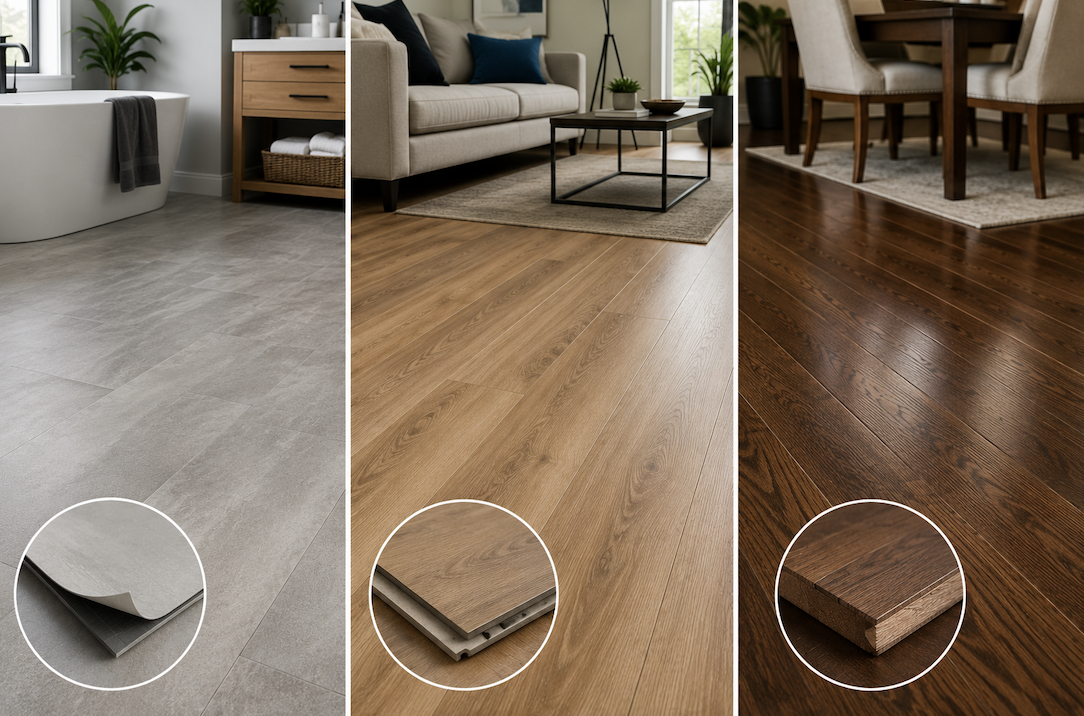
Modern luxury vinyl plank (LVP) has moved well beyond the thin, obviously synthetic vinyl of past decades, now offering realistic wood and stone visual textures alongside genuinely strong performance. It’s generally the most water-resistant of the three options, often fully waterproof depending on the specific product, making it a strong candidate for kitchens, bathrooms, and basements where moisture is a regular concern.
Laminate Flooring: An Overview
Laminate consists of a printed image layer topped with a hard, protective wear layer over a composite core. It offers a hard, scratch-resistant surface at a generally lower cost than hardwood, though most laminate is not fully waterproof, and standing water or high humidity over time can cause the composite core to swell or warp, making it a less reliable choice for consistently damp spaces.
Hardwood Flooring: Solid vs Engineered
Solid hardwood is made from a single piece of wood throughout, allowing it to be sanded and refinished multiple times over its lifespan, which can extend well beyond several decades with proper care. Engineered hardwood uses a thinner layer of real wood over a plywood or composite core, offering better dimensional stability in humidity-prone areas than solid hardwood, though with fewer possible refinishing cycles over its lifetime due to the thinner top wood layer.
How Climate Affects the Right Choice
Homes in humid climates, or regions with significant seasonal humidity swings, put more stress on solid hardwood, which can expand and contract noticeably with moisture changes, sometimes leading to gaps or cupping over time. Engineered hardwood’s layered construction handles these fluctuations considerably better, making it the more sensible hardwood option specifically in humid or variable-climate regions, while vinyl and laminate remain largely unaffected by this particular concern.
Comparing Durability
Vinyl generally holds up well to scratches and dents from everyday foot traffic and pet claws, making it a practical choice for busy households. Laminate offers strong scratch resistance, often comparable to or better than vinyl in this specific area, but its composite core is more vulnerable to moisture damage than vinyl’s fully synthetic construction. Hardwood, particularly solid hardwood, is more prone to scratching and denting than either alternative, though this is partially offset by the ability to sand and refinish the surface to remove years of accumulated wear.
Comparing Moisture Resistance
For kitchens, bathrooms, laundry rooms, and basements, vinyl is generally the safest, most reliable choice given its strong water resistance. Laminate is a reasonable choice for kitchens with careful cleanup habits but is riskier for bathrooms or basements where consistent moisture exposure is more likely. Hardwood, even engineered hardwood, is the least suited of the three for consistently damp environments, and is generally better reserved for living rooms, bedrooms, and other drier areas of the home.
Comparing Sound Transmission Between Floors
In multi-story homes or apartments, flooring choice also affects how much sound transmits to the space below. Vinyl and laminate, particularly with a sound-dampening underlayment, generally perform better in this regard than hardwood installed without additional soundproofing measures, which is worth considering for upper-floor rooms in homes or buildings where noise transmission to lower levels is a genuine concern.
Comparing Cost
Vinyl and laminate are generally the most budget-friendly options, with vinyl often costing slightly more than laminate for comparable quality, given its added water resistance. Hardwood, particularly solid hardwood, typically represents the highest upfront cost of the three, though its potential lifespan when properly maintained can offset that higher initial investment over a long enough time horizon.
Repair and Replacement of Damaged Sections
Vinyl and laminate installed as individual planks generally allow a single damaged piece to be replaced without redoing the entire floor, provided you’ve kept spare matching material from the original installation. Solid hardwood can typically be sanded to remove surface damage, but deeper damage affecting individual boards is more involved to repair than simply swapping out a single plank, making it worth keeping a small stock of extra flooring material regardless of which option you choose.
Comparing Maintenance Requirements
Vinyl and laminate both require relatively low maintenance — regular sweeping and occasional damp mopping generally keeps both looking presentable without specialized products. Hardwood requires more careful maintenance, including avoiding excess standing water during cleaning and periodic refinishing over its lifespan to address accumulated wear and restore its appearance.
Comparing Resale Value
Hardwood flooring generally carries the strongest positive association with home value among buyers, and is often specifically called out as a selling point in real estate listings. Vinyl and laminate are increasingly accepted, particularly high-quality luxury vinyl in kitchens and bathrooms, but hardwood in main living areas still tends to be viewed as a more premium, desirable feature by many buyers, worth factoring in if resale value is a significant consideration in your decision.
Installation: DIY vs Professional by Material
Vinyl plank, particularly click-lock styles, is one of the more DIY-friendly flooring options available, often installable by a reasonably handy homeowner over a weekend. Laminate is similarly DIY-friendly, using comparable click-lock installation systems. Solid hardwood installation is considerably more involved, typically requiring specialized tools and experience, and is more commonly hired out to a professional installer, while engineered hardwood with a click-lock system can be somewhat more approachable for an experienced DIYer than solid hardwood nailed or glued down traditionally.
Choosing Flooring by Room
For kitchens and bathrooms, vinyl is generally the safest choice given consistent moisture exposure. For basements, vinyl is again the most reliable option due to both moisture resistance and better tolerance of the temperature fluctuations common in below-grade spaces. For living rooms and bedrooms, all three options are reasonable, with the choice coming down more to budget, desired appearance, and how much you value hardwood’s long-term refinishing potential specifically.
Underfoot Comfort and Sound
Vinyl generally feels warmer and softer underfoot than laminate or hardwood, particularly with an underlayment pad, making it a comfortable choice for spaces where you’ll be standing for extended periods, like a kitchen. Laminate and hardwood both tend to feel harder and can produce more noticeable sound underfoot, though adding a quality underlayment during installation reduces this noise for both materials meaningfully.
Environmental Considerations
Solid hardwood, particularly from responsibly managed forests, is a renewable material with a potentially very long lifespan, which some homeowners weigh favorably from a sustainability perspective compared to synthetic flooring materials. Vinyl, being a petroleum-based product, carries different environmental considerations, though some manufacturers now offer vinyl flooring made with recycled content, worth looking into specifically if this factor matters to your decision.
Radiant Heating Compatibility
For homes with in-floor radiant heating, engineered hardwood and vinyl generally handle the heat cycling better than solid hardwood, which is more prone to expansion and contraction issues under consistent radiant heat exposure. Laminate can also work with radiant heating in many cases, but it’s worth confirming the specific product’s manufacturer rating for radiant heat compatibility before installation, since not every laminate product is rated for this use.
How Subfloor Condition Affects Your Choice
An uneven or damaged subfloor affects flooring options differently vinyl and laminate generally require a very flat, even subfloor for proper installation and long-term performance, while solid hardwood can sometimes accommodate minor subfloor imperfections more forgivingly, though a poor subfloor should still be addressed regardless of the chosen flooring material to avoid long-term issues.
Considering Long-Term Total Cost
While hardwood carries a higher upfront cost, its potential multi-decade lifespan with refinishing can make its cost-per-year competitive with, or even lower than, vinyl or laminate that may need full replacement within 15 to 20 years. Factoring in this longer time horizon, rather than comparing only upfront installation cost, gives a more complete picture of true long-term value across all three materials.
Testing Samples in Your Actual Space
Similar to paint, flooring can look noticeably different under your home’s specific lighting compared to how it appeared in a showroom. Ordering a few physical samples of your top choices and viewing them in the actual room, at different times of day, helps avoid the disappointment of a floor that looked warmer or cooler in tone than expected once fully installed.
Common Flooring Mistakes
Choosing laminate or hardwood for a consistently damp space, based on appearance alone without accounting for moisture risk, is one of the most common and costly flooring mistakes. Underestimating the importance of a quality underlayment is another common oversight, since a good underlayment meaningfully affects both comfort and sound regardless of which flooring material is chosen on top of it.
Matching Flooring Across Connected Rooms
For open-concept homes where multiple rooms flow into each other, using the same flooring material throughout creates a more cohesive, visually larger-feeling space than switching materials at every room boundary. If budget requires mixing materials, planning the transition points at natural boundaries, like a doorway, rather than in the middle of an open sightline, keeps the transition looking more intentional.
Conclusion
Vinyl offers the strongest moisture resistance and easiest DIY installation, making it the safest default for kitchens, bathrooms, and basements. Laminate offers a similar budget-friendly, DIY-approachable option for drier spaces where moisture is less of a concern. Hardwood remains the premium choice for resale value and long-term refinishing potential in living areas and bedrooms, where its moisture vulnerability is less of a practical concern.