Tom replaced his thirty-year-old dial thermostat on a Saturday afternoon expecting a quick upgrade, only to discover his HVAC system used a wiring configuration that half the smart thermostats on the market weren’t built to support.
Two returned boxes and a frustrating hour spent under his stairwell photographing wire colors later, he finally found a model compatible with his system’s lack of a common wire. What should have been a simple weekend project turned into an afternoon of research he hadn’t planned on.
His neighbor, installing the same week in a newer house, had the opposite experience: any thermostat she considered worked fine, and her decision came down to app design and voice assistant compatibility instead.
The two households ended up with completely different shopping experiences from the same product category, one dictated almost entirely by wiring and the other by software preference, which says a lot about how uneven the smart thermostat buying process can be depending on a home’s age and electrical setup.
Those two experiences capture what makes shopping for a smart thermostat more complicated than picking the one with the best reviews. Compatibility, features, and household habits all pull in different directions, and the “best” thermostat varies notably depending on which of those factors matters most in a given home.
Setting the Stage: What Changed With Connected Thermostats
Traditional programmable thermostats let homeowners set schedules, but smart thermostats added remote control, learning algorithms, and integration with broader smart home ecosystems. Homeowners who grew up adjusting a mechanical dial thermostat, or programming a basic digital unit with a handful of preset time blocks, are often surprised by how much more responsive a connected system feels once installed. That shift changed what people expect from a device that used to just measure temperature and click a relay.
Modern smart thermostats generally offer remote adjustment through a smartphone app, geofencing that detects when residents leave or approach home, energy usage reports, and compatibility with voice assistants like Alexa or Google Assistant. Some models add occupancy sensing through built-in or remote sensors, adjusting temperature based on which rooms are in use rather than treating the whole home as a single zone.
This layer of automation replaced what used to be a purely manual process, where a homeowner had to remember to adjust the dial before leaving for work or turn it down before bed. Removing that manual step has real appeal beyond convenience alone, since a forgotten adjustment on a programmable thermostat translated directly into wasted energy, while a connected thermostat can correct for a forgotten manual override automatically once it detects a change in occupancy or an unusual pattern in the household’s routine.
Nest, Ecobee, and Honeywell Home Side by Side
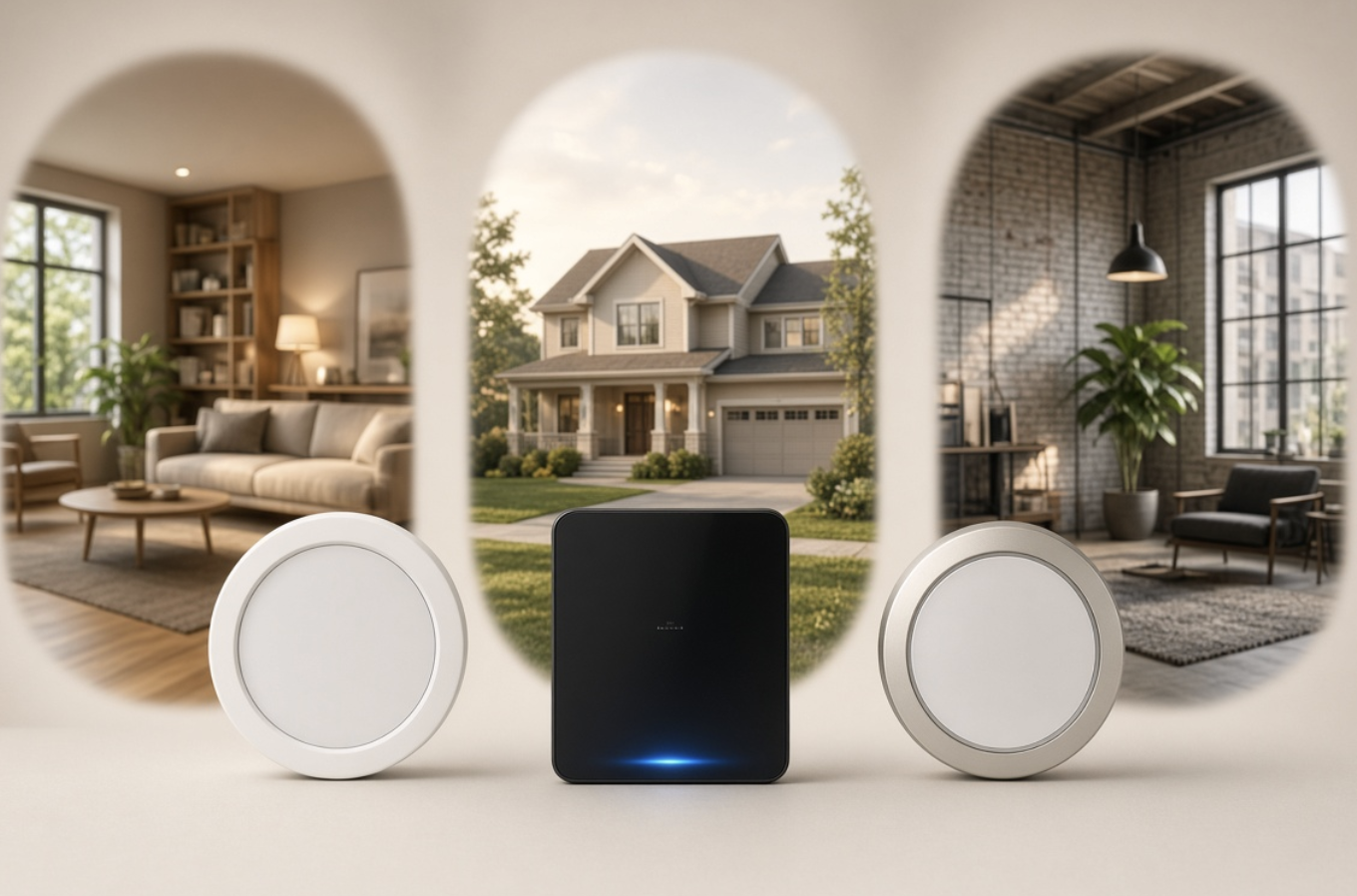
Three brands dominate most comparison shopping, each with a distinct approach. Looking at how each positions itself, and where each tends to fall short, helps frame the rest of the buying decision before diving into compatibility and installation details.
- Google Nest: known for a polished, minimalist interface and strong learning algorithms that adapt to a household’s schedule over the first week or two of use, with tight integration into the broader Google Home ecosystem.
- Ecobee: distinguished by included room sensors in many models, which measure temperature and occupancy in individual rooms rather than relying solely on the thermostat’s own location, often praised for more even whole-home comfort as a result.
- Honeywell Home: offers a wide range of models spanning basic Wi-Fi thermostats to more advanced options, generally positioned as a value-friendly alternative with broad HVAC compatibility across both simple and complex systems.
None of the three is objectively superior across every category. Nest tends to win on design and simplicity, Ecobee on multi-room comfort management, and Honeywell on price flexibility and compatibility with a wider range of older or unusual HVAC setups.
Beyond these three, a handful of smaller players have carved out niches worth a mention. Emerson’s Sensi line focuses on straightforward, no-frills operation with strong HVAC compatibility, often appealing to homeowners who want smart features without a steep learning curve. Wyze and other budget-focused brands have entered the space with lower-cost options that cover the basics well but generally skip the more advanced sensor and learning features found in premium models, making them a reasonable choice for anyone prioritizing cost over deeper automation.
Compatibility With Older HVAC Systems
Compatibility is the single most common obstacle homeowners run into, and it trips up far more people than feature comparisons ever do. Many smart thermostats require a “C-wire” (common wire) to provide continuous power, and older homes built before smart thermostats existed often lack one.
- C-wire present: most smart thermostats install without complication.
- No C-wire: some models include a power extender kit or can draw power creatively from existing wiring, though not universally.
- Heat pump systems: require thermostats specifically rated for heat pump compatibility, since the wiring and staging differ from standard forced-air systems.
- Multi-stage or zoned systems: not every smart thermostat supports multi-stage heating and cooling or complex zoning setups, which can rule out otherwise appealing models.
- Boiler and radiator systems: fewer smart thermostat options support these older heating types compared to standard forced-air compatibility.
Checking a manufacturer’s compatibility tool using existing wiring photos before purchasing avoids the return-and-reshop cycle that trips up many first-time buyers.
Homes with older HVAC systems sometimes discover compatibility issues only after removing the old thermostat, when wiring that looked straightforward on paper turns out to use non-standard labeling or a configuration the manufacturer’s online tool didn’t anticipate. Taking a photo of the wiring terminals before disconnecting anything, and keeping the old thermostat’s base plate for reference, makes it far easier to troubleshoot or return a unit that turns out to be a poor match without having to guess at the original configuration from memory.
Energy Savings Claims Versus Real-World Results
Smart thermostat marketing leans heavily on energy savings claims, and while the underlying mechanisms automated scheduling, geofencing, and usage reports do support more efficient heating and cooling in many households, actual savings depend heavily on how a home was being managed before the upgrade.
Households that already used a programmable thermostat with a consistent schedule tend to see smaller gains than households that previously left temperature settings static around the clock. A household that manually adjusted its thermostat diligently every day before bed and every morning before leaving generally sees the smallest measurable improvement from switching to an automated system, since the manual habit was already delivering most of the available savings.
Climate also plays a role: homes in regions with extreme seasonal swings generally see more dramatic savings from optimized scheduling than homes in milder climates where heating and cooling loads are lighter to begin with. Energy reports built into most apps give a rough sense of savings trends, though they’re generally better at showing relative changes over time than delivering a precise dollar figure comparable across households.
Utility company rebate programs add another variable worth checking before assuming a thermostat’s cost will be fully offset by savings alone. Many utilities offer rebates for installing an approved smart thermostat, sometimes in exchange for allowing the utility limited access to adjust the thermostat during peak demand events. These rebate programs can offset a real share of the purchase price, though participating in demand-response features means accepting occasional automated temperature adjustments during high-demand periods, a tradeoff some households are comfortable with and others prefer to avoid.
App Features Worth Using Daily
Feature lists for smart thermostats can run long, but a smaller set of features tends to see regular use once the novelty of a new device wears off. Buyers frequently choose a model based on a long spec sheet during the research phase, only to settle into daily use of a handful of core functions within the first month, which is worth keeping in mind before paying a premium for a feature set that ends up going largely unused.
- Scheduling flexibility: the ability to set different schedules for weekdays versus weekends without manual intervention each time.
- Geofencing: automatically adjusting temperature based on phone location, reducing the need for manual away-mode toggling.
- Energy history: simple visual summaries of usage trends rather than overly granular data most people won’t dig into.
- Multi-user access: allowing every household member to adjust settings from their own phone without conflicting changes.
- Voice assistant integration: hands-free adjustments through Alexa, Google Assistant, or Siri shortcuts, useful for quick changes without opening an app.
Advanced features like detailed HVAC diagnostics or third-party smart home routine triggers tend to appeal mostly to more technically engaged users rather than the average household.
Integration with broader smart home routines, such as automatically lowering the temperature when a connected smart lock detects everyone has left, appeals to households already invested in a specific smart home ecosystem. For a household starting from scratch with no other smart devices, this kind of integration matters far less than the core scheduling and remote-access features that cover the majority of everyday use cases without requiring additional hardware purchases.
Installation Difficulty for DIY Homeowners
Most smart thermostats are marketed as DIY-friendly installations, and for straightforward forced-air systems with a C-wire already present, that’s generally accurate many homeowners complete installation within thirty to sixty minutes using included wiring diagrams and app-guided setup. Manufacturer apps have improved a lot at walking first-time installers through each wiring step with photo-based prompts, reducing the odds of a miswired connection compared to relying on a printed diagram alone.
Complications arise with older systems, unusual wiring configurations, or homes where the existing thermostat placement doesn’t align well with a new unit’s mounting requirements. Patching or repainting the wall around the old thermostat’s footprint is another small step some installers overlook, worth planning for when a new, differently shaped unit doesn’t fully cover the marks left behind by its predecessor. Homeowners uncomfortable working with low-voltage electrical wiring, or those with heat pump, multi-zone, or boiler systems, often find professional installation worth the added cost to avoid damaging HVAC equipment or voiding a warranty through an improper connection.
Turning off power at the breaker before beginning any thermostat installation is a basic safety step that’s easy to overlook when a wiring diagram makes the process look deceptively simple. Even low-voltage thermostat wiring can damage sensitive HVAC control boards if connected incorrectly while the system is powered, and a mistake at this stage sometimes costs more to repair than the entire thermostat itself, making the extra minute spent confirming the breaker is off a worthwhile precaution regardless of how confident a homeowner feels about the rest of the installation.
Privacy and Data Considerations
Smart thermostats collect data about household presence patterns, temperature preferences, and usage habits, which raises reasonable privacy questions for some buyers. This data typically feeds back to the manufacturer’s cloud servers to power features like learning algorithms and remote access, and each brand handles data retention and sharing policies somewhat differently.
Reviewing a manufacturer’s privacy policy before purchase, especially around whether usage data is shared with third parties or utility partners for demand-response programs, gives a clearer picture of what a household is trading for the added convenience. Some models offer more granular privacy controls than others, including options to limit data sharing while still retaining core scheduling functionality.
A few questions worth asking before buying help clarify how a specific model handles this tradeoff:
- Data sharing with third parties: whether usage patterns get shared with advertisers, utility partners, or other outside companies.
- Local versus cloud processing: how much of the thermostat’s core function depends on an active internet connection versus running locally.
- Data retention length: how long a manufacturer keeps historical usage data tied to a household’s account.
- Account deletion options: whether a household can fully remove its data if it stops using the device or switches brands.
Local processing versus cloud dependency is another consideration some buyers overlook. A thermostat that requires constant cloud connectivity to function fully may lose remote features, or in some cases basic scheduling flexibility, during an internet outage, while models designed with more local processing continue operating core functions independently of connectivity. For households in areas with less reliable internet service, checking how a specific model behaves when disconnected is worth a few extra minutes of research before settling on a purchase.
Picking the Right Model for Your Household
The right thermostat for a given household depends on weighing compatibility, feature priorities, and budget against each other rather than defaulting to whichever brand has the most name recognition. Working through these factors roughly in that order, compatibility first, then feature priorities, then budget, tends to produce a better outcome than starting from budget alone and hoping compatibility works itself out later.
A household with an older HVAC system and no C-wire should prioritize compatibility verification above feature comparisons entirely. A larger home with uneven temperatures between rooms might lean toward a system offering room sensors. A household focused purely on cost savings with a simpler system might do fine with an entry-level Honeywell Home model rather than a premium Nest or Ecobee unit with features that go unused.
Final Thoughts
Choosing a smart thermostat comes down to matching a household’s specific HVAC system, home layout, and daily habits against what each brand does well, rather than assuming the most popular option automatically fits every home. Compatibility should be confirmed first, since even the most feature-rich thermostat is useless if it can’t connect properly to an existing system.
A quick wiring check before shopping, rather than after a purchase, remains the single most reliable way to avoid the return-and-reshop cycle that trips up so many first-time smart thermostat buyers.
From there, the decision becomes a matter of priorities, polished simplicity, multi-room comfort, or budget-friendly flexibility, and any of the major brands can deliver real value once matched correctly to the home it’s going into.
Frequently Asked Questions
1. Do smart thermostats work without Wi-Fi?
Most smart thermostats can still control basic heating and cooling functions without an internet connection, but remote access, geofencing, and app-based scheduling changes require Wi-Fi to function. A lost internet connection typically reverts the thermostat to its last known schedule rather than shutting off entirely.
2. Can I install a smart thermostat myself?
Many homeowners install smart thermostats themselves, especially for standard forced-air systems with existing compatible wiring. Systems involving heat pumps, multiple zones, or boilers often benefit from professional installation to avoid wiring errors that could damage HVAC equipment.
3. Do smart thermostats really save money on energy bills?
They can, especially for households that previously left temperature settings unmanaged throughout the day, but savings vary based on climate, home insulation, and prior thermostat habits. Households already using consistent programmable schedules tend to see smaller additional savings.
4. What’s the difference between Nest and Ecobee?
Nest is generally known for a simpler interface and strong learning algorithms based on the thermostat’s own location, while Ecobee typically includes room sensors that measure conditions throughout the home rather than relying on a single point of measurement, often resulting in more even comfort in larger or unevenly heated homes.
5. Will a smart thermostat work with my heat pump?
Many smart thermostats support heat pump systems, but not all models do, and heat pump compatibility often requires specific wiring configurations different from standard forced-air systems. Checking a manufacturer’s compatibility tool with exact wiring details before purchasing avoids installation problems.
6. How long do smart thermostats typically last?
Most smart thermostats are built to last around seven to ten years, similar to other home electronics, though software support and app updates may end sooner than the hardware itself stops functioning. Checking a manufacturer’s track record for long-term software support can be worth factoring into the decision.