After a boil-water advisory hit their neighborhood for the second time in a year, Priya and her husband started noticing things they’d tuned out for a decade a faint chlorine smell from the kitchen tap, mineral spots on the shower glass, a kettle that needed descaling every few months.
A plumber they called for an unrelated repair mentioned their water hardness was well above average for the region. That offhand comment sent them down a research rabbit hole that ended with a whole-house filtration system installed at the point where water entered their home, rather than another pitcher filter sitting in the fridge.
Whole-house filtration sits at a different scale than the countertop pitchers and faucet attachments most people are familiar with, both in cost and in what it addresses. Deciding whether it’s worth the investment depends on water quality specifics, household habits, and how much of the plumbing system a homeowner wants protected rather than just the water coming out of the kitchen tap.
Signs Your Water Quality Needs Attention
Most homeowners don’t get an accurate read on their water quality until something forces the issue a strange taste, visible sediment, or a municipal notice. There are earlier signals worth watching for, though.
- Mineral buildup on fixtures: white or chalky residue on faucets and showerheads often points to hard water high in calcium and magnesium.
- Appliances wearing out early: water heaters, dishwashers, and washing machines can suffer reduced lifespans from hardness or sediment.
- Noticeable chlorine or metallic taste: common in municipal water treated with chlorine or chloramine, or in homes with older plumbing.
- Skin and hair changes: some people notice dryness or irritation that improves with filtered or softened water.
- Recent local water quality reports: annual consumer confidence reports from municipal suppliers list detected contaminants and can flag issues worth addressing.
A basic water test, either through a local lab or a mail-in kit, gives a far more reliable picture than any of these signs alone, and most filtration companies offer a free or low-cost test as part of a sales consultation.
It’s worth treating a free test offered by a filtration company’s own sales representative with a degree of healthy skepticism, since the person conducting it often has a financial interest in finding a problem worth solving.
An independent lab test, or a state-certified testing service, provides a more neutral read on water quality without the built-in incentive to recommend the most expensive system available. Comparing results from both an independent test and a company-provided one, when both are on hand, can help homeowners separate real water quality concerns from sales-driven exaggeration.
Point-of-Entry Versus Point-of-Use Systems
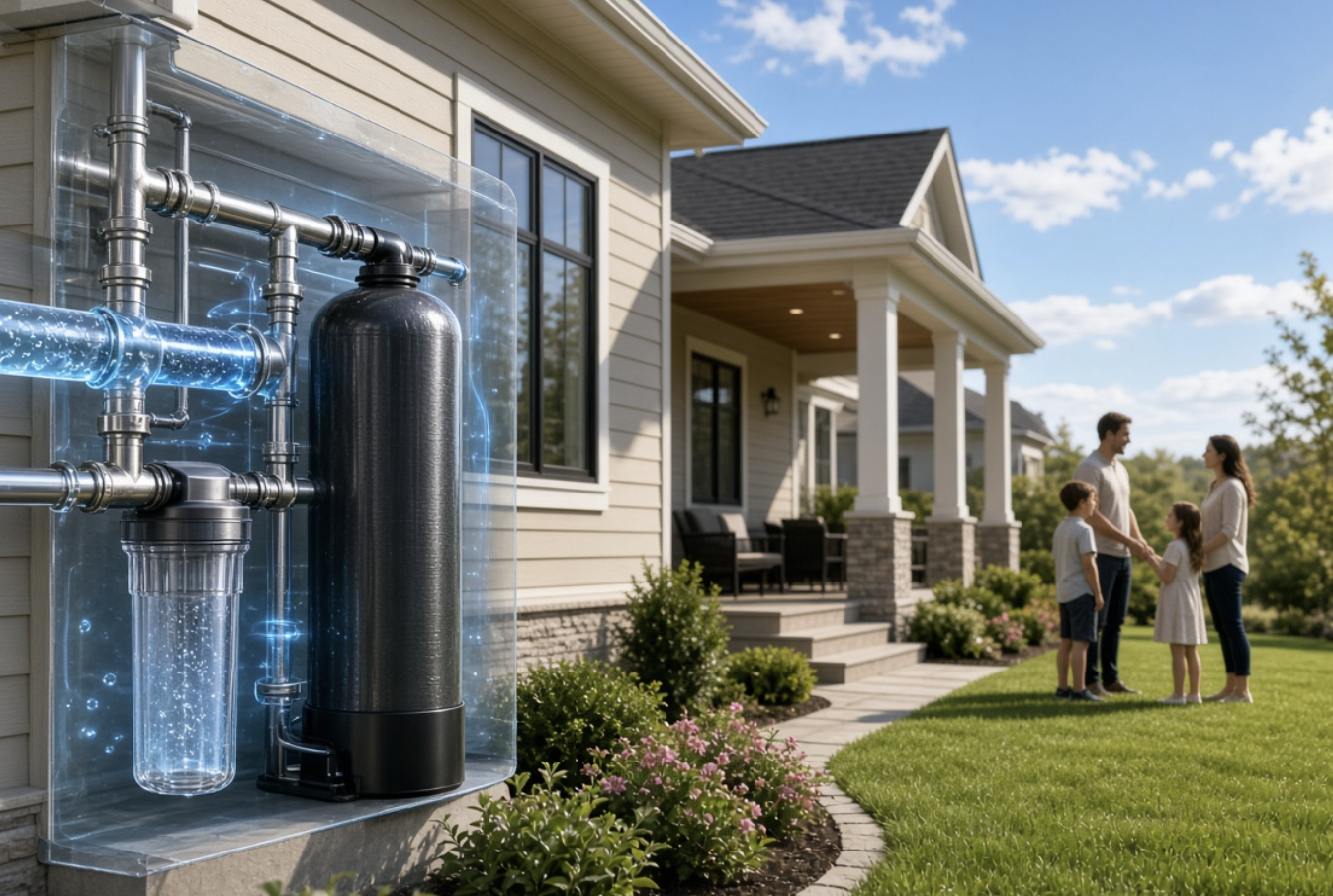
The core distinction in home water treatment is where the filtration happens. Point-of-entry systems, which is what “whole-house filtration” refers to, treat water as it enters the home, before it reaches any tap, shower, or appliance.
This placement typically means installation happens near the main water line, close to where it enters the house from the street or well, rather than tucked under a single sink or attached to one faucet. Point-of-use systems treat water at a single location, like an under-sink reverse osmosis unit or a refrigerator filter.
Whole-house systems make sense when the concern is something affecting the entire plumbing system, like hardness, sediment, or chlorine odor throughout the home. Point-of-use systems make more sense when drinking water quality is the main concern and the household isn’t worried about hardness affecting fixtures and appliances elsewhere. Many homes end up with both: a whole-house sediment and carbon system for general water quality, paired with a reverse osmosis unit under the kitchen sink specifically for drinking and cooking water.
Deciding between the two approaches, or combining them, often comes down to how a household uses its water day to day in practice. A family concerned mainly about pinhole leaks from mineral scale in pipes and appliances gets more practical value from a whole-house solution addressing hardness at the source. A household mainly worried about taste, odor, or specific contaminants in their drinking water might get sufficient benefit from a targeted point-of-use system alone, without the larger investment a whole-house install requires.
Carbon, Reverse Osmosis, and Sediment: The Main Technologies
Whole-house systems typically combine multiple filtration stages rather than relying on a single technology, since each stage targets different contaminants.
- Sediment filtration: removes visible particles like sand, rust, and dirt, usually as a first-stage pre-filter protecting later stages from clogging.
- Activated carbon filtration: absorbs chlorine, chloramine, and many organic compounds responsible for taste and odor issues.
- Water softening (ion exchange): addresses hardness by swapping calcium and magnesium ions for sodium or potassium, reducing scale buildup.
- Reverse osmosis: forces water through a semi-permeable membrane to remove a broad range of dissolved contaminants, though it’s more commonly installed at a single point of use given its slower flow rate and water waste.
- UV purification: uses ultraviolet light to neutralize bacteria and viruses, often added as a final stage for homes on well water.
A system tailored to specific water test results, rather than a generic package, tends to perform better and avoids paying for stages that address contaminants that aren’t present.
Some manufacturers now bundle smart monitoring into their filtration systems, tracking flow rate, filter life, and water usage through a connected app. These additions can help homeowners catch a failing filter or an unusual spike in water consumption, which sometimes signals a hidden leak elsewhere in the plumbing system, before it becomes a bigger and more expensive problem. The added convenience comes at a price premium over simpler mechanical systems, so it’s worth deciding whether the monitoring features add real value for a specific household or whether a basic, non-connected system covers the same practical need.
Installation Costs and What Drives Them Up
Whole-house filtration installation costs vary widely based on system complexity, home plumbing layout, and regional labor rates. Basic sediment-and-carbon systems sit at the lower end of the cost range, while systems combining softening, reverse osmosis, and UV purification climb notably higher.
Several factors tend to push installation costs up beyond the base equipment price: retrofitting an older home’s plumbing to accommodate the system’s placement, adding a dedicated electrical line for UV components, extending drain lines for softener backwash or reverse osmosis wastewater, and permitting requirements that vary by municipality.
Homes with well water sometimes need additional pre-treatment stages compared to homes on municipal supply, since well water can carry a wider range of contaminants including iron, sulfur compounds, or bacteria that municipal treatment already addresses before it reaches the home.
Labor costs vary as much by region as by system complexity, and getting quotes from at least two or three licensed plumbers or water treatment specialists before committing gives a clearer sense of a fair local price. Some installers bundle the equipment and labor into a single package price, while others itemize equipment and labor separately, which makes direct comparison harder unless a homeowner asks for both figures broken out.
Financing options, including manufacturer payment plans, are increasingly common for larger whole-house systems, spreading the upfront cost over a period that can make a higher-end system more approachable without paying the full price immediately.
Maintenance Schedules Homeowners Often Underestimate
A whole-house system isn’t a one-time installation that runs maintenance-free indefinitely. Filters need replacement on a schedule, and skipping that schedule can degrade water quality rather than simply reducing filtration efficiency, since a saturated carbon filter can release trapped contaminants back into the water.
- Sediment filters: typically need replacement every three to six months depending on water quality and household usage.
- Carbon filters: generally last six to twelve months before losing absorption capacity.
- Water softener resin and salt: resin beds last years, but salt (or potassium) needs regular refilling, often monthly.
- Reverse osmosis membranes: usually replaced every two to three years, with pre-filters changed more frequently.
- UV bulbs: typically replaced annually regardless of visible wear, since output degrades gradually and invisibly.
Homeowners who skip these schedules often end up disappointed with a system’s performance months after installation, not because the technology failed but because maintenance was treated as optional.
Setting calendar reminders tied to each component’s replacement schedule, rather than relying on memory or waiting for a noticeable drop in water quality, keeps a system performing as intended without requiring constant attention.
Several manufacturers now offer subscription-based filter replacement programs that automatically ship new cartridges on a set schedule, which removes the guesswork for homeowners who would otherwise forget until a problem shows up. The modest added cost of a subscription program is often worth it simply for the peace of mind of not having to track multiple replacement intervals across different system components manually.
Comparing Brands Like Aquasana, SpringWell, and Culligan
A handful of established brands dominate the whole-house filtration market, each with a somewhat different approach.
- Aquasana: known for combining carbon-based whole-house systems with UV add-ons, often marketed toward homeowners wanting a straightforward multi-stage setup without a full water softener.
- SpringWell: offers both salt-based and salt-free softening options alongside whole-house filtration, appealing to households with specific preferences around sodium in their water.
- Culligan: a longtime name in water treatment with a dealer-based model that includes professional installation and ongoing service plans, often at a premium compared to DIY-oriented competitors.
Beyond brand reputation, warranty terms, filter replacement costs over time, and the availability of local service technicians matter as much as the initial equipment price, especially for systems involving softeners or UV components that occasionally need professional troubleshooting.
Reading customer reviews with an eye toward long-term ownership experience, rather than just initial installation satisfaction, tends to surface more useful information than star ratings alone. Complaints that consistently mention slow customer service response times, hard-to-find replacement filters, or unexpected repair costs after the warranty period ends are worth weighing heavily, since these issues tend to matter more over a system’s multi-year lifespan than any small difference in upfront price between comparable brands.
Well Water Versus Municipal Water Needs
Households on well water generally have more variable and less predictable water quality than those on municipal systems, since there’s no centralized treatment process testing and adjusting the water before it reaches the home. A municipal supply passes through a regulated treatment plant before reaching any single household, giving every home on that system a broadly similar starting point, while well water quality can differ a great deal between two houses on the same street depending on depth, geology, and what sits near the wellhead. That variability shapes what a whole-house system needs to address.
Municipal water is already treated for pathogens and regulated for a range of contaminants, so whole-house filtration for these homes often focuses on chlorine taste and odor removal, sediment from aging pipes, and hardness. Well water can require a broader approach, including iron and manganese removal, UV or chemical disinfection for bacteria, and testing for contaminants like nitrates or arsenic that vary heavily by region and aren’t subject to municipal treatment oversight. Annual well water testing is generally recommended regardless of whether a filtration system is in place, since conditions can shift with seasonal changes or nearby land use.
Homeowners relying on well water should also factor in the well pump and pressure tank when planning a filtration system, since these components interact directly with whatever treatment equipment gets added downstream. An undersized pump struggling to maintain pressure through several filtration stages can create performance problems that have nothing to do with the filtration technology itself, which is why an experienced well water specialist, rather than a general plumber unfamiliar with well systems, is often worth the extra effort to find for this type of installation.
When Renting Makes More Sense Than Buying
Some water treatment companies, including regional Culligan dealers, offer rental or lease programs for whole-house systems, especially softeners, as an alternative to purchasing outright. Renting typically includes maintenance and filter replacement as part of the monthly fee, which appeals to homeowners who want predictable costs without tracking replacement schedules themselves.
Buying outright tends to cost less over a multi-year period for anyone planning to stay in a home long-term, since the monthly rental fees eventually surpass the purchase price of comparable equipment. Renting can make more sense for short-term homeowners, renters themselves in situations where a landlord permits installation, or anyone who wants to test whether a system truly improves their water before committing to a larger purchase.
Final Thoughts
Whole-house filtration isn’t a universal necessity, but for households dealing with hard water, chlorine odor, aging plumbing, or well water without existing treatment, it addresses problems that a countertop pitcher simply can’t reach. The investment pays off most clearly for homeowners planning to stay put for several years, since the upfront cost and installation effort spread out over time rather than delivering value in the first few months alone.
Homeowners weighing the decision against a move within the next year or two often find the math tilts toward a simpler point-of-use solution instead, saving the larger investment for whichever home ends up being a longer-term residence. A water test before shopping, rather than after, keeps the process focused on the contaminants present rather than a generic multi-stage package that may not match the home’s real needs.
Frequently Asked Questions
1. How long does a whole-house water filtration system last?
The housing and plumbing components of a whole-house system often last a decade or more with proper maintenance, though individual filter cartridges, membranes, and UV bulbs need replacement much more frequently. Water softener resin beds typically last eight to fifteen years before needing replacement.
2. Will a whole-house filter reduce water pressure?
Some reduction in water pressure is common, especially with multi-stage systems or reverse osmosis, though a properly sized system installed by an experienced technician should keep any pressure drop minimal. Undersized systems or clogged filters overdue for replacement are the more common causes of noticeable pressure loss.
3. Does whole-house filtration remove lead from water?
It depends on the specific filtration stages included. Standard carbon and sediment filters don’t reliably remove lead, so homes with known lead concerns, often tied to older plumbing or lead service lines, typically need a system specifically certified for lead reduction, such as certain reverse osmosis configurations.
4. Is a water softener the same as a water filter?
No. A water softener specifically addresses hardness by removing calcium and magnesium, while a water filter targets a broader range of contaminants like chlorine, sediment, or organic compounds. Many whole-house systems combine both functions, but they serve different purposes.
5. How much does whole-house filtration cost per year to maintain?
Ongoing costs vary based on system complexity, but most homeowners can expect to budget for periodic filter replacements, softener salt, and occasional professional servicing. Systems with reverse osmosis or UV components generally carry higher ongoing costs than basic sediment-and-carbon setups.
6. Can I install a whole-house filtration system myself?
Basic sediment and carbon systems are within reach for homeowners comfortable with plumbing work, while systems involving softeners, UV components, or electrical connections often benefit from professional installation to ensure proper sizing and code compliance. Many manufacturers also require professional installation to keep warranty coverage valid.