Water heating is one of the largest energy uses in many homes, often second only to heating and cooling the rooms themselves. A heat pump water heater can deliver the same hot showers while drawing far less electricity than a conventional electric tank, but it only performs well in the right setting.
In this article we will explore how these machines work, what they need from your house, how they are installed and maintained, and how to decide whether one is a sensible replacement for your current heater.
The basic idea behind moving heat instead of making it
A standard electric water heater works like a toaster sitting inside a tank. Electricity flows through a heating element, the element gets hot, and the water around it warms up. Every unit of electricity you pay for becomes, at best, one unit of heat in the water. That is a perfectly reliable method, but it has a ceiling on efficiency that no design improvement can break.
A heat pump takes a different route. It uses electricity to run a small compressor and a fan, and those parts carry heat that already exists in the surrounding air into the water. The same principle runs your refrigerator, only in reverse: a fridge pulls heat out of its cabinet and releases it into your kitchen, while a heat pump water heater pulls heat out of the room and releases it into the tank. Because the machine is relocating heat rather than creating it, it can deliver more heat energy than the electrical energy it consumes.
The ratio between heat delivered and electricity used is often called the coefficient of performance. For household heat pump water heaters, figures of roughly two to four are commonly quoted, which means each unit of electricity brings two to four units of heat into the water. The exact result depends on the air temperature around the unit, the temperature of the water already in the tank, and the design of the machine. A warm room and cooler incoming water make the job easier, while a cold room and a nearly hot tank make it harder.
It helps to remember that the heat has to come from somewhere. In a heat pump water heater the source is the air in the room where it stands, and that air is slowly cooled as the unit runs. This is why placement is such a central topic, and why the same appliance can be a great fit in one home and a poor one in the next. The remaining sections walk through the parts, the room requirements and the practical decisions in order.
Inside the tank: the parts that do the work
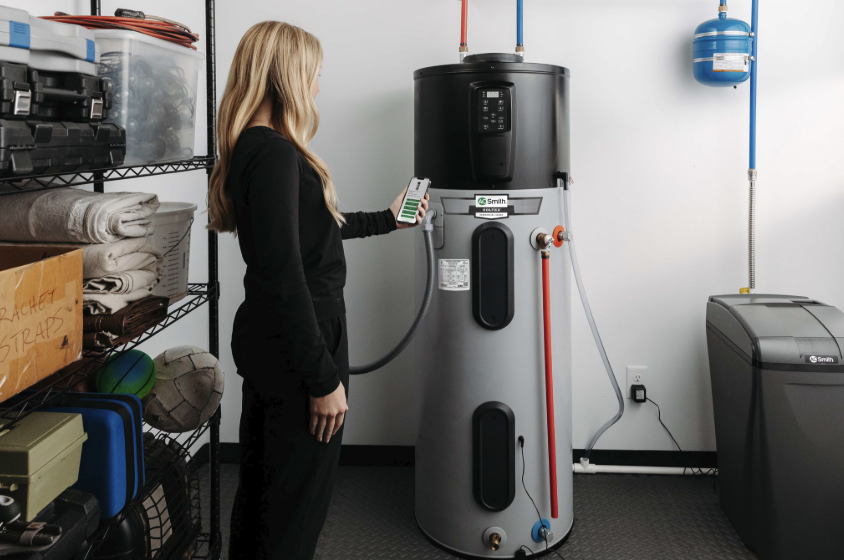
From the outside, most heat pump water heaters look like a tall tank with a rounded cap on top. That cap holds the heat pump hardware, while the tank below it stores hot water much as any other storage heater does. Some designs place the heat pump components beside the tank, and a few products sit on the wall, but the tall cylinder with a top module is the most common layout for households.
The heat pump module has four main components. An evaporator is a coil, with a fan blowing room air across it, where a refrigerant absorbs heat and turns into a gas. A compressor squeezes that gas, which raises its temperature well above that of the water in the tank. A condenser, usually wrapped around or placed inside the tank, passes the heat to the water as the refrigerant turns back into liquid. Finally an expansion device lowers the pressure of the liquid so the cycle can begin again.
Most units also keep one or two ordinary electric heating elements in the tank as backup. These elements switch on when you ask for a faster recovery, when the room is too cold for the heat pump to work well, or when a fault stops the heat pump section. Having them means you will not be left with cold water if the weather turns or the compressor needs service. It also means the unit can behave like a conventional electric heater at times, so how often those elements run has a large effect on your power bill.
The rest of the appliance will look familiar. There is an insulated storage tank, usually made of steel with a protective lining, a sacrificial anode rod to slow corrosion, a temperature and pressure relief valve for safety, and hot and cold water connections at the top. There is also a drain valve at the bottom and a small drain or tube for condensation, because cooling the air makes moisture form on the evaporator coil. Refrigerant types vary by product and region, and they are sealed inside the module at the factory, so ordinary owners should never need to handle them.
Efficiency, running costs and the climate question
The main reason people choose a heat pump water heater is lower electricity use. Compared with a standard electric resistance tank, a heat pump unit commonly uses a good deal less energy to heat the same amount of water, and published efficiency ratings for these products are normally much higher than for resistance models. The size of your saving depends on how much hot water your household uses, what your local electricity costs, and how many hours the unit spends in heat pump mode rather than backup mode. A single person living alone will save fewer units than a family of five doing daily laundry.
It is important to compare against the right alternative. If your current heater burns natural gas, propane or oil, the comparison turns on local fuel prices and electricity prices, which differ widely between regions and change over time. In places where electricity is relatively cheap compared with gas, a heat pump unit can be attractive on running costs alone. In places where gas is cheap and power is costly, the case rests more on emissions, safety or the wish to remove combustion appliances from the house.
The climate case is easier to describe in general terms. A heat pump water heater turns each unit of electricity into several units of heat, so as the electricity supply gets cleaner, the emissions linked to a hot shower tend to fall. Even on a grid with a fair share of fossil generation, using less electricity for the same hot water usually means fewer emissions than a resistance heater would cause. Homes with their own solar panels can also schedule heating for sunny hours and store the energy as hot water, which is a simple form of home energy storage.
There is one more effect to weigh: the heat taken from the room has to be replaced. In summer, the cool and dry exhaust air from the unit is a mild benefit, since it takes a little load off an air conditioner or dehumidifier in a basement or utility room. In winter, the unit draws heat that your furnace or heating system supplied, so some of the saving is offset by extra space heating if the machine stands inside the heated part of the house. The net result still tends to favour the heat pump in many climates, but it is the reason you should avoid assuming that the efficiency label tells the whole story.
Upfront cost deserves honest attention too. A heat pump water heater normally costs more to buy and install than a basic tank of the same capacity, and the extra work around drains, wiring or ducting can add to the invoice. Many governments and electricity suppliers have offered rebates, tax credits or low-interest loans for efficient water heating, but programs differ by country and change from year to year, so ask your local utility or energy agency what applies where you live. Then compare the whole-life cost, including the likely years of use, rather than the price tag alone.
Space, airflow and temperature: does your home suit one
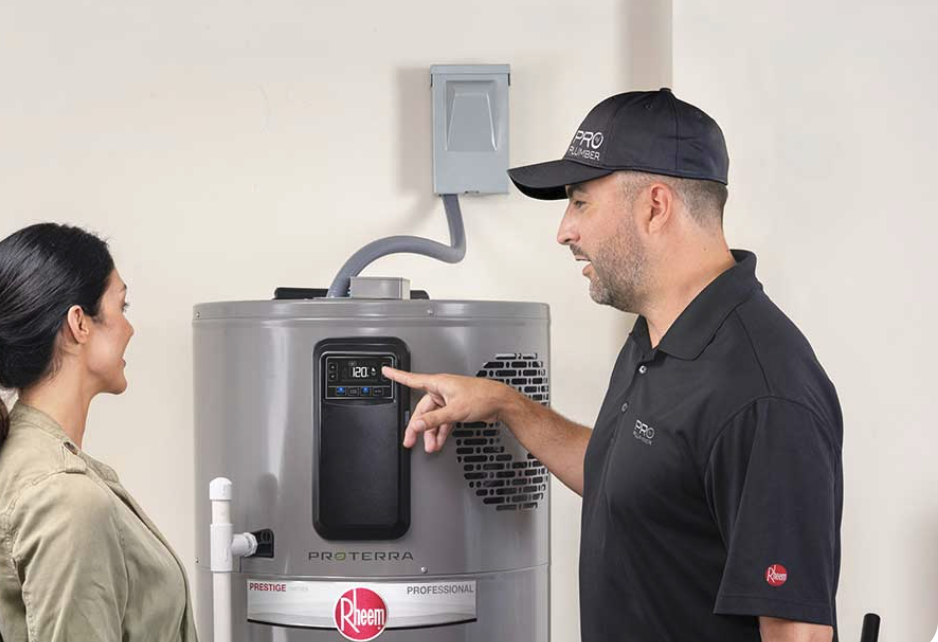
Start with the room. A heat pump water heater needs a reasonable volume of air to draw from, and manufacturers commonly state a minimum room size for installation without ducts, often in the region of several hundred cubic feet or a few tens of cubic metres. A garage, basement, large utility room or unfinished storage space usually meets that standard. A cupboard or a tight closet generally does not, unless the door is fitted with louvres or the unit is connected to ducts that bring in air and send it out again.
Next, consider temperature. Most units are designed to run in heat pump mode only when the surrounding air sits inside a stated range, commonly from somewhere near freezing or a little above up to the low thirties in degrees Celsius. Below the lower limit the compressor stops and the electric elements take over, which erases much of the saving. A garage that drops below freezing in winter, or an outbuilding with no heat, is therefore a poor choice in cold regions unless the manufacturer lists the model for such use.
The table below gives a quick way to judge common locations. Treat it as a screening tool and not a verdict, since the final answer depends on the product you choose and on local building rules. Rooms that score well still need a drain and a power supply nearby.
| Location | Usually suits a heat pump water heater? | Main points to check |
| Large unfinished basement | Often yes | Condensate drainage, enough volume, floor drain nearby |
| Attached garage in a mild climate | Often yes | Winter lows, space for the tank, vehicle clearance |
| Garage in a cold climate | Sometimes | Backup element use, manufacturer temperature range |
| Heated utility room | Yes, with care | Noise, winter heat loss, some air circulation |
| Small closet | Rarely without changes | Louvred door or ducts, service access |
| Tiny apartment cupboard | Usually no | Volume, drainage, building rules |
Noise is the next filter. The compressor and fan produce a steady hum that is often compared with that of a dehumidifier or a large refrigerator, which is fine in a basement but can irritate you if the unit sits against a bedroom wall. Ask the supplier for the sound rating, and if possible listen to a similar installed unit before you commit. Also look at the ceiling height, since the top module makes these tanks taller than many standard heaters, and check that you can reach the air filter and the drain for later work.
Finally, think about the people and habits in the house. Households with steady, moderate hot water use suit a heat pump unit well, because the machine can reheat the tank slowly and efficiently overnight or midday. Households with very large bursts of use, such as several long showers in a row or a big soaking tub, may lean on the backup elements more often. If that sounds like you, choose a larger tank, or pick a mode that allows faster recovery at busy times of year.
Installation details that decide success
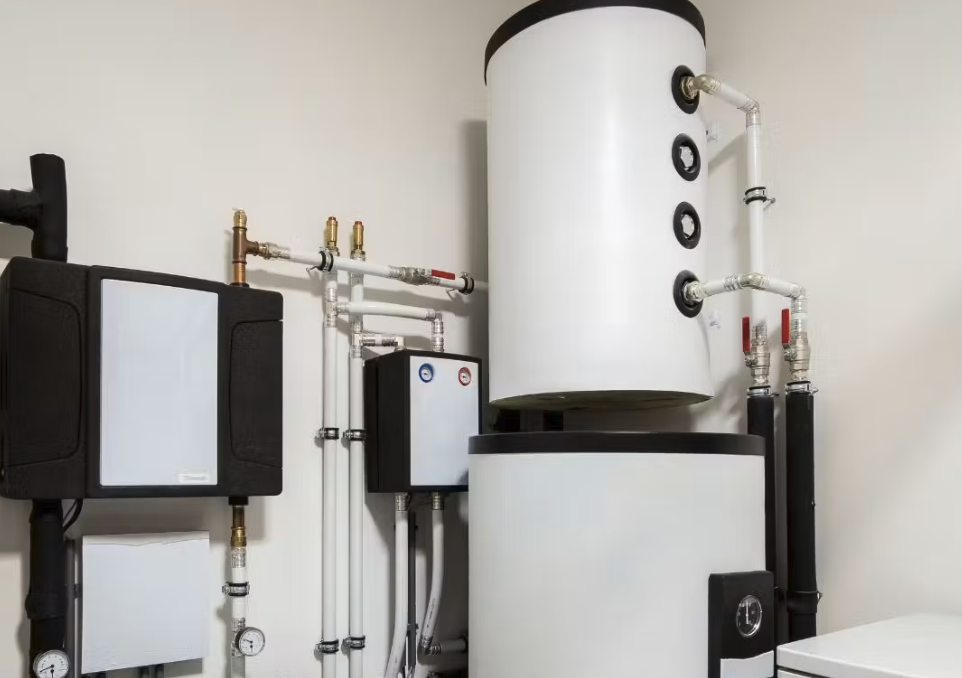
Most of the real-world problems with heat pump water heaters trace back to installation. The first matter is the condensate. As the evaporator cools the air, moisture collects and has to go somewhere, so the unit needs a drain line that runs downhill to a floor drain, a laundry sink or a condensate pump. In a basement with no drain nearby, a small pump is a common solution, but it adds one more part that can fail, so ask about a reliable model and an overflow safeguard.
The second matter is electricity. Many heat pump water heaters are built to use the same kind of supply as a standard electric tank, and some can even be connected to an existing circuit. Others need a dedicated circuit or a different voltage, and a few smaller models can plug into an ordinary outlet. Requirements vary by country and product, and wiring work should be done by a licensed electrician who knows local codes. If you are switching from gas, expect to budget for new wiring, and check whether your electrical panel has room for it.
Third, plan the airflow. Leave the clearances in the installation manual around the air intake and outlet so that the unit does not recirculate its own cold exhaust, and never block the filter or stack storage boxes against it. If you plan to use ducts, short and straight runs work best, since long runs with many bends add resistance and reduce efficiency. Ducting can also let you draw air from outdoors or from another room, which is useful where the machine stands in a living space and you do not want it cooling the house.
Work through the project in a sensible order. Measure the room, the doorways and the ceiling height, and note where the drain, the electrical panel and the water pipes are. Ask at least two licensed installers for written quotes that cover the same scope of work, including how condensate, airflow, noise and backup heating will be handled in your room. Check with your utility or local energy agency for rebates before you order, because some programs require approval in advance.
Operating modes and settings worth knowing
Most units offer several operating modes, and the names differ by brand. A typical set includes an efficiency mode that runs the heat pump alone, a hybrid or auto mode that adds electric elements when demand is high, a mode that uses the elements only for fast recovery, and a vacation mode that holds the tank at a low temperature while you are away. Some products also include a schedule that lets you heat water at times when electricity is cheap or when solar panels are producing power. Read your manual and pick the mode that matches your priorities for the season.
For most households a hybrid or auto mode is the safest everyday choice, since it keeps hot water available while using the heat pump for most of the work. Efficiency mode saves more but may leave you waiting for water to recover after a heavy load of laundry or a run of showers. Resistance-only mode costs the most to run and is best kept for short emergencies, such as a visitor weekend or a time when the heat pump section is waiting for repair. If your electricity supplier charges different rates at different hours, a timer or smart controls can shift much of the heating into cheaper hours.
Temperature settings need some care. In many countries, a household tap temperature of about 120 degrees Fahrenheit, or roughly 49 degrees Celsius, is commonly recommended to lower the risk of scalds, especially for children and older adults. At the same time, health agencies commonly note that storage tanks should not be held at lukewarm temperatures for long periods, because Legionella bacteria can grow in water between roughly 20 and 45 degrees Celsius. A common approach is to store water at a higher setting, often around 60 degrees Celsius, and use a thermostatic mixing valve at the outlet so that the water reaching taps is safer to touch.
Because rules and advice differ between countries, check what your local health or plumbing authority recommends, and talk to your installer about the best set point for your household. Anyone with a weakened immune system or a chronic lung condition should ask a doctor or local public health service whether extra precautions are wise. Many modern units run an automatic higher-temperature cycle from time to time to reduce bacterial growth, and your manual should say whether yours does. If you plan to leave the house empty for a long period, use vacation mode, and run a hot cycle and flush the taps when you return.
Maintenance and common problems
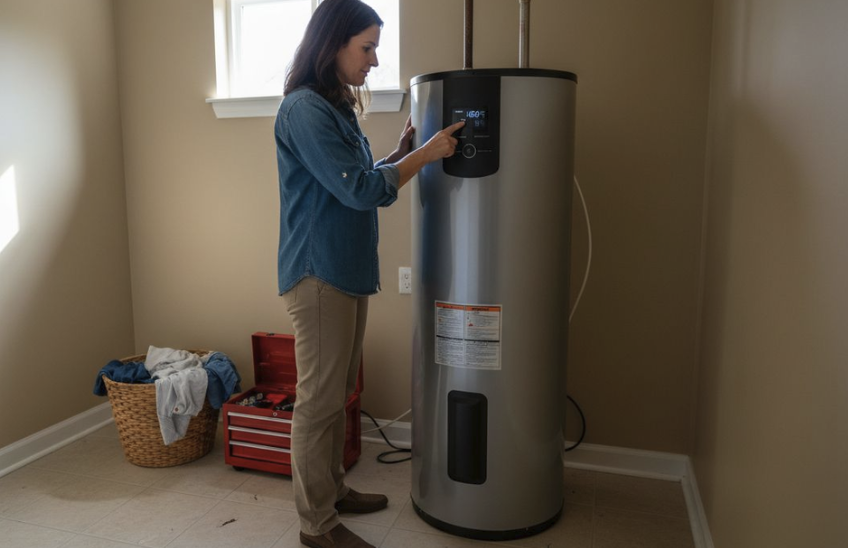
Heat pump water heaters ask for slightly more attention than plain tanks, but the tasks are simple. Clean or rinse the air filter every few months, or as the manual directs, since a clogged filter cuts airflow and makes the machine work harder. Check that the condensate drain is clear, and pour a little water into the pan or line to confirm it flows. Keep the area around the unit tidy, and watch for any signs of dampness, drips or rust at the base.
Once a year, it is wise to flush some water from the bottom of the tank to carry away mineral sediment. Sediment builds up faster in areas with hard water, and over time it insulates the elements and the tank bottom, reducing efficiency and shortening the life of the heater. Many manuals also recommend testing the temperature and pressure relief valve now and then by lifting its lever briefly, but follow your own instructions, because a worn valve can fail to reseat afterwards. If you are not confident about any step, hire a plumber, since a hot tank and pressurised water can cause injury.
When something goes wrong, a few symptoms are common. Little or no hot water may point to a tripped breaker, a blocked filter, an electrical fault or a heat pump section that has switched itself off and left the elements to work. A rattling or loud humming sound can mean a loose panel, a dirty fan or a failing component. Water on the floor might come from the condensate line, a loose pipe fitting or the tank itself, and leaks from the tank are a reason to turn off the water and power and call a professional. Most units display error codes, so keep the manual handy and note the code before you call for service.
Comparing the other ways to heat water
A fair decision needs a clear view of the alternatives. The table below sets out the main household options in general terms. Costs and availability differ widely by country and by region, so use it to frame your questions and not as a final answer.
| Option | How it heats | Typical strengths | Typical drawbacks |
| Heat pump water heater | Moves heat from air into a storage tank | Low electricity use, no on-site combustion | Needs space, drainage, suitable room temperature |
| Standard electric tank | Resistance elements in a tank | Simple, low purchase cost, easy installation | High running cost for electricity |
| Gas or propane tank | Burner under or in a storage tank | Fast recovery, familiar technology | Needs flue and fuel supply, combustion emissions |
| Gas tankless heater | Burner heats water as it flows | Endless hot water, compact | Needs venting, may need larger gas supply, servicing |
| Electric tankless heater | Elements heat water on demand | Compact, no standby loss | Very high electrical load, often needs a panel upgrade |
| Solar water heating | Collectors on the roof heat water | Low running cost in sunny areas | Higher setup cost, needs a backup heater |
If you already have solar panels, a heat pump water heater pairs well, since it can use midday power that might otherwise be sold back to the grid at a low rate. If you live in a very cold area and the only space is an unheated outbuilding, a different option may serve you better. And if your gas supply is cheap and your boiler or furnace also supplies a combined system, replacing it as part of a wider upgrade may be wiser than changing the water heater alone. A good installer will talk through these cases and will not push one answer for every house.
Conclusion
Begin with a short survey of your own home, because that will rule out or confirm the idea more quickly than any brochure. Find your current water heater and note its type, capacity, age and fuel. Then look at the surrounding space: its size, its winter and summer temperatures, the nearest drain and the distance to your electrical panel. If the unit is more than ten years old, or if you have noticed rust, leaks or falling performance, start planning the replacement now rather than waiting for a failure that leaves you without hot water on a cold morning.
Next, gather a few facts about your household, such as the number of people, the daily pattern of showers and laundry, and the typical energy bills over the year. Use these to ask for quotes that compare a heat pump unit with a like-for-like conventional replacement, and ask the installer to estimate the yearly running cost of each using your local energy prices. Ask about rebates and incentives with your utility or your national or regional energy agency. Make sure the quote lists the work for drains, wiring, valves, permits and removal of the old tank, so that you can compare the total and not just the appliance price.
If the site works, choose a unit with a tank size that fits your peak use, a warranty you are happy with, and a service provider within easy reach. Set it to hybrid or auto mode at first, adjust the temperature with a mixing valve as advised, and note the settings in your home folder. Then check your power bill after a couple of months to see whether the result matches what you were told. If the site does not work, ask whether a different heat pump design, a ducted setup, or a better insulated conventional tank would meet your needs. For any questions about wiring, gas lines or water safety, rely on a licensed electrician, plumber or heating professional, and for questions about water temperature and health risks, a doctor or local public health service can advise you.