When the days shorten, many people notice they feel flatter, sleepier and less motivated than they do in summer. For some this is a mild seasonal dip, and for others it grows into a depression that affects work, relationships and daily life.
In this article we will explore why darker months change mood and energy, how light therapy lamps are thought to work, how to choose and use one safely, who should check with a doctor first, and which everyday habits can support the lamp.
Seasonal changes in mood and energy are common
Many people feel somewhat different in winter. They sleep longer, crave carbohydrate-rich foods, find it harder to get out of bed, and have less interest in social plans. For a lot of people this pattern is mild and passes as the days lengthen again. It is sometimes called the winter blues, and it is not a medical diagnosis.
A smaller group experiences a more serious pattern known as seasonal affective disorder, often shortened to SAD. This is a form of recurring depression that follows the seasons, usually starting in autumn or early winter and easing in spring. Typical signs include persistent low mood, loss of interest in things once enjoyed, heavy tiredness, oversleeping, weight gain, and trouble concentrating. The condition tends to be more common the farther a person lives from the equator, because winter daylight is shorter there, although it can occur anywhere.
Because the symptoms overlap with other forms of depression, a proper assessment matters. A doctor can ask about your history, rule out other causes such as thyroid problems or low iron, and discuss treatment choices. Those may include light therapy, talking therapies, medicines, or a combination. It is worth seeing a doctor if your low mood lasts more than about two weeks, interferes with daily life, or returns each year at the same time.
If you ever have thoughts of harming yourself or feel that life is not worth living, do not wait for a lamp to help. Contact your doctor, a local crisis line or emergency services straight away, and tell someone you trust. Help is available, and these feelings are treatable. A lamp can be a useful part of a plan, but it is never the whole plan for someone in distress.
Light works through the body clock
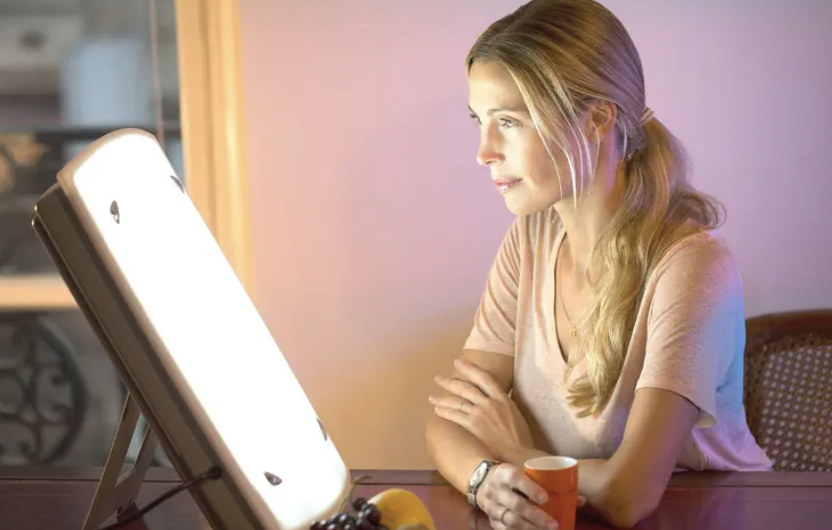
To grasp why a lamp might help, it helps to know how light affects the body. Special light-sensitive cells in the eye send signals to a small area of the brain that works as a master clock. This clock sets the timing of sleep, alertness, body temperature and the release of hormones such as melatonin. Bright light in the morning tells the clock that the day has begun, and that helps keep sleep and waking on a regular rhythm.
In winter, people often wake in the dark, spend the day indoors under dim lighting, and get little natural light. Indoor lighting is usually far weaker than daylight, even on a gray day. A cloudy sky outdoors can still deliver thousands of lux, while a typical living room may offer only a few hundred. The brain may therefore receive a weaker signal, which could contribute to a drifting body clock and low mood in people who are sensitive to it.
Light therapy aims to replace some of the missing morning light with a bright, filtered source. Researchers have proposed a few explanations, including a reset of the body clock and effects on chemical messengers in the brain such as serotonin, but the exact mechanism is not fully settled. What is well established is that bright light therapy has been studied for many years and is recognized in several clinical guidelines as an option for seasonal depression. Results vary from person to person, and some people respond well while others notice little change.
It is also worth knowing that a lamp is not the same as a tanning bed or a sunlamp. Therapy lamps should filter out ultraviolet rays, which can harm skin and eyes. They also differ from ordinary bright household bulbs, because a standard bulb cannot deliver therapeutic brightness at a comfortable viewing distance. When shopping, look for a product that is clearly sold for this purpose.
Seasonal changes affect families and workplaces as well as individuals. A child may become more irritable at school, a partner may withdraw from shared plans, and a team member may struggle with focus during the shortest days. Noticing these patterns early gives everyone time to respond kindly and practically. Simple steps, such as a bright shared breakfast spot or a walk at lunchtime, can help more than people expect.
Choosing a lamp: brightness, size and safety features
Brightness is measured in lux, and the lux rating only means something when paired with a distance. A lamp that offers 10,000 lux at 30 centimeters will give far less at 60 centimeters. Most guidance mentions 10,000 lux as the commonly recommended strength for a session of 20 to 30 minutes. Lamps with lower ratings, such as 2,500 lux, may need much longer sessions, often a couple of hours, which is harder to fit into a morning.
Ultraviolet filtering is the next feature to check. A good therapy lamp states that it filters UV light, and many are designed to produce a diffuse white light that is gentler to look at than a bare bulb. Avoid products that do not mention UV at all. Some brands carry safety marks or declare that they meet medical device standards in their country, and rules on this differ from one region to another, so read the details for your market.
Size and design matter for daily use. A larger panel lets you sit at a comfortable distance and moves the light across more of your field of view, whereas a small desktop unit may force you to sit very close. Adjustable stands, tilt angles and a timer are handy. Think about where you will place the lamp, such as on a kitchen counter, a desk or a dining table, and whether it will be easy to switch on without effort.
Blue-enriched lamps and white full-spectrum lamps are both sold. Many clinical guidelines refer to white light with a broad spectrum, and there is no need to pay extra for unusual colors. The table below compares the main features so you can weigh them against your budget and routine.
| Feature | What to look for | Why it matters |
| Brightness | About 10,000 lux at a stated distance | Shorter sessions with a recognized dose |
| UV filter | Clearly stated on the label | Protects skin and eyes |
| Panel size | Large enough to sit comfortably in front of | Better coverage and comfort |
| Light color | Broad white light | Matches most guidance |
| Stand and angle | Adjustable height and tilt | Lets the light reach your eyes from slightly above |
| Timer | Built-in or easy to add | Keeps sessions consistent |
| Return policy | A fair trial period | Lets you test whether it suits you |
Finally, be wary of exaggerated claims. A lamp should not promise to cure depression, and you should be cautious of products that give no lux figure or distance. Consumer reviews can help with comfort and build quality, but they are no substitute for medical advice. If you are unsure which type suits you, ask your doctor, pharmacist or an optometrist.
Not everyone responds to light in the same way, and age, genetics, sleep habits and general health all play a part. Some people feel clearer within days, others feel nothing, and a few feel slightly worse at first. None of these reactions is a failure, and they simply tell you and your doctor something about what to try next. Keeping a short record makes the pattern easier to see.
Setting up and using a lamp step by step
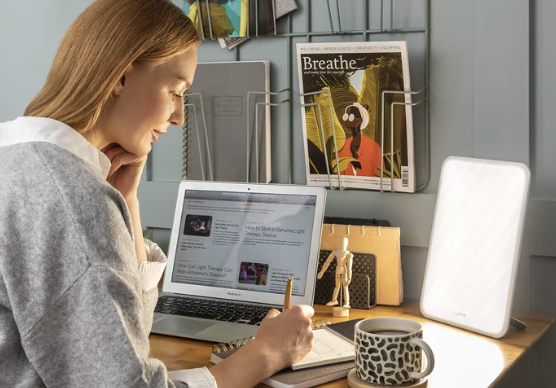
A good setup makes the lamp easy to use, and ease of use is what leads to regular sessions. Follow these steps for your first week, and adjust as you learn what works for your home. Each step is simple, and the aim is to build a routine you can maintain.
First, read the instructions that come with your lamp, because the manufacturer states the correct distance for the stated brightness. Place the lamp on a stable surface at that distance, usually between 20 and 60 centimeters, and angle it slightly downward so the light reaches your eyes from above. This mimics natural daylight and reduces glare. Make sure the power cable is out of walkways and the lamp is clear of water and clutter.
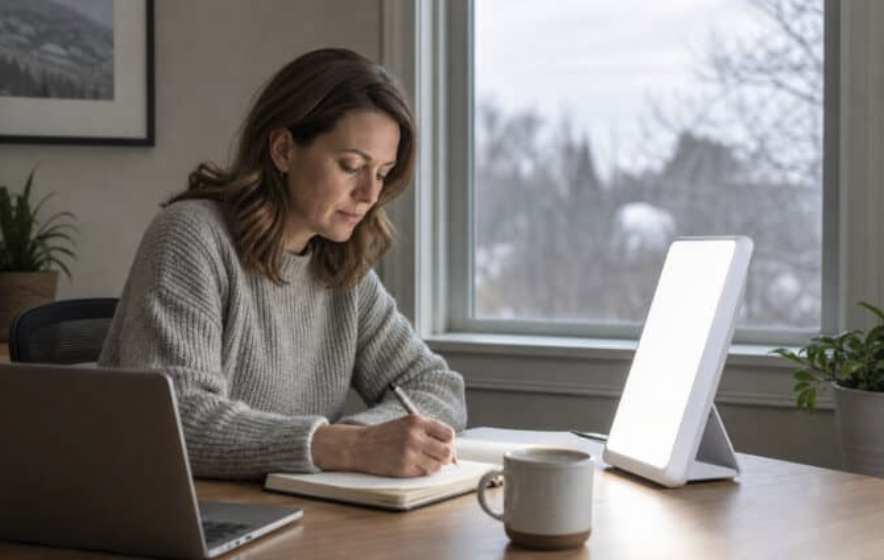
Second, sit in front of the lamp during an activity you can do easily without staring at it, such as eating breakfast, reading, using a laptop or having a cup of tea. Your eyes should be open, and you should glance toward the light now and then, but do not look directly into it. The light needs to enter the eyes, so closing them or facing away will defeat the purpose. Sunglasses and tinted glasses block some of the light, so remove them.
Third, begin with a shorter session, perhaps 10 to 15 minutes for the first few days, and build up to the recommended time if you feel comfortable. This lets you spot any headache or eye strain early. Use a timer so you are not guessing. After each session, jot down a quick note about your mood, energy and sleep, because changes can be gradual and are easy to miss.
Fourth, keep a consistent time every day, including weekends, since the body clock responds well to routine. Link the session to something you already do, such as pouring the first coffee, to make it automatic. If you travel, take a portable lamp or plan an outdoor walk instead. Keep the lamp somewhere visible, because a lamp tucked in a cupboard is a lamp that does not get used.
Timing and duration that suit different routines
Morning is the time most often suggested for light therapy. Using the lamp soon after waking, ideally within the first hour, sends a strong signal that the day has begun and helps shift the body clock earlier. Many people with winter low mood sleep late and feel groggy, so morning light fits naturally. A session of 20 to 30 minutes at 10,000 lux is a commonly recommended dose.
Evening use can backfire. Bright light late in the day suppresses melatonin and can make it harder to fall asleep, which may worsen tiredness the following day. If you notice that you are lying awake after using the lamp, move the session earlier or shorten it. People who work night shifts or have unusual schedules may need individual advice, since the right timing depends on when their sleep happens.
The effect usually takes time. Some people notice improvement within a few days, but many need one to two weeks of daily use, and some need longer. Treatment is often continued through the dark months and stopped in spring when natural daylight returns. Doctors may suggest starting the lamp in early autumn before symptoms begin for people with a clear yearly pattern, though this is a conversation to have with your own clinician.
If you find a session hard to fit in, think about the whole day. A person who commutes in the early hours might use a lamp at their desk for the first half hour of work, while a parent could place one on the breakfast table. Those with lower-lux lamps can compensate with longer sessions while working at a desk. The best timing is the one you will keep up.
Common mistakes are easy to avoid once you know them. People often sit too far from the lamp, use it for only a few days before giving up, stare directly into the light, or place it where they cannot see it from their seat. Others use it late in the evening and then blame the lamp for poor sleep. A quick check of distance, timing and consistency solves most of these problems.
Side effects and people who need medical advice
Light therapy is generally well tolerated, and side effects are usually mild and short-lived. The most common are headache, eye strain, nausea, dizziness, dry eyes and irritability. Some people feel jittery or restless, especially if they use the lamp for too long or too close. Most of these effects ease when you shorten the session, sit farther away, or move the time earlier in the day.
Certain people should speak to a doctor before using a lamp. These include anyone with an eye condition, such as macular degeneration, glaucoma, cataracts or retinal disease, or a history of eye damage, because bright light may not be suitable. People with diabetes, which can affect the retina, should also check. Those who have bipolar disorder need medical supervision, since bright light can sometimes trigger a manic or hypomanic episode. A person with a history of mania should not start a lamp on their own.
Some medicines and herbal products increase sensitivity to light. Examples can include certain antibiotics, some medicines for skin conditions, and St John’s wort, and the full list is long, so ask your pharmacist or doctor. Anyone who takes medicines that may affect the eyes or skin should confirm that a lamp is safe. Skin conditions that are triggered by light, such as lupus, also call for medical advice.
Stop using the lamp and seek advice if you develop eye pain, vision changes, severe headache, unusual agitation, racing thoughts, or markedly less need for sleep. If your mood worsens instead of improving, tell your doctor promptly. Pregnancy and breastfeeding do not usually rule out light therapy, but it is sensible to mention it to your midwife or doctor. Children and teenagers should only use these lamps with guidance from a health professional.
Practical care of the lamp itself is worth a mention. Keep the surface clean and dust-free with a soft dry cloth, unplug it before cleaning, and do not use it in damp areas such as bathrooms unless the maker says it is designed for that. Check the cable for fraying and stop using the lamp if it is damaged. Follow the maker’s instructions for lifespan, as some lamps lose brightness over the years.
Daylight habits that support a lamp
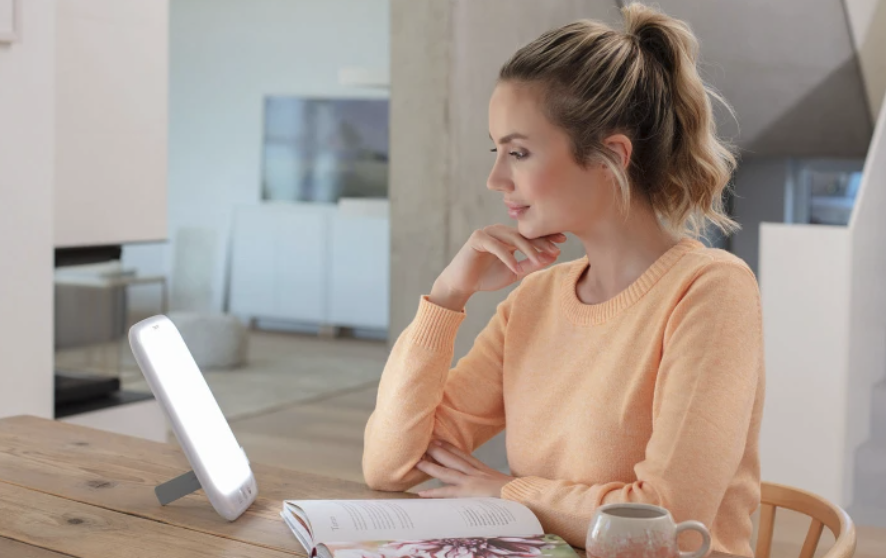
A lamp works best as part of a wider approach to light and routine. The simplest free source of bright light is the outdoors, and even a short walk in morning daylight is useful. On an overcast day, outdoor light is still much stronger than most indoor lighting. A 20 to 30 minute walk at lunchtime or before work can add to the lamp and make you feel more alert.
Arrange your home to let in more daylight. Open curtains and blinds as soon as you wake, clean windows, and move your desk or favorite chair close to a window. Pale walls and mirrors can reflect light into a room. If you work from home, take calls near a window, and try to eat at least one meal in the brightest spot you have.
Sleep habits make a large difference. Go to bed and get up at similar times each day, keep the bedroom dark and cool, and avoid bright screens in the hour before sleep. Limit caffeine in the afternoon and alcohol in the evening, as both can disrupt sleep and mood. A dawn simulator, a light that brightens gradually before your alarm, is an additional option that some people find gentler than a sudden alarm.
Movement, food and company also play a role. Regular physical activity, even a brisk walk, is linked with better mood, and sharing meals or plans with friends helps counter the urge to withdraw. Eat regular meals that include protein, vegetables and fruit, rather than relying only on sugary snacks. Vitamin D is sometimes discussed in winter, but you should ask your doctor before taking supplements, since needs and safe amounts vary by country and individual.
Costs, alternatives and realistic expectations
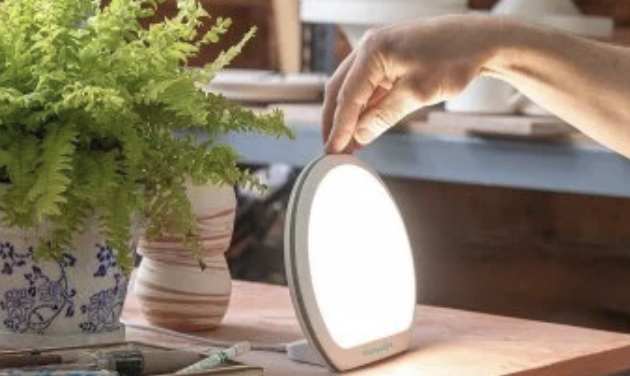
Light therapy lamps range from fairly affordable to quite expensive, and the price often depends on size, build quality and extra features. A higher price does not always mean a better lamp, so focus on a stated lux rating at a clear distance, UV filtering and a decent return policy. Some health systems or insurers may offer help with the cost, but this differs widely between countries, so ask your doctor or insurer. Libraries, community health services or workplace wellbeing programs sometimes lend lamps.
Light therapy is one option among several. Talking therapies, especially cognitive behavioral therapy adapted for seasonal depression, have good evidence. Antidepressant medicines may be recommended by doctors for moderate or severe cases, and they can be used with or without a lamp. Your doctor can explain the benefits and risks of each option, and the choice often depends on how severe your symptoms are and your personal preferences.
Keep your expectations realistic. A lamp may lift mood and energy for some people, but it will not remove every winter difficulty, and it is not suitable for all. If you see no benefit after several weeks of correct use, you have not failed. It is a sign to go back to your doctor and consider other approaches.
Be careful with online advice that promises a quick fix. Social media posts and advertising often blur the line between wellness and treatment. A product that helps one person may not suit another, so trust your own experience and professional guidance over hype. Used with sense, a lamp can be a safe and simple tool in your toolkit.
Travel and work patterns can disrupt a routine, so plan for them. If you are away, a compact travel lamp, a hotel room with a bright window, or an outdoor walk each morning can keep the habit going. Shift workers and people who move between time zones may want advice from a sleep specialist, since the best timing for light changes with their sleep schedule. A flexible mindset helps more than perfection.
Conclusion
Start by noticing your own pattern. Keep a short diary for two weeks, noting when you wake, how you feel in the morning and afternoon, your energy and your appetite. If your low mood is mild and follows the season, a lamp and daylight habits may be a reasonable first step. If it is heavy, long-lasting or affects your ability to function, book an appointment with your doctor before buying anything.
Use the checklist below to move from idea to routine. Work through it in order, and bring it to your appointment if you choose to see a doctor. Each row is short on purpose, so the whole list can be done in a single evening.
| Step | Action | Notes |
| 1 | Track mood, sleep and energy for two weeks | Look for a seasonal pattern |
| 2 | Check for eye conditions, bipolar disorder and light-sensitizing medicines | Ask a doctor or pharmacist if unsure |
| 3 | Choose a lamp with a stated lux at a distance and a UV filter | Check the return policy |
| 4 | Place it at the stated distance and use it in the morning | Begin with 10 to 15 minutes |
| 5 | Build up to 20 to 30 minutes at 10,000 lux | Follow the maker’s instructions |
| 6 | Review after two weeks | Keep going, adjust the timing, or seek advice |
Next, pick a spot in your home where the lamp will sit, and tie the session to a fixed routine such as breakfast. Add a daily outdoor walk and open your curtains early. Keep notes as you go, so that you and your doctor can judge what is working. Many people find that the notes themselves keep them motivated.
If your mood does not improve, or if it gets worse, contact your doctor without delay. Reach out immediately if you have thoughts of self-harm. Darker months can be hard, but there are practical, well-studied ways to support yourself, and a lamp is one of the easier ones to try.
Read more about Newolt