A damp or leaking basement is one of the more stressful home issues to deal with, both because water damage tends to worsen quickly if ignored and because the range of possible causes and solutions can feel overwhelming. Understanding the warning signs and general solution categories makes it much easier to respond appropriately rather than guessing.
Why Basements Are Especially Prone to Water Issues
Basements sit below grade, meaning surrounding soil exerts constant hydrostatic pressure against foundation walls, particularly after heavy rain or snowmelt. This pressure, combined with the basement’s position as the lowest point in a home where water naturally drains toward, makes basements inherently more vulnerable to water intrusion than any other part of a typical house.
Early Signs of Water Intrusion
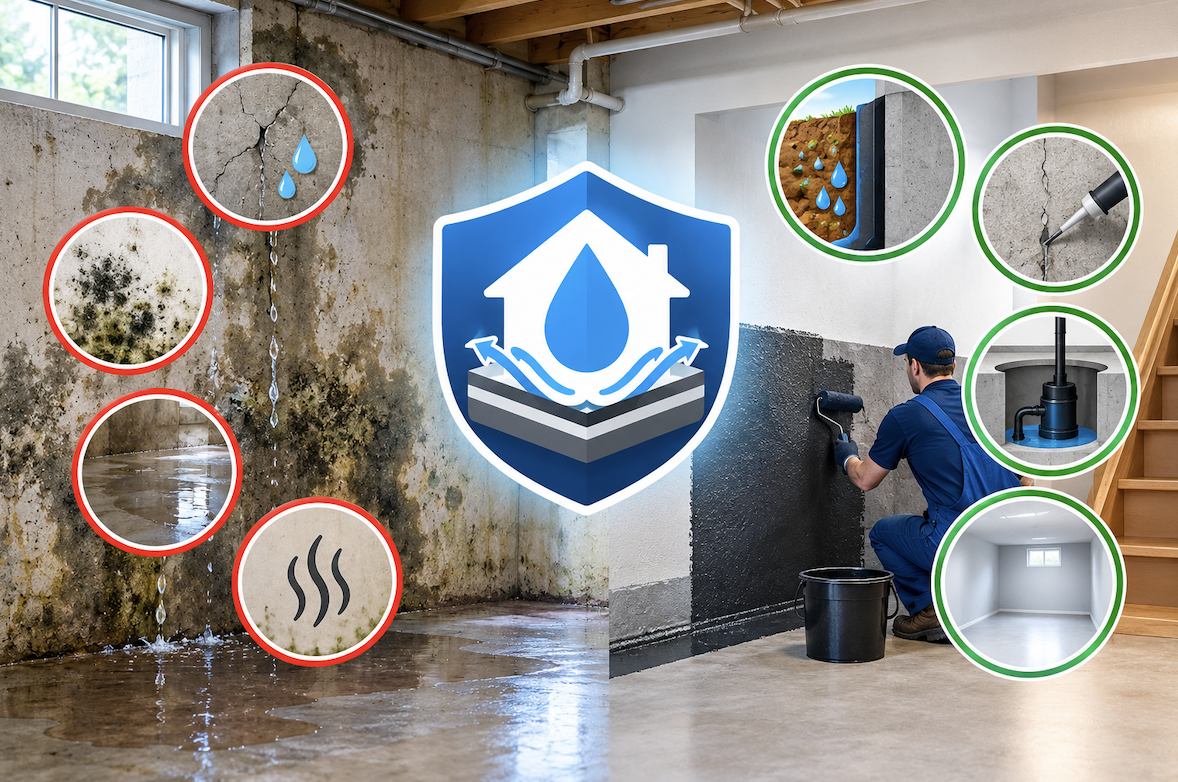
A musty smell, visible mold or mildew, white powdery mineral deposits on concrete walls (called efflorescence), peeling paint, and small cracks that appear damp or show mineral staining are all early indicators of moisture issues, often appearing well before visible standing water or obvious flooding occurs.
Catching these early signs allows for less invasive, less expensive intervention than waiting until the problem becomes severe.
How Seasonal Changes Affect Basement Moisture
Spring snowmelt and heavy rain seasons put the most stress on basement waterproofing systems, making these periods the most useful time to inspect for early warning signs before summer humidity adds condensation-related moisture on top of any drainage-related issues. Checking the basement specifically after the first significant rain of the season establishes a useful baseline for comparison later in the year.
Distinguishing Condensation From Genuine Leaks
Not all basement dampness indicates a structural leak condensation, caused by warm, humid air meeting cool basement surfaces, can create similar-looking moisture without any actual water intrusion through the foundation. A simple test involves taping a small piece of plastic wrap tightly to the wall for 24 hours: moisture appearing on the outside surface facing the room suggests condensation, while moisture trapped underneath against the wall suggests a genuine intrusion issue requiring a different solution.
Foundation Crack Types and What They Indicate
Hairline vertical cracks are common in poured concrete foundations as they cure and settle, and are often not a significant structural concern on their own. Horizontal cracks, or cracks that are wider at one end than the other, can indicate more serious structural pressure issues and warrant professional evaluation rather than simply sealing over them cosmetically.
Interior vs Exterior Waterproofing
Interior waterproofing methods manage water after it has already entered the basement space, typically through an interior drainage system directing water to a sump pump. Exterior waterproofing methods work to prevent water from reaching the foundation walls in the first place, through excavation and the application of waterproof membranes or exterior drainage systems, generally representing a more thorough but also more expensive and invasive solution.
Window Wells and Their Role in Basement Water Issues
Basement window wells that lack a proper cover or adequate drainage at the bottom can become a direct water entry point during heavy rain, funneling water against a section of foundation and window frame not otherwise designed for constant water exposure. Adding a window well cover and confirming its drainage connects properly into the surrounding soil or drainage system addresses this specific, often overlooked vulnerability.
How Sump Pumps Work
A sump pump sits in a small pit dug into the basement floor, collecting water that drains toward it through an interior perimeter drainage system, then pumping that water out and away from the foundation before it can accumulate. A battery backup sump pump system is worth considering specifically for homes in areas prone to power outages during heavy storms, since a standard electric-only sump pump becomes useless exactly when it’s needed most if the power goes out during a major storm.
French Drains Explained
A French drain is a trench containing a perforated pipe surrounded by gravel, designed to redirect groundwater away from a foundation before it can pool against basement walls. These can be installed on the interior, along the basement floor’s perimeter feeding into a sump pump, or on the exterior, intercepting water before it reaches the foundation at all, with exterior installation generally offering more thorough prevention at a higher installation cost.
Grading and Downspout Extensions: The Cheapest First Step
Before considering any interior or exterior waterproofing system, checking that the ground slopes away from the foundation, rather than toward it, and that downspouts extend water at least several feet away from the house rather than dumping it directly against the foundation, addresses one of the most common and most fixable causes of basement water issues at minimal cost. This step alone resolves a meaningful share of basement moisture problems without needing any more involved waterproofing system at all.
Sealants and Waterproof Coatings
Waterproof paint or sealant coatings applied to interior basement walls can help with minor dampness and efflorescence, but they’re generally not a reliable solution for active water intrusion under real hydrostatic pressure, since the pressure can eventually push water through or around the coating regardless of how well it was applied. These coatings work best as a complementary finishing touch after addressing the underlying drainage issue, rather than as a standalone fix for a genuine leak.
Vapor Barriers for Condensation Control
For basements dealing primarily with condensation rather than active leaks, a vapor barrier installed against foundation walls, combined with adequate ventilation, addresses the moisture source directly. This is a different solution category from drainage-focused waterproofing, reinforcing why correctly diagnosing condensation versus genuine intrusion, as discussed earlier, matters before choosing which type of solution to pursue.
Dehumidifiers: A Complement, Not a Fix
A dehumidifier reduces ambient humidity and can make a basement feel noticeably drier and less musty, but it doesn’t address an underlying water intrusion source and shouldn’t be relied upon as a substitute for actually resolving a genuine leak. It’s a reasonable complement to proper waterproofing, or a standalone solution specifically for condensation-related humidity rather than active water entry.
When to Call a Professional
Any sign of active water entry, visible cracks wider than a hairline, or mold growth beyond a small, easily cleaned area warrants a professional waterproofing assessment rather than DIY intervention alone. A qualified waterproofing contractor can identify the specific source and recommend an appropriately targeted solution, rather than guessing based on visible symptoms alone, which can sometimes point toward the wrong underlying cause.
A Simple DIY Assessment Before Calling a Professional
Walking the exterior perimeter of the home after a heavy rain, noting where water pools or flows toward the foundation, and checking gutters and downspouts for clogs or misdirection, gives useful information to share with a professional if the issue does require expert assessment, potentially speeding up their diagnosis and reducing the overall cost of the visit.
Understanding Cost Considerations
Grading and downspout adjustments represent the most budget-friendly starting point, while interior drainage systems with a sump pump represent a moderate investment, and full exterior waterproofing with excavation represents the most expensive but also most thorough solution. Getting multiple professional assessments and quotes, particularly for exterior work, helps confirm that the recommended solution genuinely matches the severity of your specific situation rather than defaulting to the most expensive option available.
Considering a Basement’s Intended Use
A basement intended for finished living space or storage of valuable items justifies a more thorough waterproofing investment than an unfinished basement used only for utilities and infrequent storage, where a more modest, condensation-focused approach might reasonably suffice depending on the specific severity of any moisture issues present.
Preventive Maintenance to Avoid Future Issues
Regularly cleaning gutters to prevent overflow near the foundation, periodically checking that grading hasn’t shifted over time (soil can settle and change slope gradually), and testing a sump pump periodically by pouring water into the pit to confirm it activates properly are all low-cost habits that prevent the more serious, expensive problems covered throughout this guide.
Common Basement Waterproofing Mistakes
Applying a waterproof paint coating without addressing an underlying drainage or grading issue is a common mistake that provides only temporary, cosmetic improvement before the same moisture problem resurfaces. Ignoring early warning signs like a musty smell or minor efflorescence, assuming they’re not serious enough to investigate, is another common pattern that allows a manageable issue to develop into a more expensive, structural one over time.
Documenting Repairs for Future Home Sale
Keeping records and photos of any waterproofing work performed, including receipts and warranty information from professional contractors, provides valuable documentation for a future home sale, since buyers and their inspectors often ask specifically about past basement moisture issues and how they were addressed.
Insurance Considerations
Most standard homeowners insurance policies don’t cover gradual water damage or flooding from groundwater, which is generally why basement waterproofing is treated as a homeowner maintenance responsibility rather than an insurable event. Checking your specific policy’s language, and considering separate flood insurance if you’re in a flood-prone area, is worth doing before assuming standard coverage would handle a basement water damage claim.
A Quick Pre-Purchase Checklist
Before finalizing a basement waterproofing decision, confirming grading and downspouts are already properly addressed, getting at least two independent professional assessments for anything beyond minor cosmetic dampness, and checking contractor reviews and licensing specifically for waterproofing work rather than general contracting, sets up a more informed final decision.
The Bottom Line
Most basement water issues start with correctable, low-cost fixes like grading and downspout adjustments before requiring a more involved drainage or waterproofing system. Correctly distinguishing condensation from genuine water intrusion, and involving a professional for anything beyond minor dampness, prevents both wasted effort on the wrong solution and the risk of a minor issue developing into significant structural damage.
- Read more about Newolt