Kitchen counters have gotten crowded over the past several years as air fryers have gone from a niche gadget to a standard appliance in millions of homes, often sitting right next to a full-size oven that already has a convection setting built in. That overlap raises a fair question: if a convection oven already circulates hot air to crisp and brown food, what exactly does a separate air fryer add?
The short answer is that both appliances rely on the same basic principle, moving hot air rapidly around food to cook it evenly and create a crisp exterior, but they differ enough in size, airflow intensity, and convenience that each has a clear place in a well-equipped kitchen.
Cooking Mechanics and Heat Distribution
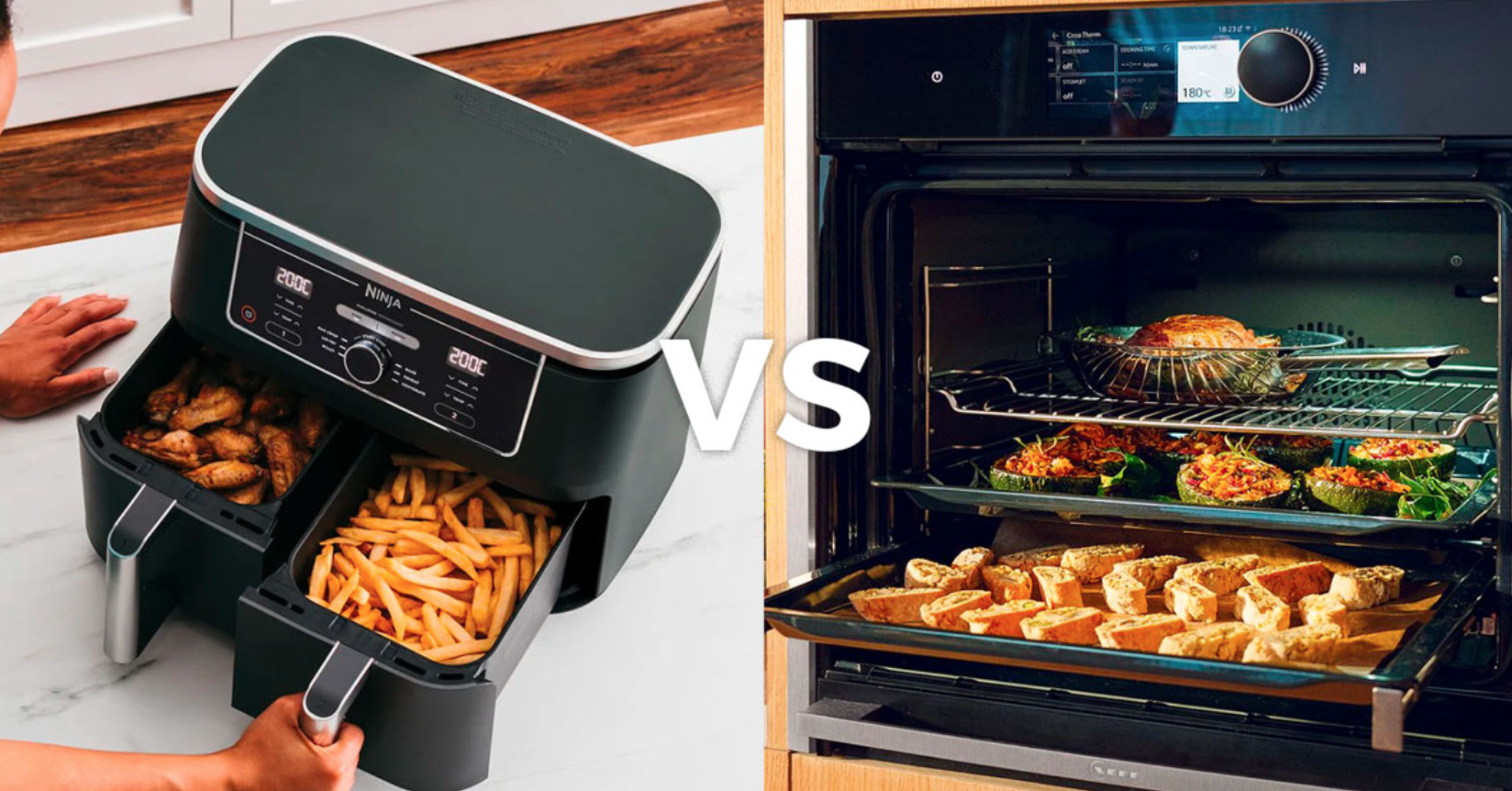
An air fryer is, at its core, a compact convection oven with a smaller cooking chamber and a more powerful fan relative to its size. Because the basket sits close to the heating element and the fan pushes air through a tight space, food gets surrounded by hot, fast-moving air on nearly all sides at once. This concentrated airflow is why air fryers can produce a crisp, almost fried-like texture on foods like frozen fries or chicken wings in less time than a full-size oven typically needs.
A convection oven, by contrast, uses a fan to circulate air throughout a much larger cavity, which cooks food more evenly than a conventional oven without a fan, but the air movement is less concentrated simply because there is more space for the hot air to fill. This makes a convection oven better suited to larger batches, whole trays of vegetables, or a full sheet pan of chicken thighs, where an air fryer’s small basket would require multiple batches to fit the same amount of food.
Both appliances benefit from preheating and from avoiding overcrowding the cooking surface, since a full basket or an overloaded tray blocks airflow and leads to uneven browning. Shaking or flipping food partway through cooking also helps both appliances brown food on all sides, though air fryers make this step easier thanks to their smaller, more accessible basket.
Temperature accuracy is another point of contrast worth noting. Many countertop air fryers run hotter than their displayed temperature suggests, since their compact heating elements sit closer to the food and the internal thermostat can cycle unevenly in a small space. A full-size oven, especially a newer model with a well-calibrated convection fan, tends to hold a set temperature more precisely across a longer cook, which matters for recipes like bread or custard that depend on a stable, predictable environment rather than quick bursts of intense heat.
Energy Use and Cooking Times
One of the most practical differences between the two appliances shows up in the utility bill and in how long dinner takes to reach the table. Air fryers are notably more efficient for small to medium portions, since their compact chamber heats up almost instantly and needs to warm only a small volume of air, unlike a full oven cavity that takes several minutes to preheat and consumes energy the entire time it is running.
- Preheat time: air fryers typically reach cooking temperature in two to five minutes, while a full-size convection oven often needs eight to fifteen minutes to preheat fully.
- Cooking time: many recipes cook 20 to 30 percent faster in an air fryer compared with the same recipe in a standard oven, due to the concentrated airflow.
- Energy draw: an air fryer’s smaller heating element and shorter run time generally use less electricity per meal for small portions than heating a full oven cavity.
- Batch size trade-off: cooking for a large family or a big dinner party in an air fryer often means several batches, which can erase the time and energy savings compared with one large convection oven batch.
- Standby efficiency: ovens built into a range often share heat with the surrounding kitchen, while a countertop air fryer contains heat more effectively, keeping the kitchen cooler during summer cooking.
For a household cooking small portions on a regular basis, such as one or two servings of a weeknight dinner, the air fryer’s speed and lower energy draw make it the more practical daily tool. For anyone who regularly cooks for a larger household or hosts guests, the oven’s greater capacity often outweighs the extra preheat time and energy use.
Cost per use is worth a brief mention here too, since a lower electricity bill per meal only matters if the appliance gets used often enough to offset its purchase price. A basic air fryer typically costs less upfront than a range with a convection setting, but most households already own a full oven regardless, so the air fryer’s energy savings function more as a bonus on top of an existing appliance rather than a replacement for it.
Capacity and Kitchen Space
Physical space is a real constraint in most kitchens, and the two appliances ask for very different amounts of counter or storage room. Air fryers range from compact two-quart models suited to a single person or couple, up to family-size baskets holding six quarts or more, while some newer models use a wide, flat tray design instead of a basket to fit more food in a shallower space. A convection oven, whether built into a range or a wall unit, does not add counter clutter but represents a larger upfront investment and is not something that can be added to an existing kitchen without renovation in most cases.
- Compact models: two- to four-quart air fryers suit one or two people and fit easily on a smaller counter or in a cabinet between uses.
- Family-size baskets: five- to eight-quart models handle a modest family dinner but still require multiple batches for large gatherings.
- Tray-style air fryers: a flatter, wider design that trades vertical height for a larger cooking surface, often marketed as an air fryer oven or toaster oven hybrid.
- Built-in convection ovens: no additional counter space needed, since the appliance replaces or supplements an existing range or wall oven.
- Toaster oven convection combos: a middle-ground option that offers a larger capacity than a basket air fryer while still sitting on a counter.
Anyone with limited kitchen counter space should weigh whether an air fryer will get used daily or end up stored in a cabinet, since a bulky basket model that is inconvenient to pull out and clean often gets used far less than a toaster-oven-style model that can stay on the counter.
Cleaning and Maintenance
Cleanup routines differ enough between the two appliances that some people base their entire decision on this factor alone. Air fryer baskets are generally dishwasher-safe or easy to hand wash, since food residue and grease collect in a removable, non-stick-coated tray that lifts out completely. A convection oven’s interior, by comparison, is a fixed cavity that requires either a self-cleaning cycle, a manual scrub with an oven cleaner, or careful use of liners to prevent baked-on residue from building up over time.
- Removable basket: air fryer baskets and trays typically detach fully for washing, which most people find far more convenient than scrubbing an oven interior.
- Non-stick coating wear: repeated washing and metal utensil use can wear down an air fryer basket’s coating over several years, eventually affecting food release.
- Self-cleaning ovens: many convection ovens include a high-heat self-cleaning cycle that burns off residue, though the process can take several hours and produce a strong odor.
- Grease splatter: because air fryer baskets sit close to the heating element, grease can splatter onto the element itself, requiring periodic wiping of the interior chamber, not just the basket.
- Odor transfer: cooking strongly flavored foods, such as fish or garlic-heavy dishes, in either appliance can leave a lingering smell that takes a few cycles of plain cooking to dissipate.
A quick daily wipe-down of an air fryer basket and drawer, done while the appliance is still slightly warm, prevents grease from hardening and makes deep cleaning far less frequent. Ovens benefit from a similar habit: wiping up spills soon after they happen, rather than letting them bake onto the cavity floor over repeated uses, reduces how often a full self-cleaning cycle or manual scrub is needed.
Choosing Based on Household Needs
Deciding between the two, or deciding to use both together, comes down to matching the appliance to real cooking habits rather than following a trend. A single person or couple who cooks small portions most nights, wants speed, and values easy cleanup will likely get more daily use from an air fryer. A household that regularly cooks for four or more people, roasts whole meals on sheet pans, or bakes regularly will lean on a full-size convection oven for most meals, using an air fryer as a secondary tool for quick reheating or small side dishes.
- Single or two-person households: an air fryer alone may cover most cooking needs, especially for reheating, frozen foods, and quick proteins.
- Families of four or more: a convection oven remains the primary cooking appliance, with an air fryer used for smaller sides or quick snacks.
- Frequent bakers: a full oven’s larger cavity and more even, consistent heat distribution across multiple racks suits bread, cakes, and pastries better than a compact air fryer.
- Small kitchens or dorm-style living: a countertop air fryer can serve as a primary cooking method when a full range is not available or practical.
- Meal preppers: batch-cooking proteins and vegetables for the week often goes faster in a full oven’s larger capacity, even with a longer preheat time.
Noise level is a small but real factor for some households, since an air fryer’s fan runs at a higher speed in a smaller enclosure and can be noticeably louder than a standard oven’s fan, especially in an open-concept kitchen near a living or dining area. Anyone sensitive to appliance noise, or living in a smaller apartment where the kitchen sits close to a workspace, may want to test an air fryer’s sound level before committing to using it daily.
Brands and Models Worth Considering
The market has matured enough that reliability and consistent performance vary notably across brands, making it worth researching specific models rather than buying based on price alone. Ninja, Instant Brands, Cosori, and Philips are among the most established air fryer manufacturers, each offering multiple sizes and price tiers. On the convection oven side, brands like GE, Whirlpool, KitchenAid, and Bosch build convection settings into a large share of their standard ranges and wall ovens, while Breville’s higher-end countertop convection ovens have built a following as a hybrid option between a full oven and a basket air fryer.
- Ninja: known for large-capacity baskets and dual-zone models that cook two different foods at different temperatures simultaneously.
- Instant Brands: leverages the same brand recognition as the Instant Pot, often bundling air frying with other functions in a single multi-cooker appliance.
- Cosori: a popular mid-range option with a simple interface and a strong reputation for consistent results at a lower price point.
- Philips: one of the original mainstream air fryer brands, credited with helping popularize the category in Western markets.
- Breville: a premium countertop convection oven brand often chosen by people who want oven-like capacity without a basket’s size limits.
Warranty length and customer support responsiveness are worth checking before purchase, since air fryers see heavy daily use and a heating element or fan failure within the first year or two is not unheard of across the category. Reading recent buyer reviews for a specific model, rather than relying only on a brand’s overall reputation, gives a clearer picture of how a current production run is holding up, since manufacturing quality can shift between product generations even within the same brand.
Final Thoughts
Air fryers and convection ovens share the same core idea, circulating hot air to cook food quickly and evenly, but they serve different daily needs. An air fryer wins on speed, energy use for small portions, and easy cleanup, making it a strong fit for individuals, couples, or anyone cooking quick weeknight meals. A convection oven wins on capacity, consistency across large batches, and versatility for baking, making it the better tool for families and frequent hosts. Rather than treating the choice as either-or, many kitchens end up using both, reserving the air fryer for speed and small portions while relying on the oven for bigger meals.
Matching the appliance to how your household cooks, rather than to trends alone, leads to a setup that gets used rather than one that sits unused in a cabinet, and it keeps the decision grounded in daily practicality instead of the appeal of a new gadget.
Read more about Newolt
Frequently Asked Questions
Does an air fryer cook food differently than a convection oven setting on a regular oven?
Not fundamentally. Both rely on fan-circulated hot air, but an air fryer’s smaller chamber and closer proximity between the heating element, fan, and food produce faster, more concentrated browning. A convection oven can achieve similar results with slightly longer cooking times, especially for smaller portions.
Is it worth buying both an air fryer and using my oven’s convection setting?
Many households find value in both, since an air fryer handles small, quick meals with less energy use and cleanup, while the oven’s convection setting handles larger batches, baking, and multi-rack cooking that would not fit in a basket.
Do air fryers really use less oil than deep frying?
Yes, air fryers typically require only a light coating or spray of oil compared with the volume needed for deep frying, since the hot air itself creates the crisp exterior rather than submerging food in oil. The texture is close to fried food but not identical.
How long do air fryers typically last before needing replacement?
With regular use, most air fryers last a few years before the non-stick coating wears down or the heating element weakens, though build quality varies by brand and price tier. Following the manufacturer’s care instructions and avoiding metal utensils on the basket can extend its usable life.
Can I convert a regular oven recipe to an air fryer without adjustments?
Most guidance suggests lowering the temperature by about 25 degrees Fahrenheit and reducing cooking time by 20 to 30 percent when adapting a conventional oven recipe for an air fryer, then checking food a few minutes early since air fryers cook faster than standard ovens.
Are air fryer baskets safe for all types of cookware or accessories?
Only accessories rated for the specific air fryer model or general oven-safe materials, such as certain metal and silicone bakeware, should be used inside an air fryer basket. Checking the manufacturer’s guidance before adding parchment liners, foil, or aftermarket accessories helps avoid damage or safety issues. Similarly, food and texture differences between the two appliances are small since both rely on the same circulating hot air, though an air fryer’s more concentrated airflow tends to produce a slightly crisper exterior in less time, while a full oven’s gentler, steadier heat often suits larger cuts of meat or slow-roasted dishes better.