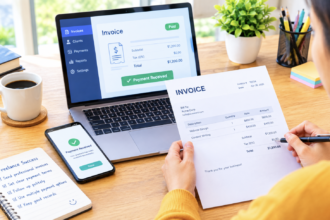

When Devon launched his landscaping business, he ran every expense through his personal credit card out of habit. Fuel, equipment rentals, a new mower it all went on the same card he used for groceries. Eighteen months later, when he tried to get a small business loan to buy a second truck, the lender asked for his business credit history and found almost nothing there. His personal credit was strong, but the business itself had no financial track record of its own, and that gap nearly cost him the loan.
That scenario plays out constantly among small business owners who never separate personal and company finances until a lender, landlord, or supplier asks for a business credit profile that doesn’t exist. A business credit card is one of the more accessible tools for closing that gap, and grasping how it differs from a personal card changes how a company gets treated by lenders down the road.
Secured Versus Unsecured Business Cards
Business credit cards split into two broad categories based on how the issuer manages risk. Unsecured cards extend credit based on the business’s (or owner’s) financial profile without requiring collateral, and they’re the more familiar option most people picture when they think “business credit card.” Secured cards require a cash deposit that typically matches the credit limit, functioning as a safety net for the issuer while the business builds a track record.
- Unsecured cards: no deposit required, higher approval bar, often tied to personal credit for newer businesses.
- Secured cards: deposit required upfront, easier approval for startups or businesses with limited credit history, deposit usually refunded after a period of responsible use.
- Charge cards: a lesser-known third category requiring the balance to be paid in full each cycle, with no preset spending limit but strict repayment expectations.
New businesses without established revenue often start with a secured card specifically to begin generating a payment history that lenders can later reference.
Some secured card issuers also offer a graduation path, automatically reviewing the account after six to twelve months of on-time payments and converting it to an unsecured line with the deposit refunded. This structure gives newer businesses a low-risk entry point into the credit system without requiring an immediate leap to an unsecured product that a thin credit file might not qualify for anyway. Comparing graduation policies across issuers before opening a secured card can save a business from being stuck on a deposit-backed account longer than necessary.
Rewards Categories That Fit Small Business Spending
Business card rewards programs are structured around categories that map to how companies spend money, which looks different from typical household spending. Office supplies, shipping costs, telecommunications, and advertising often carry elevated rewards rates on cards designed for small business owners, while categories like groceries or dining might be secondary.
Matching a card’s bonus categories to real spending patterns matters more than chasing the card with the flashiest headline rewards rate. A construction company spending heavily on fuel and equipment rentals benefits from a different rewards structure than a marketing agency spending heavily on software subscriptions and digital ad platforms. Reviewing three to six months of actual business expenses before applying gives a clearer picture of which categories deserve priority.
Rotating category cards, common among cash-back business products, add another layer worth factoring into the comparison. Some issuers let cardholders choose or adjust bonus categories quarterly, which suits businesses whose spending shifts seasonally, such as a landscaping company that spends heavily on fuel in summer and on equipment maintenance in winter. Fixed-category cards, by contrast, offer more predictable rewards but less flexibility if spending patterns change throughout the year, so matching the card’s structure to how stable or variable a business’s expenses tend to be is worth a few extra minutes before applying.
Applying With an EIN Versus a Personal Guarantee
A common misconception is that a business credit card application relies entirely on the business’s own financial identity through its Employer Identification Number, or EIN. In practice, most business cards, especially for small or newer companies, still require a personal guarantee from the owner, meaning the individual remains legally responsible for the debt even though the card is issued in the business’s name.
- EIN alone: rare for new businesses, generally reserved for corporations with established revenue and credit history.
- Personal guarantee required: the norm for sole proprietors, LLCs, and newer companies, tying the owner’s personal credit to the account.
- Hybrid reporting: some issuers report only to business credit bureaus, while others report to both business and personal bureaus, which affects how the account shows up on personal credit reports.
Knowing which reporting pattern an issuer uses before applying helps avoid surprises, especially for owners who want to keep business credit activity from affecting their personal credit score, or vice versa.
Newer LLCs and corporations sometimes qualify for cards that weight business revenue and time in operation more heavily than the owner’s personal credit score, though these products remain less common and typically come with stricter documentation requirements during the application process. Providing recent bank statements, a business plan, or projected revenue figures can strengthen an application built primarily around the business’s own financial identity rather than the owner’s personal history. Even in these cases, a personal guarantee often still applies as a backstop for the issuer.
Reporting Habits That Build a Strong Business Profile
Business credit bureaus like Dun & Bradstreet, Experian Business, and Equifax Business track company credit separately from personal bureaus, and not every card issuer reports to all three, or any of them consistently.
Some issuers report monthly, others quarterly, and a few only report negative events like missed payments, which means two businesses making identical on-time payments could see very different progress building a visible credit file depending purely on which card they happened to choose. Building a usable business credit file requires more intention than simply opening an account and using it.
Building this profile takes longer than most owners expect, often a year or more before a business credit file carries enough history to influence a lender’s decision in a real way, which is part of why starting early, even with modest card usage, pays off more than waiting until a loan application is imminent.
Habits that support a stronger profile over time include:
- Paying on time, every cycle: payment history carries the heaviest weight in most business credit scoring models.
- Keeping utilization low: using a small fraction of the available limit signals healthy cash flow management rather than dependency on credit.
- Establishing trade lines with vendors: some suppliers report payment history to business bureaus independently of credit cards, adding another data point.
- Registering with business bureaus directly: proactively creating a Dun & Bradstreet number (a D-U-N-S number) rather than waiting for one to be assigned automatically.
- Separating all business and personal spending: mixing the two muddies both credit profiles and complicates bookkeeping and tax preparation.
Monitoring the business credit file periodically, much like checking a personal credit report, helps catch errors or missed reporting before they become a problem during a loan application. Services tied to Dun & Bradstreet and Experian Business often let owners view a summary of their file for a fee, and some banks offer complimentary monitoring as an account perk. Catching a misreported late payment or an inaccurate business detail early is far easier than disputing it months later when a lender is actively reviewing the file.
Common Mistakes That Delay Credit Growth
Several recurring mistakes slow down how quickly a business builds a usable credit profile, even among owners who are otherwise financially disciplined. Most of these mistakes are easy to fix once identified, but they tend to go unnoticed for months since their effects show up gradually on a credit file rather than through any immediate warning sign.
Running personal expenses through a business card, or business expenses through a personal card, is probably the most frequent misstep, and it creates confusion that surfaces later during tax season or loan applications.
Carrying a high balance relative to the credit limit, even if payments are made on time, can suppress business credit scores the same way it does personal scores. Applying for too many cards in a short window sends a signal of financial instability to underwriters reviewing future applications. And treating the business card purely as a spending tool without paying attention to which bureaus the issuer reports to means months or years of on-time payments may never register with the agencies lenders check.
Another overlooked mistake involves treating a personal guarantee too casually, as though the card exists in a legal bubble separate from personal finances. Because the guarantee makes the owner personally liable for the balance, a business downturn that leaves a card unpaid can damage personal credit just as surely as a missed personal loan payment would.
Owners sometimes discover this connection only after a rough quarter, which is why keeping a cash buffer specifically for fixed business obligations, credit card payments included, is worth building into the company’s broader financial planning from the start.
Comparing Chase Ink, Amex Business, and Capital One Spark
Three well-known business card families illustrate how different issuers approach small business customers.
- Chase Ink: a lineup ranging from no-annual-fee cash back cards to premium travel-rewards cards, generally praised for straightforward category bonuses and strong sign-up offers tied to Chase’s broader Ultimate Rewards ecosystem.
- American Express Business cards: known for flexible membership rewards points, a wide range of card tiers from no-fee options to premium charge cards, and tools aimed at expense tracking and vendor management.
- Capital One Spark: often highlighted for simplicity, with flat-rate cash back options that don’t require tracking rotating categories, appealing to business owners who prefer a predictable rewards structure over optimizing category spend.
None of these represents a universal “best” choice the right pick depends on spending categories, whether travel rewards or cash back matters more, and how much attention an owner wants to devote to managing card benefits.
Beyond the three most recognized families, regional and online-first banks have entered the business card space with products aimed at very small businesses and solo operators, often featuring simpler qualification requirements and lower or no annual fees.
These cards typically trade away some of the premium travel perks and elevated rewards ceilings that larger issuers offer, but they can serve as a practical entry point for a business not yet large enough to make full use of a premium card’s benefit structure. Comparing a handful of options side by side, rather than defaulting to whichever bank already holds the business’s checking account, usually surfaces a better fit.
Timing Your Application Around Business Milestones
When a business applies for its first card matters almost as much as which card it chooses. Applying immediately after formal registration, before any revenue history exists, generally limits options to secured cards or cards requiring a strong personal credit score as the primary underwriting factor.
Waiting until after the first full year of revenue, or after securing a first major client contract, often improves approval odds and credit limits, since issuers can point to actual business performance rather than projections. Some owners also time applications around major purchases, new equipment, an office lease deposit, initial inventory so that a card’s sign-up bonus offsets a cost the business was already going to incur anyway, rather than opening an account purely to chase a promotional offer with no immediate use for the credit line.
Seasonal businesses face a particular timing wrinkle worth planning around. A landscaping or holiday retail business with sharply uneven revenue across the year may find it easier to qualify for a new card during its peak season, when recent bank statements show stronger cash flow, rather than during its slow months when the same application might get a smaller limit or an outright denial. Keeping a rough calendar of when the business’s finances look strongest, and timing credit applications to align with it, is a simple habit that can noticeably improve approval odds over guessing at a random point in the year.
Final Thoughts
A business credit card does more than separate expenses on a spreadsheet it starts building a financial identity for the company itself, one that eventually stands apart from the owner’s personal credit history. That separation matters most when a business needs a loan, a lease, or a vendor relationship that depends on demonstrated payment reliability rather than personal creditworthiness alone.
Getting there takes consistent, deliberate habits: paying on time, watching utilization, and choosing an issuer whose reporting practices support the credit file being built. None of it happens automatically just by opening an account, but a few consistent habits over a year or two can put a business in a fundamentally stronger financial position.
Frequently Asked Questions
1. Does a business credit card affect my personal credit score?
It can, depending on the issuer’s reporting practices and whether a personal guarantee is attached to the account. Some issuers report account activity to personal credit bureaus, especially for missed payments, while others keep business and personal reporting separate. Checking an issuer’s specific policy before applying avoids surprises later.
2. Can I get a business credit card without an LLC?
Yes. Sole proprietors can typically apply for a business credit card using their own name and Social Security number if they don’t have a formal business entity yet. The application will usually ask for an estimated business revenue figure even without incorporation.
3. How many business credit cards should a small company have?
There’s no fixed number, but most advisors suggest starting with one card focused on the company’s primary spending categories before adding others. Opening several cards in quick succession can hurt approval odds for future applications and makes expense tracking more complicated.
4. Do business credit cards have higher limits than personal cards?
They often do, especially for established businesses with strong revenue, since issuers can extend credit based on business cash flow rather than an individual’s income alone. Newer businesses may see limits closer to what a personal card would offer until a track record develops.
5. What credit score is needed to qualify for a business credit card?
Requirements vary by issuer and card tier, but many unsecured business cards look for a personal credit score in the good-to-excellent range when a personal guarantee is involved. Secured business cards typically have more flexible requirements since the deposit reduces the issuer’s risk.
6. Is it worth paying an annual fee for a business credit card?
It depends on whether the card’s rewards, perks, or credit-building value outweigh the fee for the specific business in question. A company that consistently spends in categories with elevated rewards, or that uses included travel or purchase protections, may recoup the fee easily, while a business with lighter or irregular spending might do better with a no-fee option.
Running a quick annual math check, estimated rewards earned against categories the business spends in, minus the fee, settles the question more reliably than a gut feeling, and repeating that check each year as spending habits shift keeps the card choice aligned with how the business is really operating rather than how it operated when the card was first opened.