A friend recommends a film, describes it as “beautiful,” and then mentions almost as an afterthought that not much happens in it. Ninety minutes later, you’ve watched a woman make soup in near-total silence for what felt like ten unbroken minutes, and somehow you can’t stop thinking about it. That reaction, confusion sliding into fascination, is close to a rite of passage for anyone first encountering slow cinema, a style of filmmaking that has quietly built one of the most devoted audiences in contemporary film culture.
Defining What Slow Cinema Actually Is
Slow cinema refers to films built around extended takes, minimal dialogue, and a deliberate resistance to the pacing conventions of mainstream storytelling. Scenes often run far longer than plot necessity requires, camera movement tends to be restrained or absent entirely, and narrative information gets withheld or delivered obliquely rather than explained directly.
The term isn’t a strict genre so much as a shared sensibility across directors working in very different traditions, unified by a trust that patience, not exposition, is what actually draws an audience into a story.
Where the Style Traces Its Roots
Slow cinema didn’t emerge from nowhere, it grew out of several overlapping film traditions across different decades and countries.
- Italian neorealism’s commitment to depicting ordinary life without stylistic embellishment
- The long-take philosophy associated with certain European art house directors of the 1960s and 70s
- Japanese and Taiwanese cinema’s tradition of contemplative pacing and negative space
- Documentary filmmaking’s influence on naturalistic, unhurried observation
These threads converged over decades into what critics eventually labeled slow cinema as a recognizable movement, particularly as international film festivals in the 2000s began consistently showcasing directors working in this style, giving audiences a shared vocabulary for discussing it.
The Function of Long Takes in Building Tension
A long, unbroken shot forces an audience into a different relationship with time than rapid editing does. Instead of a director controlling attention through cuts, a static or slowly moving camera leaves the viewer to actively search the frame, deciding for themselves what matters within it.
This shift creates a distinct kind of tension, not the tension of a ticking clock, but the tension of uncertainty about what a scene is asking to be noticed. A long take of someone simply waiting can feel unbearably suspenseful precisely because nothing is telling the audience how to feel about it.
Why Silence and Minimal Dialogue Carry So Much Weight
Removing exposition-heavy dialogue forces a film to communicate through behavior, environment, and implication instead. A character’s posture, the sound of a room, or the amount of time spent on a mundane task all become carriers of meaning that dialogue would otherwise handle explicitly.
This approach demands more active interpretation from an audience, but it also creates a kind of intimacy that fast-paced, dialogue-driven films rarely achieve, the sense of observing a life rather than being told about one.
How Slow Cinema Treats Plot Differently
Conventional narrative structure relies on escalating stakes and clearly defined turning points to keep an audience engaged. Slow cinema frequently abandons this structure altogether, favoring accumulation over escalation.
- Small, repeated actions build meaning gradually rather than through a single dramatic turn
- Plot events, when they occur, are often withheld from the frame or shown only partially
- Character motivation is implied through behavior rather than stated through dialogue
- Endings often resist resolution, leaving interpretation open rather than tying up loose ends
This resistance to conventional plotting is precisely what alienates some viewers and captivates others, there’s no reliable formula predicting which reaction a given person will have until they actually sit with a film of this kind.
Notable Directors Associated With the Movement
Certain directors have become closely associated with slow cinema’s core techniques, even when their individual styles diverge significantly. Some work almost exclusively in extended static takes depicting rural or domestic life; others use slowness within otherwise more conventional dramatic structures, stretching key moments far beyond expected length to intensify their emotional impact.
Still others apply the approach to historical or political subjects, using unhurried pacing to force audiences to sit with difficult material rather than move past it quickly. The common thread across all of them is a willingness to trust an audience’s patience more than most contemporary filmmaking does.
The Streaming Era’s Complicated Relationship With Slowness
Streaming platforms are generally built around algorithms and viewing habits that reward immediate engagement, which creates real friction for a style of film that asks audiences to sit with discomfort or boredom before a payoff arrives. At the same time, streaming has made slow cinema more accessible than it has ever been, since films that once required tracking down a festival screening or an obscure physical release are now searchable within a few clicks.
This accessibility has introduced the style to audiences who might never have encountered it through traditional theatrical distribution, even as the platforms themselves aren’t especially well-suited to promoting it.
How to Approach Slow Cinema as a New Viewer
Watching slow cinema for the first time works better with a different set of expectations than a typical film night.
- Choosing a shorter or more accessible entry point rather than the most demanding, hours-long example
- Watching without distractions, since the style rewards full attention more than most film does
- Resisting the urge to check a phone or speed through a slow scene, which undermines the entire experience
- Approaching confusion or boredom as part of the intended experience rather than a sign something is wrong
Viewers who go in expecting conventional pacing and plot momentum are almost always disappointed. Viewers who go in curious about a different kind of cinematic experience tend to come away with something memorable, even when they can’t fully articulate why.
The Role of Sound Design in the Absence of Dialogue
With dialogue minimized or removed entirely, sound design in slow cinema takes on a weight that busier, more conventional films rarely ask of it. Ambient sound, wind, distant traffic, the specific acoustic quality of an empty room, becomes a primary storytelling tool rather than background texture. A director working in this style often spends considerable attention on precisely what an audience hears during an extended, visually static shot, since that sound is frequently doing narrative work that would otherwise require dialogue or a musical score to accomplish.
- Environmental sound establishing time, place, and mood without any explanatory dialogue
- The deliberate absence of a musical score in many scenes, letting silence itself carry tension
- Sound used to imply off-screen action or events the camera never directly shows
- Subtle shifts in ambient sound signaling a change in mood or narrative direction
This heightened reliance on sound design is part of why slow cinema tends to reward careful, undistracted viewing far more than casual background watching. A shift in ambient noise that would go completely unnoticed during a typical viewing experience can carry real narrative significance in a film built around this kind of sustained attention.
How Slow Cinema Has Influenced Prestige Television
Television, freed from a strict runtime and increasingly competing for critical prestige rather than pure viewership numbers, has absorbed several techniques associated with slow cinema over the past decade. Extended, dialogue-light sequences that would have been unthinkable in earlier television, built around advertising breaks and rigid pacing formulas, now appear regularly in prestige drama series aiming for a more cinematic sensibility.
Directors with backgrounds in art house and slow cinema have increasingly moved into television, bringing techniques like extended static shots and deliberately withheld exposition into a medium that historically prized clarity and pace above almost everything else.
This crossover hasn’t erased the difference between the two forms entirely, a television series still generally needs to sustain audience interest across multiple episodes in a way a single feature film doesn’t, which limits how far most shows can push into true slow cinema territory. But the influence is visible in how comfortable prestige television has become with silence, ambiguity, and pacing that trusts an audience considerably more than earlier television conventions ever did, suggesting the aesthetic has moved well beyond its original niche festival audience.
Slow Cinema’s Relationship With Landscape and Place
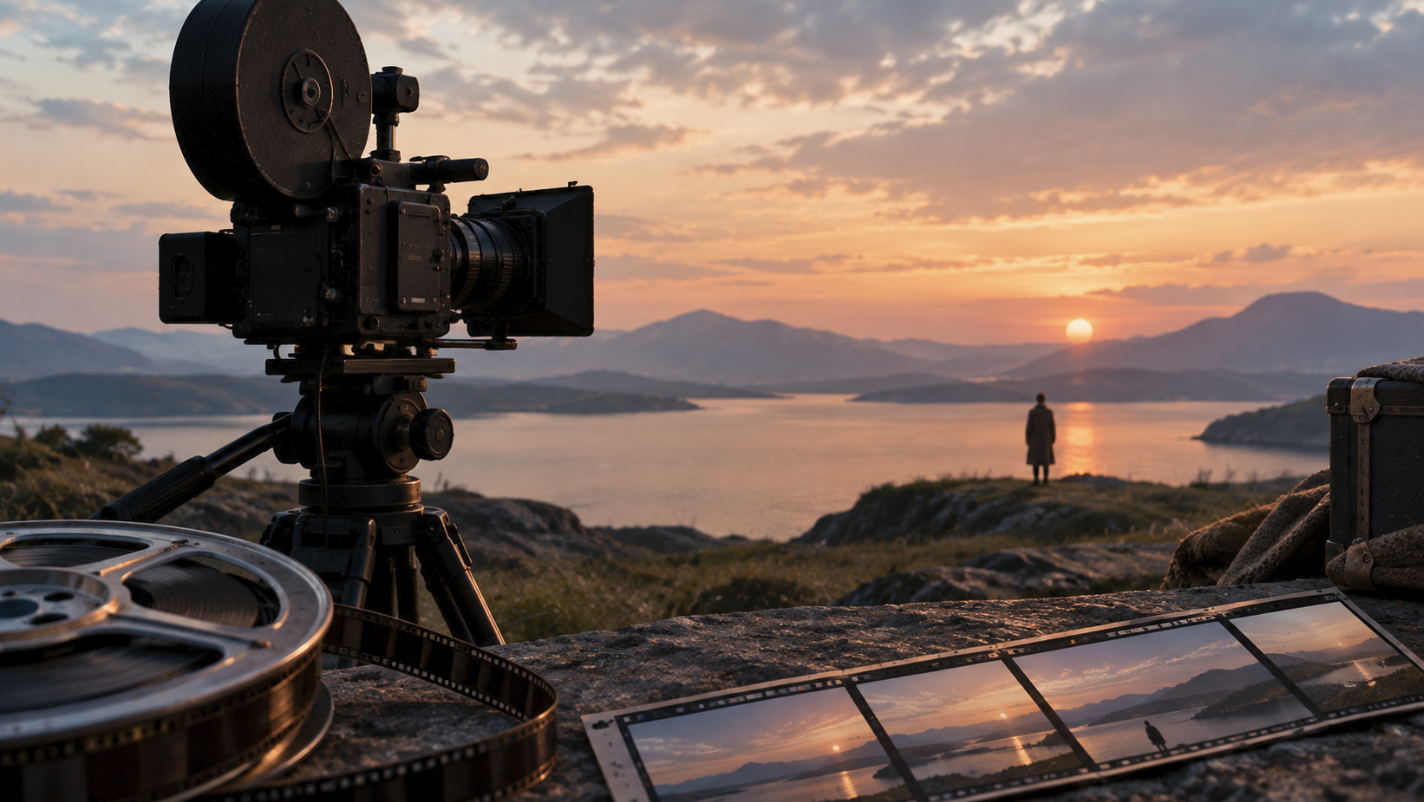
A recurring feature across many slow cinema films is an unusually sustained attention to physical landscape and setting, often treating location almost as a character in its own right rather than simple backdrop. Extended shots of weather, terrain, or the physical texture of a specific place allow a setting to accumulate meaning gradually, in a way a few establishing shots at the start of a conventional film rarely achieve.
This attention to place often ties closely to the films’ broader interest in duration and accumulation over plot momentum, since a landscape observed patiently over an extended take reveals details, changing light, subtle movement, texture, that a brief establishing shot simply doesn’t have time to capture.
- Extended landscape shots often carry emotional or thematic weight beyond simple scene-setting
- Weather and natural light changes within a single shot can mirror a film’s emotional arc without dialogue
- Specific regional landscapes become closely associated with certain directors’ recurring visual style
- This sustained attention to place often reflects a broader interest in humans’ relationship to their environment
This treatment of landscape is part of why slow cinema is sometimes described as having a documentary-like quality even in fictional narratives, since the camera’s patience with physical space mirrors the observational approach documentary filmmaking has long used to let a place speak for itself.
The Critical Reception Slow Cinema Has Received Over Time
Slow cinema’s reception among film critics and audiences has always been divided, and that division is arguably part of the style’s identity rather than an incidental side effect. Champions of the approach often describe it in terms of meditative depth and a rare trust placed in audiences, praising directors willing to resist commercial pacing pressures in favor of a more demanding, personal vision.
Critics of the style, including some professional film critics themselves, have described certain examples as needlessly punishing, arguing that difficulty and depth aren’t the same thing and that some films mistake slowness itself for profundity.
- Festival audiences and critics have historically been more receptive to slow cinema than general theatrical audiences
- The style has produced some of the most acclaimed and awarded films in international art house cinema over recent decades
- Mainstream audience reception remains considerably more mixed, with abandonment rates during home viewing notably higher than for conventional films
- Academic film criticism has engaged extensively with the style’s theoretical and philosophical underpinnings
This ongoing critical divide is unlikely to resolve, and it doesn’t really need to. Slow cinema was never designed to appeal universally, and its continued production and festival presence suggests a durable audience exists for it, even if that audience remains a minority relative to mainstream film consumption overall.
How Restoration and Preservation Affect Access to Older Slow Cinema
Many influential slow cinema films, particularly those from earlier decades or produced with limited festival distribution budgets, exist in fragile physical or early digital formats that require active preservation effort to remain accessible at all.
Film restoration organizations and specialty streaming platforms dedicated to art house and international cinema have played a significant role in keeping these films available, often working from limited surviving prints and sometimes producing meaningfully improved versions compared to how the films were originally seen even in their initial theatrical runs.
- Specialty streaming platforms focused on art house cinema often curate slow cinema more thoroughly than general platforms
- Physical media releases from dedicated restoration labels sometimes offer the highest quality versions available
- Some historically significant slow cinema films remain difficult to access despite their critical reputation
- Film festivals and repertory theaters continue to play an outsized role in exposing audiences to the style
This preservation challenge is a reminder that a film’s critical reputation doesn’t automatically guarantee easy access, and viewers interested in exploring the style’s history sometimes need to seek out specialty platforms or physical media rather than assuming everything significant is readily available through mainstream streaming services.
Why Some Filmmakers Reject the “Slow Cinema” Label Entirely
Interestingly, many directors whose work is routinely categorized as slow cinema by critics and festival programmers resist the label themselves, arguing that it reduces a deliberate, considered approach to pacing into a single reductive descriptor. From a filmmaker’s perspective, the specific choices behind an extended take or minimal dialogue are usually motivated by a particular story’s needs rather than an allegiance to a recognized movement or style category.
This tension between how a style gets labeled by outside observers and how its practitioners actually think about their own work is common across art movements generally, and it’s worth keeping in mind that “slow cinema” is ultimately a critical and audience-facing shorthand rather than a term most of the filmmakers associated with it chose for themselves.
Final Thoughts
Slow cinema asks something most contemporary entertainment doesn’t: patience without a guaranteed payoff. That’s exactly what makes it divisive, and exactly what makes its devoted audience so committed to it. Approaching the style with curiosity rather than expectation is usually the difference between finding it tedious and finding, unexpectedly, that a film about very little has stayed with you far longer than one built around constant incident.
Frequently Asked Questions
Is slow cinema the same thing as art house film in general?
Not exactly. Art house is a broader category covering non-mainstream, often independently produced films across many styles and pacing choices. Slow cinema is a specific approach within that broader category, defined primarily by its extended takes and deliberate pacing rather than budget, distribution, or subject matter alone.
Why do some critics consider slow cinema more emotionally powerful than faster-paced films?
The extended time spent in a scene can build a kind of emotional weight that quick editing rarely achieves, since the audience has more time to sit with a character’s situation rather than moving past it quickly. This isn’t universally true for every viewer, but it’s a commonly cited reason for the style’s devoted following.
Are there well-known mainstream films that use slow cinema techniques?
Yes, certain elements of the style have influenced mainstream and awards-focused filmmaking, particularly extended takes used at key emotional moments. Full commitment to the approach across an entire film remains rare outside dedicated art house and festival cinema, but individual techniques have crossed over more broadly.
How long are typical slow cinema films?
Runtimes vary considerably, though the style is associated with longer-than-average films more often than not, sometimes extending past three hours. This isn’t a strict rule, some slow cinema films run under ninety minutes while still using the same core techniques of extended takes and minimal dialogue.
Does slow cinema require a big screen to be properly appreciated?
A larger screen and undistracted viewing environment generally enhance the experience, since the style relies heavily on visual detail and sustained attention that a phone screen or multitasking environment can undermine. That said, plenty of viewers have meaningfully connected with these films on standard home setups.
Where is a good starting point for someone curious about the style?
Starting with a shorter, more narratively grounded example rather than the most extreme or demanding film in the genre tends to work best. Building familiarity gradually, rather than starting with the longest or most divisive title, gives a new viewer a fairer sense of what the style is actually capable of.