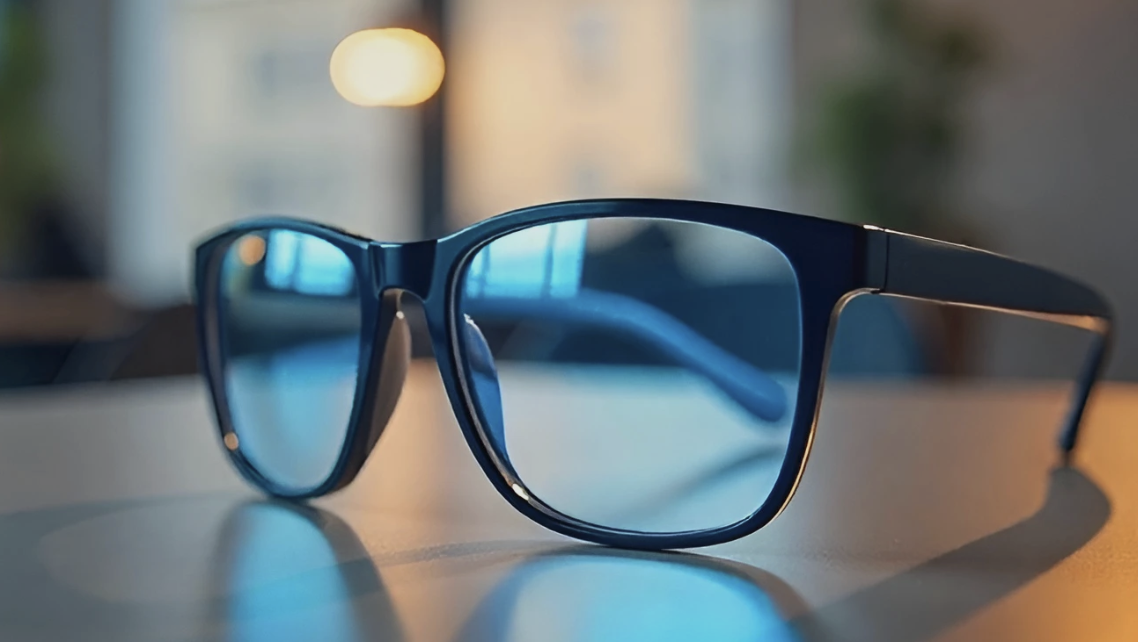
Blue light glasses have become a common sight in offices, on video calls, and on store shelves next to reading glasses, marketed as a simple, ready-made fix for tired eyes and disrupted sleep caused by long hours spent in front of screens. The premise sounds entirely reasonable on its surface: screens emit blue light, blue light is associated with eye strain and sleep disruption in some published research, so filtering it out before it reaches the eye should logically help.
The reality, based on the research conducted so far by scientists and eye care specialists, is far more nuanced than the marketing suggests, and knowing what the evidence supports helps set reasonable expectations for anyone considering a pair.
Screen Exposure and Eye Strain
Digital eye strain, sometimes called computer vision syndrome, is a real and common experience among people who spend long hours looking at screens, with symptoms including dryness, blurred vision, headaches, and general eye fatigue by the end of a workday. The question researchers have examined is whether blue light specifically causes these symptoms, or whether other factors tied to screen use are the more likely culprits.
- Reduced blink rate: people tend to blink less often while focused on a screen, which dries out the eyes and contributes to irritation regardless of the light’s color spectrum.
- Screen glare and brightness: poor lighting conditions and screens set too bright or too dim relative to the surrounding room can strain the eyes more than the blue light itself.
- Prolonged near-focus: keeping eyes focused at a fixed close distance for extended periods causes fatigue in the muscles that control focus, a mechanical strain unrelated to light wavelength.
- Uncorrected vision issues: an outdated eyeglass prescription or an unaddressed vision problem often shows up as screen-related eye strain before it becomes obvious in other settings.
- Posture and screen distance: a screen positioned too close, too far, or at an awkward angle can contribute to strain that has nothing to do with the light emitted.
Most major eye health organizations point to these mechanical and behavioral factors as the primary drivers of digital eye strain, rather than blue light exposure on its own, which suggests that blue light glasses may only address one small piece of a larger, more complex set of causes.
Ambient humidity and airflow in a workspace also play a role that rarely gets discussed alongside blue light. Office environments with forced-air heating or cooling, or a desk positioned directly in the path of a fan or vent, can dry out the surface of the eye far faster than a comparable setup in a more humid, still room. Adding a small humidifier near a workstation, or simply repositioning a desk away from direct airflow, is a low-cost adjustment that addresses this contributing factor directly, something no lens coating can fix on its own.
Lens Coatings and Filtering Technology
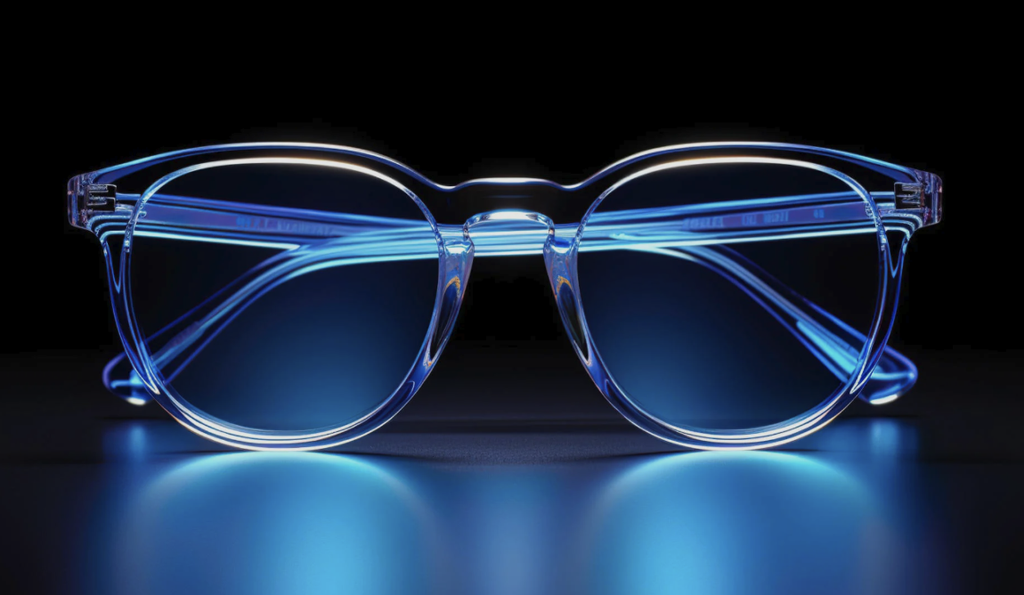
Blue light glasses work by adding a coating or tint to the lens designed to reflect or absorb a portion of blue light before it reaches the eye. The amount of blue light filtered varies widely between products, and this variation is one of the more overlooked details when shopping for a pair.
- Clear-coated lenses: reflect a relatively small percentage of blue light, often in a lower range, while remaining visually indistinguishable from ordinary clear lenses.
- Yellow-tinted lenses: block a higher percentage of blue light than clear coatings, at the cost of a visible color shift that some people find distracting for daily wear.
- Amber or orange lenses: block the highest percentage of blue light among common options, frequently marketed for evening use rather than daytime work.
- Prescription integration: blue light filtering can typically be added to an existing prescription lens, avoiding the need for a separate pair of glasses.
- Certification and testing: independent lab testing of the exact percentage of blue light blocked is not always available for every product, making label claims difficult to verify without third-party data.
Because the filtering percentage varies so widely, a pair of glasses marketed simply as “blue light blocking” may provide very different levels of protection than another product carrying the same label, making it worth checking for any published testing data before assuming a specific level of filtering.
Price is not always a reliable guide to filtering strength either, since a more expensive frame with a well-known brand name does not necessarily correspond to a higher percentage of blue light blocked than a cheaper alternative. Reviews from independent optometry sources or consumer testing organizations, when available, tend to offer a more useful comparison than price alone, though such independent testing remains uncommon across the wide range of products currently sold under the blue light label.
Sleep Quality and Evening Screen Use
The strongest and most consistent area of research on blue light involves its effect on the body’s internal clock, known as the circadian rhythm, rather than its effect on eye strain during the day. Blue light exposure, especially in the hours before bedtime, can suppress the release of melatonin, a hormone that signals to the body that it is time to sleep.
- Evening screen use: scrolling on a phone or watching a bright screen close to bedtime is associated with delayed melatonin release in several studies, potentially pushing back natural sleep onset.
- Amber or red-tinted lenses in the evening: filter a larger share of blue wavelengths and have shown some benefit for melatonin suppression in research settings, more so than daytime clear lens options.
- Device night modes: built-in software settings that shift a screen’s color temperature toward warmer tones in the evening achieve a similar goal without requiring separate glasses.
- Screen brightness reduction: lowering overall screen brightness in the evening reduces total light exposure, addressing both blue light and general light intensity at once.
- A wind-down routine without screens: avoiding screens entirely for the last thirty to sixty minutes before bed remains one of the more consistently supported recommendations for improving sleep onset.
This is the area where blue light glasses, especially the more heavily tinted amber or red varieties worn in the evening, have the most supporting research behind them, though even here, researchers generally frame the effect as one factor among several that influence sleep quality rather than a stand-alone solution.
Total light exposure in the hour or two before bed matters alongside the specific color of that light. A brightly lit room paired with a screen, even one filtered for blue light, can still delay the body’s natural signal to wind down for sleep, since overall brightness plays a role independent of wavelength. Dimming household lights in the evening, alongside any screen adjustments, gives the body a more consistent signal that bedtime is approaching, an approach that sleep researchers generally view as complementary to, rather than a replacement for, reducing blue light specifically.
Research Findings and Their Limits
A commonly cited body of research on blue light glasses and eye strain has produced mixed results, with some studies finding modest symptom improvement among users and others finding no measurable difference compared with a placebo pair of glasses. A widely referenced review of existing studies concluded that the evidence supporting blue light glasses specifically for reducing eye strain from screens was limited and inconsistent, though the same body of research does support the broader concept that reducing overall screen-related strain, through breaks, better lighting, and proper prescriptions, does help.
This does not mean blue light glasses provide no benefit at all, since individual experience varies and some people do report feeling less eye fatigue while wearing them. It does mean that expecting a pair of glasses to resolve eye strain caused primarily by behavioral and environmental factors is likely to lead to disappointment, since the underlying causes of the discomfort may remain unaddressed.
It is worth noting that research in this area continues to evolve, and any single study or review reflects the state of knowledge at the time it was conducted rather than a permanent, settled conclusion. Anyone with persistent eye strain, headaches, or vision changes should consult an eye care professional rather than relying on blue light glasses alone to diagnose or resolve the underlying cause, since these symptoms can sometimes point to a vision problem or other condition that a pair of tinted lenses will not address.
It is also worth distinguishing between industry-funded research and independent academic studies when evaluating claims about blue light glasses, since some of the more optimistic findings promoting these products have come from studies connected to manufacturers rather than fully independent researchers. This does not automatically make such findings wrong, but it is a reasonable factor to weigh when comparing conflicting results, alongside checking whether a given study measured objective symptom relief or relied on participants’ subjective impressions alone, which can be more susceptible to a placebo-like effect from simply believing a product should help.
Choosing Glasses That Fit Your Needs
For anyone still interested in trying blue light glasses, whether based on personal experience of feeling better while wearing them or simply as a low-cost, low-risk addition to a broader eye care routine, a few practical considerations help in choosing a suitable pair.
- Daytime versus evening use: a lighter, nearly clear tint suits daytime office use without altering color perception, while a stronger amber tint is better suited to evening use before bed.
- Prescription needs: anyone who already wears prescription glasses can usually add blue light filtering to their existing lenses rather than purchasing a separate non-prescription pair.
- Comfort and fit: proper fit matters as much for blue light glasses as for any eyewear, since poorly fitting frames can themselves contribute to headaches or discomfort.
- Anti-reflective coating: pairing blue light filtering with an anti-glare coating can address screen glare, one of the more established contributors to digital eye strain.
- Budget expectations: since strong scientific consensus on eye strain benefits is limited, treating these glasses as an inexpensive experiment rather than a guaranteed fix sets more reasonable expectations.
Trying a pair for a few weeks while also addressing other known contributors to eye strain, such as taking regular screen breaks and adjusting monitor brightness, gives a clearer sense of whether the glasses themselves are providing any noticeable personal benefit.
Return policies are worth checking before buying a pair online, since fit and personal tolerance for a tinted lens vary enough between individuals that a product working well for one person may feel uncomfortable or visually distracting to another. Many retailers offer a trial period of thirty days or more for eyewear, which allows enough time to wear the glasses through a normal mix of workdays and evenings before committing to keeping them.
Alternatives to Blue Light Glasses
Because the research supporting blue light glasses specifically is limited, it is worth knowing about other approaches that address digital eye strain and sleep disruption through mechanisms with more consistent supporting evidence.
- The 20-20-20 rule: looking at something twenty feet away for twenty seconds every twenty minutes gives eye muscles a periodic break from sustained near-focus.
- Artificial tears or lubricating eye drops: address dryness directly, which is one of the more common and well-established contributors to screen-related eye discomfort.
- Adjusting screen brightness and contrast: matching screen brightness to the surrounding room’s lighting reduces the strain caused by a mismatch between the two.
- Regular eye exams: confirming an up-to-date prescription addresses a frequently overlooked cause of screen-related eye strain that blue light glasses cannot fix.
- A consistent sleep schedule: going to bed and waking at consistent times supports the circadian rhythm more broadly than any single intervention aimed at light exposure alone.
Combining several of these approaches, rather than relying on any single fix, including blue light glasses, tends to produce more reliable improvement for people dealing with persistent eye strain or sleep difficulty tied to heavy screen use.
Workplace ergonomics tie into this list as well, since a monitor positioned at the wrong height or distance forces the eyes and neck into a strained position regardless of what light filtering is in place. Setting a monitor roughly an arm’s length away, with the top of the screen at or slightly below eye level, reduces strain on both the eyes and the surrounding muscles, an adjustment that costs nothing and complements any of the other approaches listed above.
Final Thoughts
Blue light glasses sit in a middle ground between a truly useful tool and an overhyped consumer product, with the strongest supporting evidence found in their use for evening sleep support rather than daytime eye strain relief.
The research on eye strain itself remains mixed, suggesting that factors like blink rate, screen brightness, posture, and uncorrected vision problems deserve more attention than blue light exposure alone. Anyone curious about trying a pair can do so at low cost and low risk, ideally alongside other well-supported habits like regular screen breaks and proper lighting.
For persistent eye discomfort, headaches, or vision changes, a conversation with an eye care professional remains the more reliable path forward, since blue light glasses are best treated as one small piece of a broader, well-rounded approach to eye and sleep health rather than a stand-alone solution on their own.
Read more about Newolt
Frequently Asked Questions
Do blue light glasses reduce eye strain?
Research findings are mixed, with some studies showing modest benefit and others showing no measurable difference from a placebo. Behavioral factors like blink rate, screen brightness, and uncorrected vision problems appear to play a larger role in most cases of digital eye strain.
Are blue light glasses safe to wear all day?
Yes, wearing blue light glasses throughout the day carries no known health risk, since they simply filter a portion of visible light rather than altering the eye in any other way. Some people do notice a slight color shift with more heavily tinted lenses.
Can children benefit from blue light glasses?
There is limited research specifically on children and blue light glasses, so most guidance for kids focuses on general screen time limits, taking breaks, and maintaining good posture rather than recommending blue light glasses as a primary solution.
Do blue light glasses help with migraines triggered by screens?
Some people who experience light-sensitive migraines report relief from tinted lenses, including blue light filtering options, though this effect is not universal and migraine triggers vary widely between individuals. Consulting a doctor about migraine management is advisable for anyone with frequent or severe episodes.
Is it better to use a screen’s built-in night mode instead of blue light glasses?
Both approaches reduce blue light exposure, and using a screen’s built-in night mode setting is a free alternative that achieves a similar goal for evening use without needing to purchase glasses. Some people use both together for a stronger combined effect.
How do I know if my blue light glasses are truly filtering blue light?
Checking for any published lab testing data from the manufacturer or seller is the most reliable way to confirm a specific filtering percentage, since visual appearance alone, especially with clear-coated lenses, does not reveal how much blue light is truly being blocked.