

Protein powder has moved from gym lockers into ordinary kitchens, and the choice on the shelf can feel overwhelming. Picking the wrong tub can mean wasted money, an upset stomach, or a product that does not suit your health needs.
In this article, we will explore how much protein most people need, how the main powder types differ, how to read a label, what safety testing tells you, and how to build a simple routine you can keep up.
Protein needs vary more than the labels suggest
Before choosing a powder, it helps to know how much protein you are trying to add. Many national guidelines set the basic recommended intake for healthy adults at around 0.8 grams per kilogram of body weight per day. For a person weighing 70 kilograms, that works out to roughly 56 grams a day. This figure is meant to prevent deficiency in most people, and it is not a target for building muscle or recovering from heavy training.
Some groups commonly aim higher. Sports nutrition bodies often describe a range of about 1.2 to 2.0 grams per kilogram per day for people who train hard or regularly lift weights. Many dietitians also suggest that older adults aim for somewhat more than the basic figure, often around 1.0 to 1.2 grams per kilogram, because muscle tends to be lost with age and protein helps slow that process. These are commonly recommended ranges and not strict rules, and your own number depends on your health, activity, and any medical advice you have received.
The first practical step is to estimate what you already eat. Write down a normal day of meals and note the main protein foods, such as eggs, yogurt, chicken, fish, beans, lentils, tofu, cheese and nuts. A palm-sized portion of cooked meat or fish gives roughly 20 to 30 grams, a cup of cooked lentils gives close to 15 to 18 grams, and an egg gives about 6 grams. Add these up and compare the total with your estimated target.
If you already reach your target, a powder adds little except convenience. If you fall short, perhaps because of a busy schedule, a small appetite, a vegetarian diet, or recovery from illness, a powder can fill the gap neatly. The gap is the useful number, because it tells you whether you need one scoop a day or none at all. Treat the powder as a top-up to meals, not as a substitute for them.
Whey, casein, soy, pea and other types compared
Protein powders fall into two broad families: animal-based and plant-based. The most common animal-based powder is whey, a by-product of cheese making that digests quickly and contains all the essential amino acids. Casein, the other main milk protein, forms a thicker gel in the stomach and is digested more slowly, which is why it is often marketed for evening use. Egg white powder and collagen powder also exist, although collagen is lower in some essential amino acids and is not a complete protein on its own.
Whey comes in a few forms. Whey concentrate is the least processed and usually contains some lactose and fat. Whey isolate is filtered further, so it typically has less lactose and is often easier on people who are mildly lactose intolerant. Hydrolyzed whey has been partly broken down for faster absorption, and it tends to cost more and taste more bitter.
Plant-based powders suit vegans, people with a milk allergy, and anyone who prefers to avoid dairy. Soy protein is a complete protein with a long record of use. Pea protein is popular and widely available, though on its own it is lower in the amino acid methionine. Rice protein is lower in lysine, and many plant blends combine pea and rice, or other sources, so that each fills the other’s gaps. Hemp is gentle on the stomach for some people but is usually lower in protein per scoop.
The table below sets out the main differences in plain terms. Treat it as a general guide, since brands vary and the label on your tub is the final word. Always compare the table with the product in front of you before buying.
| Type | Source | Digestion speed | Main points to weigh |
| Whey concentrate | Milk | Fast | Often the cheapest; contains some lactose |
| Whey isolate | Milk | Fast | Lower lactose; usually costs more |
| Casein | Milk | Slow | Thick texture; milk allergen |
| Soy | Soybeans | Medium | Complete protein; soy allergen |
| Pea | Yellow peas | Medium | Dairy-free; may be lower in methionine |
| Rice or hemp | Grains or seeds | Medium | Often blended; lower protein per scoop |
| Collagen | Animal connective tissue | Fast | Not a complete protein; best as an add-on |
No single type is best for everybody. A person with a lactose problem may do better with isolate or a plant blend, while someone who wants a filling evening drink might prefer casein. If you cannot decide, a plain whey isolate or a pea and rice blend is a reasonable starting point for most healthy people. The right choice is the one you tolerate, can afford, and will use consistently.
Reading the label before you buy
The front of a tub is advertising, and the back is information. Start with the serving size, because brands choose their own and a large scoop can make a product look better than it is. Then check the grams of protein per serving, and compare that with the total weight of the scoop. A powder that gives 24 grams of protein in a 30 gram scoop is more protein-dense than one that gives 15 grams in a 35 gram scoop, and the difference shows up in the cost per gram of protein.
Next, read the ingredient list from the top. Ingredients are listed by weight, so the first item should be the protein source you expected. A short list is usually a good sign, and a long one full of thickeners, flavorings and sweeteners is not automatically bad but deserves a closer look. Watch for added sugar, which can turn a protein drink into a dessert, and for sugar alcohols such as sorbitol or xylitol, which can cause bloating and loose stools in some people.
Look carefully at the allergen statement. Milk, soy, egg, tree nuts, and wheat are common allergens, and a plant powder may still be made in a facility that handles them. If you have a diagnosed allergy, a cross-contact warning matters and should not be dismissed. Rules for labeling differ from one country to another, so the wording you see may not match what is shown in a different market.
Be cautious about terms that sound scientific but carry no fixed meaning. Phrases such as “proprietary blend”, “muscle matrix” or “anabolic complex” can hide how much of each ingredient is present. Claims about burning fat, rapid transformation, or hormone support are marketing, and they are not a reason to buy. Finally, check for added extras such as creatine, caffeine, herbal extracts, or amino acid blends, since these change the product from a simple protein source into a supplement with its own considerations.
Quality, testing and contamination concerns
In many countries, dietary supplements are regulated more lightly than medicines, and the maker is often responsible for the safety and accuracy of its own product. This means that the quality of protein powders can vary. Reports from consumer groups and independent testers over the years have raised concerns about some products containing less protein than claimed, or traces of contaminants such as heavy metals. These findings do not apply to every brand, but they explain why testing matters.
Third-party certification is one of the clearest signals you can look for. Several independent programs test supplements for banned substances and check that what is in the tub matches the label. Marks from schemes such as NSF Certified for Sport or Informed Sport are examples, and they are especially useful for athletes who are subject to drug testing. A certification does not make a powder healthier, but it does give you more confidence about what you are swallowing.
Plant-based powders deserve a little extra attention here, because plants take up minerals from the soil, and trace metals can end up in the finished product. Choosing a brand that publishes test results, or that carries independent certification, reduces the risk. It is also sensible to vary your protein sources instead of relying on one product every day. Eating a mix of foods alongside a powder spreads out any exposure to a single contaminant.
Be wary of very cheap products from unknown sellers, especially those sold through unfamiliar online marketplaces. Check that the tub has an intact seal, a batch number, an expiry date, and a manufacturer’s contact address. If a powder smells off, clumps from damp, or tastes unusual, do not use it. If you ever feel unwell after a new product, stop taking it, and speak to a doctor or pharmacist if symptoms persist.
Cost is the final practical filter, and the cheapest tub is not always the best value. Divide the price by the total grams of protein in the container to get a cost per gram, and compare that figure across brands and sizes. Large tubs usually lower the cost per serving, but only if you will finish them before the best-before date. For a first purchase, a smaller size or a sample pack is the safer choice.
Scoops, timing, and amounts that make sense
A common serving of powder provides about 20 to 30 grams of protein, which suits most people for a single sitting. There is no strong reason to take far more than that at once, because the body uses protein across the day and not in a single burst. Taking one serving after exercise or alongside breakfast, when many people struggle to eat enough protein, is a simple and practical pattern. A second serving can be added on days when your food intake falls short.
Timing gets a great deal of attention online, but it is usually less important than the daily total. Having protein within a few hours either side of a workout is a reasonable habit, and spreading intake over three or four eating occasions suits many people. Casein or a milk-based drink before bed is sometimes used by people with high training loads. For someone exercising lightly or not at all, none of these refinements matters much.
Use the scoop that comes in the tub, and level it unless the label says otherwise. Heaping scoops can add a third more powder than intended, which affects cost, taste and your daily total. If you are using a powder to support weight loss, remember that a shake still contains calories, and adding fruit, nut butter or whole milk can quickly turn it into a full meal. Check the label’s calorie count and adjust the rest of your day to match your goal.
Do not use powder to replace all of your meals for long periods. Whole foods supply fiber, vitamins, minerals and healthy fats that a basic protein shake does not. A good rule of thumb is to let food supply most of your protein and use the powder for the remainder. If you are unsure of a safe amount for your situation, a registered dietitian can help you set a target.
Taste and mixing preferences also affect safety, in a roundabout way. A powder you dislike tends to sit in the cupboard, and people sometimes try to hide the flavor with sweet extras that add sugar and calories. Trying a flavor that you enjoy, or starting with an unflavored product that you can blend into familiar foods, avoids the problem. Many brands sell small trial sachets, which let you test several flavors without committing to a full tub.
Who should be careful or avoid powders?
For most healthy adults, a moderate amount of protein powder is considered safe. There is, however, a group of people who should speak to a doctor before starting. This includes anyone with kidney disease, because a high protein intake can add to the workload on the kidneys, and doctors often set a specific protein limit for these patients. It also includes people with liver conditions, people with a history of kidney stones, and anyone on a medically supervised diet.
Allergy and intolerance are the next concern. A person with a milk allergy should avoid whey and casein completely, since these proteins are the very thing that triggers a reaction. Lactose intolerance is different and is about digestion and not the immune system, so isolate or plant-based powders often work. People with a soy allergy should read labels with care, as soy lecithin and soy protein can appear in unexpected places. Anyone who has a severe allergic reaction, with swelling, trouble breathing, or widespread hives, needs emergency care.
Pregnant and breastfeeding women, teenagers, and children should also take care. Their protein needs are specific, and many powders are formulated for adult athletes, with added stimulants or herbal extracts that are not suitable. Younger people are generally better served by a food-first approach, unless a doctor or dietitian recommends a supplement. Parents should be cautious about products marketed to boost size or strength in teens.
People with a history of disordered eating should be careful about products and routines that encourage tracking every gram. If a powder starts to drive anxiety about food, that is a sign to pause and talk to a health professional. Finally, tell your doctor or pharmacist about any supplement you take, since some products contain ingredients that interact with medicines. This simple step is easy to forget, and it matters most for people on several prescriptions.
Hydration is a sensible companion to a higher protein intake. The body needs water to process the nitrogen that protein produces, and a person who increases protein while drinking very little may feel thirsty, headachy or constipated. Drinking water regularly through the day, and eating fiber-rich foods such as vegetables, fruit and whole grains, usually prevents these complaints. If constipation, bloating or cramps persist after you adjust your routine, reduce the amount or change the type of powder.
Mixing, storing and keeping powders tasty
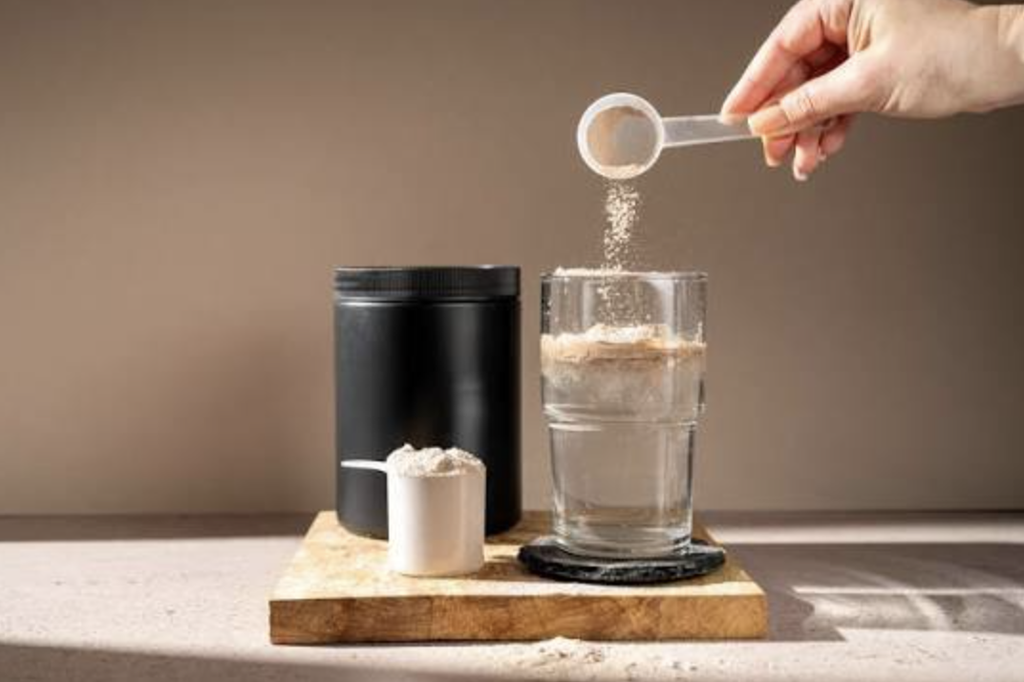
Taste and texture decide whether you keep using a powder, so it is worth getting the mixing right. Add the liquid to the shaker first and the powder second, which prevents it from caking at the bottom. Shake for 20 to 30 seconds, or use a blender if you are adding fruit or ice. Water gives the lightest result, milk or a fortified plant drink gives a creamier one, and either works well.
If a shake tastes chalky or gritty, there are simple fixes. Let it rest for a minute so the powder can hydrate fully, use slightly more liquid, or add a frozen banana, a spoon of plain yogurt or a pinch of cinnamon. Unflavored powder is flexible, since it can be stirred into oatmeal, pancake batter, soups or smoothies. Note that very hot liquids can make some powders clump, so cool a drink slightly before adding it, or mix the powder with a little cold liquid first.
Storage is simple but often ignored. Keep the tub in a cool, dry cupboard with the lid tightly closed, away from heat and humidity, since moisture can cause clumping and shorten shelf life. Use the dry scoop supplied, and never leave it sitting in the powder or use a wet spoon. Follow the best-before date on the pack, and discard any powder that smells sour, looks discolored or has formed hard, damp lumps.
Wash your shaker bottle after each use, including the lid seal and any mixing ball, because leftover milk-based residue grows bacteria fast. Do not leave a mixed shake at room temperature for hours, and refrigerate it if you will not drink it soon. Many brands advise drinking a prepared shake within a day, and the label may give its own guidance. A few minutes of cleaning protects you from an avoidable stomach upset.
Some people worry that protein powder will damage their health in the long run. For healthy adults, intakes within the commonly recommended ranges have not been shown to harm the kidneys or bones, and the bigger risks are usually contamination, hidden extras and excess calories. The sensible response is to choose carefully and stay moderate, and not to avoid protein altogether. If you have a medical condition, your doctor remains the best judge of what is safe for you.
How protein powder fits into ordinary meals
The most sustainable way to use a powder is to treat it as one tool among many. A shake can rescue a rushed morning, add protein to a light lunch, or help someone with a small appetite reach their daily goal. It works best when it sits alongside regular meals that include vegetables, whole grains, fruit and healthy fats. Think of it as a supporting actor and not the star of your diet.
For those building muscle, protein is only part of the picture. Regular resistance training, enough total calories, adequate sleep and steady progression matter at least as much as the powder. A person who skips workouts will not gain muscle from shakes alone, and extra protein beyond what the body needs is simply used for energy or stored as fat. Setting realistic expectations can save you money.
For weight management, protein can help people feel full, which makes it easier to keep calories under control. A high-protein breakfast, for example, may reduce mid-morning snacking for some people. Still, no powder works as a weight-loss solution by itself. Combine it with sensible portions, movement you enjoy, and a diet you can maintain for the long term.
Older adults and people recovering from illness may benefit from powders when appetite is poor. In these cases a doctor or dietitian can recommend a suitable product, sometimes a medical nutrition drink, along with a safe amount. Vegetarians and vegans can use a complete plant blend to cover gaps, although a varied diet with beans, lentils, tofu, nuts and seeds often covers most needs. In every case, the aim is to support a healthy way of eating, and not to chase a number for its own sake.
Final Thoughts
If you are still weighing up a purchase, a short sequence of steps keeps things simple. Work through the checklist below in order, and stop at any point where the answer suggests you may not need a powder at all. The table summarizes what to check and what a good result looks like.
| Step | What to check | A good result |
| 1 | Your daily protein from food | You know roughly how many grams you eat |
| 2 | Your target | A range that fits your age, activity and health |
| 3 | Health or allergy concerns | No kidney, liver or allergy issue, or a doctor has approved it |
| 4 | Type of powder | Matches your diet, tolerance and budget |
| 5 | Label and testing | Clear serving size, short ingredients, independent testing |
| 6 | Trial | A small tub, used for one to two weeks with no problems |
Begin by tracking your food for three or four ordinary days and estimating your protein. Compare it with your target range, and decide whether there is a gap worth filling. If you have kidney disease, a liver condition, a food allergy, are pregnant, or take regular medicines, speak to your doctor or a registered dietitian before you buy anything.
When you are ready, choose a small container of a plain, well-labeled product from a reputable seller, ideally with independent testing. Use one level scoop a day for the first week and note how you feel, including digestion, energy and appetite. If everything goes well, you can adjust the amount or buy a bigger tub. If you notice stomach pain, rashes, swelling or anything that worries you, stop and seek medical advice.
It also helps to set a review date. After a month, ask yourself whether the powder is solving the problem you bought it for, whether you enjoy it, and whether it still fits your budget. If the answer to any of these is no, switch to a different type or return to food only. There is no need to keep using a product out of habit.
Lastly, keep the bigger picture in view. Powder is a convenient food, and no more than that. The meals you cook, the sleep you get and the activity you enjoy will always matter more than the scoop in your shaker.
Read more about Newolt