
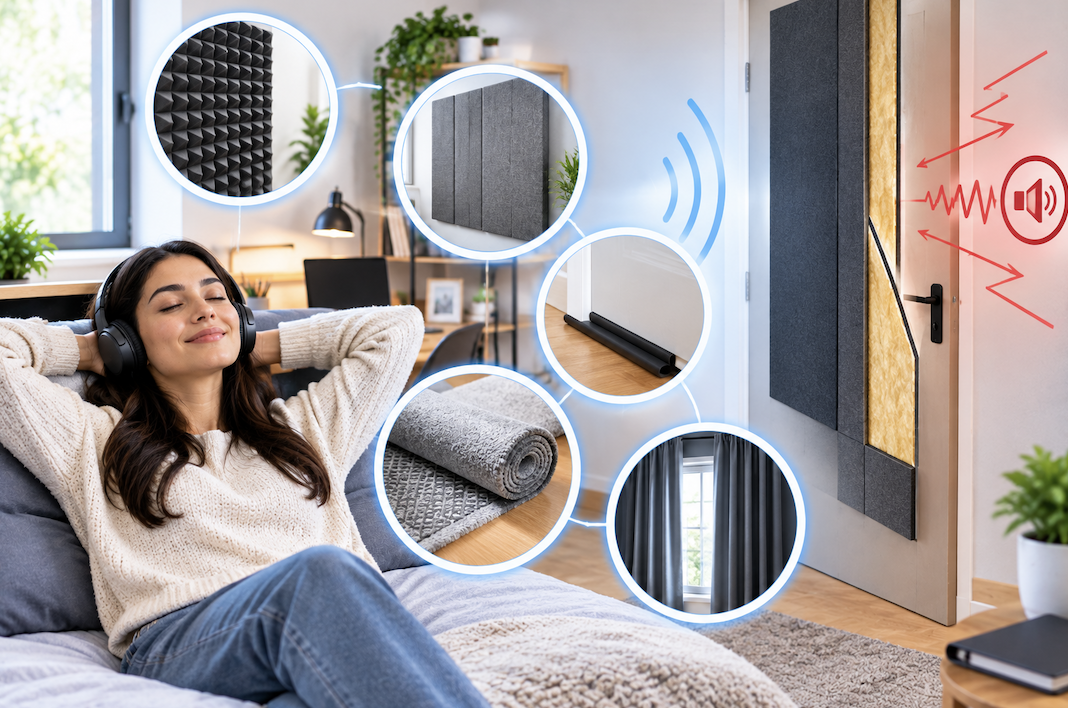
Full soundproofing, the kind that eliminates sound transmission almost entirely, generally requires structural renovation involving specialized wall assemblies and isolation techniques. But meaningful noise reduction, often enough to improve daily comfort and privacy, is achievable through a series of smaller, non-structural interventions that any renter or homeowner can pursue without major construction.
Why a Full Renovation Isn’t Always Necessary
Most everyday noise complaints, whether from a neighboring apartment, a busy street, or sound traveling between rooms in the same home, don’t require the extreme isolation used in professional recording studios to improve. A combination of gap sealing, absorptive materials, and smart furniture placement can meaningfully reduce perceived noise levels, often enough to resolve the practical problem even without achieving complete silence.
Assessing Which Type of Noise You’re Actually Dealing With
Before choosing interventions, spending a few days noting when noise is most noticeable and whether it correlates more with voices and media (suggesting airborne noise) or footsteps and movement (suggesting impact noise) helps prioritize which specific interventions from this guide will actually address your particular situation, rather than applying every technique broadly without a clear sense of the actual noise source and type.
Airborne vs Impact Noise
Airborne noise, like conversation, television sound, or traffic, travels primarily through air and gaps in a room’s envelope, while impact noise, like footsteps or furniture being moved, transmits through direct physical contact with a structure, such as a floor or shared wall. These two noise types require somewhat different solutions, which is why which type is actually causing a specific noise problem matters before choosing which interventions to prioritize.
Sealing Gaps Around Doors
Gaps around a door frame allow sound to pass through nearly as easily as air, making door sealing one of the most impactful and least expensive soundproofing interventions available. The draft stoppers discussed in the earlier weatherproofing guide serve a dual purpose here, blocking both cold air infiltration and a meaningful amount of sound transmission under the door specifically.
Considering Interior Door Quality
Many interior doors, particularly older or budget hollow-core doors, offer minimal inherent sound blocking regardless of how well the surrounding gaps are sealed. For a room where sound privacy is a significant priority, replacing a hollow-core door with a solid-core door provides a meaningfully better sound-blocking foundation than sealing gaps around an inherently thin, hollow door alone can achieve.
Adding a Door Sweep
Beyond a temporary draft stopper, installing a permanent door sweep, a strip attached to the bottom of the door that seals the gap against the floor, provides a more consistent, always-active solution than remembering to place a separate draft stopper each time. This is an inexpensive, straightforward DIY installation for most standard doors.
Installing Acoustic Door Seals
For more significant noise reduction around a door, acoustic-specific weatherstripping, denser and more effective at sound blocking than standard weatherstripping discussed in the weatherproofing guide, seals the entire door perimeter rather than just the bottom gap, addressing sound leakage from all sides of the door frame simultaneously.
Addressing Windows for Sound Reduction
Windows, particularly older single-pane models discussed in the earlier energy-efficient windows guide, are a significant sound transmission point, and the same interventions that improve energy efficiency, like weatherstripping and storm windows, also meaningfully reduce sound transmission as a secondary benefit, making window sealing a dual-purpose improvement.
Considering Double-Glazed Window Film as an Alternative
For renters or anyone not ready to invest in storm windows, adhesive window insulation film, originally intended for the energy efficiency purposes discussed in the weatherproofing guide, provides a modest secondary sound-dampening benefit as well, offering a lower-cost, temporary middle ground between doing nothing and installing storm windows.
Using Heavy Curtains for Sound Absorption
Dense, heavy curtains, particularly ones specifically marketed for sound dampening with multiple fabric layers, absorb sound that would otherwise reflect off a bare window and reduce some transmission through the window itself. This is a relatively low-cost, easily reversible option particularly well-suited to renters who can’t make permanent window modifications.
Rugs and Carpet for Impact Noise
For impact noise specifically, like footsteps from an upstairs neighbor or sound traveling down to a room below, a thick rug with a dense pad underneath absorbs a meaningful amount of this vibration -based sound before it fully transmits through a floor structure, making this one of the more effective interventions specifically for impact noise rather than airborne noise.
Using Furniture Placement as a Sound Buffer
Positioning bulky furniture, particularly upholstered pieces like sofas and armchairs, against a shared wall adds mass and absorptive material that reduces sound transmission through that wall, functioning as an accessible, no-cost soundproofing intervention using furniture most people already own rather than requiring new purchases specifically for sound control.
Considering a Room’s Existing Wall Construction
Older homes with plaster and lath walls often provide somewhat better inherent sound isolation than newer homes built with standard drywall over wood studs, given plaster’s greater density and mass, which is worth keeping in mind when setting expectations for how much additional intervention a specific room might realistically need compared to a neighboring room of different construction.
Adding Acoustic Panels
Acoustic foam or fabric-wrapped panels, mounted on walls, absorb sound reflections within a room, reducing echo and making the space feel quieter overall, though it’s worth these panels primarily improve a room’s internal acoustics rather than blocking sound from entering or leaving through walls, which requires the mass-based approaches discussed next.
Addressing Ceiling and Floor Noise Between Levels
For noise traveling between floors in a multi-story home, the rug and carpet approach discussed earlier addresses noise from above, while for noise traveling upward from below, adding a layer of mass-loaded vinyl or acoustic underlayment beneath flooring during a flooring replacement project, referenced in the earlier flooring comparison guide, offers a more thorough solution than furniture placement alone can achieve for this specific direction of sound travel.
Mass-Loaded Vinyl
Mass-loaded vinyl is a dense, flexible material that can be installed behind drywall or as a standalone layer to add mass specifically for blocking sound transmission, offering meaningfully better sound blocking than lighter acoustic foam panels, though it requires more involved installation, sometimes including removing and reinstalling drywall, making it a more advanced project than the simpler interventions covered earlier in this guide.
Soundproofing Electrical Outlets
Similar to the draft-related outlet gaps discussed in the weatherproofing guide, electrical outlets on shared walls can be a minor but real sound transmission point, and foam gasket inserts behind outlet covers, along with acoustic putty pads specifically designed for this purpose, reduce this often-overlooked gap in an otherwise sealed wall.
Using Bookshelves as Sound Barriers
A fully loaded bookshelf placed against a shared wall combines mass and irregular surface texture that helps both absorb and diffuse sound, functioning similarly to the furniture placement strategy discussed earlier while also providing storage function, making it a practical dual-purpose addition for anyone with books or other dense items to store.
Considering Door Placement and Room Layout
In situations with some flexibility over furniture and room layout, positioning a bed, desk, or other primary-use furniture as far as practically possible from a shared wall or noisy exterior wall reduces the direct impact of transmitted sound simply through distance, complementing the more active interventions discussed throughout this guide with a passive, no-cost layout adjustment.
Addressing Shared Walls in Apartments
For apartment dwellers dealing with noise from a neighboring unit, the combination of a loaded bookshelf or furniture against the shared wall, acoustic panels, and door and window sealing represents the most realistic set of interventions available without structural changes that aren’t typically permitted in a rental situation, and combining several of these approaches together produces more noticeable results than relying on any single intervention alone.
Considering Soundproofing Curtains for Doors
Similar to the heavy curtain approach for windows, a dense curtain hung over an entire doorway, particularly for doorways without a door at all (common in some open-concept homes or closets used as makeshift rooms), adds a meaningful sound-dampening layer that a bare, uncovered opening otherwise provides no barrier against at all.
Using White Noise as a Complementary Strategy
Rather than eliminating noise entirely, a white noise machine or fan can mask intermittent, distracting sounds by providing a consistent, less noticeable background sound, which is a different approach from the physical sound-blocking interventions discussed throughout this guide, but a practical complement particularly effective for sleep-related noise sensitivity.
Combining Multiple Interventions for Best Results
No single intervention covered in this guide produces dramatic results in isolation, but combining several — sealed doors, heavy curtains, a loaded bookshelf against a shared wall, and a rug with dense padding — compounds into a noticeably quieter room overall, reinforcing that layering multiple smaller improvements together produces better results than expecting any single product or technique to solve a noise problem completely on its own.
Budget vs Premium Soundproofing Approaches
A budget approach combining door sweeps, draft stoppers, heavy curtains, and rearranged furniture can meaningfully improve a noise problem at minimal cost. A more premium approach adding acoustic panels and mass-loaded vinyl behind drywall provides more substantial sound blocking but represents a considerably larger investment of both money and installation effort, making it worth starting with the budget interventions first and assessing whether the improvement is sufficient before committing to more involved and expensive options.
Common Soundproofing Mistakes
Relying solely on acoustic foam panels while expecting them to block sound from adjacent rooms, rather than their primary function is absorbing reflections within the room itself, is a common and understandable misconception. Addressing only one noise source, like a door, while ignoring other significant gaps like windows or outlets, is another common oversight that limits the overall effectiveness of an otherwise reasonable soundproofing effort.
Documenting Noise Issues for Landlord Communication
For renters dealing with noise from a neighboring unit’s disruptive behavior rather than normal living sounds, keeping a simple log of specific incidents, similar to the documentation habits recommended throughout earlier home maintenance guides, provides useful evidence if formally raising the issue with a landlord or property management becomes necessary alongside the physical interventions covered throughout this guide.
Setting Realistic Expectations
None of the interventions covered in this guide will achieve the complete silence of a professional recording studio, and it’s worth setting expectations around meaningful reduction and improved comfort rather than total noise elimination, particularly for anyone dealing with significant structural sound transmission that requires renovation-level intervention to fully resolve.
Considering Ceiling Noise From Above in Apartments
For apartment residents dealing specifically with noise from an upstairs unit, beyond the rug and carpet approach discussed earlier, a suspended acoustic ceiling tile system, while a more involved installation than most interventions in this guide, offers a more substantial solution for persistent, significant ceiling noise that lighter interventions haven’t adequately resolved.
When to Consider Professional Help
For persistent, significant noise issues that meaningfully affect quality of life despite trying the interventions covered in this guide, consulting an acoustic professional or contractor experienced in sound isolation can identify more targeted, structural solutions specific to your home’s construction, appropriate for situations where DIY approaches aren’t providing adequate relief.
A Simple Room-by-Room Priority Checklist
For a bedroom, prioritize door sealing and a rug for footstep noise from above. For a home office handling video calls, prioritize door and window sealing plus a loaded bookshelf against any shared wall. For a shared living space, heavy curtains and furniture placement against problem walls generally address the most common noise complaints without needing every intervention covered in this guide applied simultaneously to a single room.
Considering Soundproofing for Home Studios and Recording Spaces
For anyone setting up a dedicated space for podcast recording, music, or content creation, the combination of interventions covered throughout this guide becomes especially relevant, though achieving professional recording quality typically still requires purpose-built acoustic treatment beyond the general home comfort-focused approaches discussed here, making it worth researching audio-production-specific guidance separately for that particular, more demanding use case.
Keeping Maintenance Simple Going Forward
Once initial soundproofing interventions are in place, maintenance is minimal, periodically checking that door sweeps and weatherstripping haven’t worn down, and that furniture hasn’t shifted away from the wall positions chosen for their sound-dampening benefit, keeps the overall setup performing as intended without needing ongoing active effort beyond this occasional check.
A Final Note on Cost-Effectiveness
Nearly every intervention discussed in this guide costs far less than professional soundproofing renovation, making it worthwhile to work through the full range of accessible options before assuming a noise problem requires an expensive structural solution, since the cumulative effect of several modest, affordable changes often resolves the practical issue just as effectively for typical household noise concerns.
Conclusion
Meaningful noise reduction is achievable without a full renovation by combining several targeted interventions: sealing gaps around doors and windows, adding absorptive materials like heavy curtains and rugs, and using furniture placement strategically against shared walls. Starting with the most affordable options and layering in more substantial interventions as needed produces improvement for most everyday noise problems.