Anti-aging skincare marketing is full of dramatic claims, but only a handful of ingredients have genuinely strong evidence behind them. Focusing on those, rather than chasing every trending ingredient, produces better long-term results with less wasted money.
What Actually Causes Visible Skin Aging
Visible skin aging results from a combination of factors: cumulative sun exposure (the single largest controllable factor), natural collagen decline with age, repeated facial movement forming expression lines over time, and lifestyle factors like smoking and significant sun exposure without protection. Understanding that sun exposure is the most significant controllable factor reframes which single habit matters most before considering any specific product.
Understanding Intrinsic vs Extrinsic Aging
Skin aging is generally divided into intrinsic aging, the natural, genetically determined process that happens regardless of environment, and extrinsic aging, caused by external factors like sun exposure, pollution, and lifestyle choices. Extrinsic factors are estimated to account for the majority of visible aging in most people, which is significant because extrinsic factors, unlike intrinsic genetic aging, are largely within an individual’s control through consistent protective habits.
Sunscreen: The Actual Best Anti-Aging Product
Consistent daily sunscreen use, covered extensively in earlier guides, remains the single most well-supported anti-aging step available, since it directly addresses the largest controllable cause of visible aging. No other product on this list matters as much if daily sunscreen isn’t already a consistent habit, making it worth restating as the foundational step before considering any other anti-aging ingredient.
Retinoids: The Gold Standard Active
Retinol and prescription-strength retinoids, covered in detail in an earlier guide, remain the most well-studied and consistently effective anti-aging active ingredient available, supporting collagen production and improved cell turnover with a substantial body of research behind their use.
The gradual introduction approach covered previously remains essential for anyone starting retinoid use specifically for anti-aging purposes.
Retinoids: The Gold Standard Active (Continued)
Beyond the collagen and turnover benefits already discussed, consistent long-term retinoid use also shows evidence for improving skin texture and reducing the appearance of enlarged pores over time, adding to the case for retinoids as the single most versatile anti-aging active currently available, provided the gradual introduction approach from earlier guides is followed to minimize irritation.
Vitamin C for Antioxidant Protection
Vitamin C serums offer antioxidant protection against environmental damage and some evidence supporting mild brightening and collagen-supporting effects, making them a reasonable complement to retinol and sunscreen, applied in the morning as covered in earlier guides on ingredient timing and combination.
Antioxidants Beyond Vitamin C
Vitamin E and ferulic acid are commonly paired with vitamin C in serums specifically because they stabilize the vitamin C molecule and enhance its overall antioxidant effect, which is why many well-formulated vitamin C serums list these as supporting ingredients rather than vitamin C being used entirely alone.
Peptides Explained
Peptides are short chains of amino acids that signal skin to produce more collagen, and while research is generally positive, the evidence base is less extensive than for retinoids. Peptides are reasonably positioned as a complementary ingredient alongside retinol and sunscreen, rather than a replacement for either, particularly for anyone whose skin doesn’t tolerate retinol well and needs a gentler alternative to include in a routine.
AHA Exfoliation for Texture Improvement
Alpha hydroxy acids, like glycolic or lactic acid, support gentle exfoliation that can improve skin texture and tone evenness over time, complementing retinol’s cell turnover benefits. As covered in earlier ingredient-combining guides, these should generally be used on alternating nights from retinol rather than combined in the same routine, to avoid excessive irritation.
Hyaluronic Acid for Plumpness
Hyaluronic acid draws and holds moisture within the skin, contributing to a plumper, more hydrated appearance that can make fine lines look less pronounced, though this effect is more about temporary hydration than a genuine structural change to the skin. It’s a reasonable, low-risk addition to nearly any routine, including alongside stronger actives like retinol, without the combination concerns that apply to acids and retinol together.
Considering Supplements: A Note of Caution
Oral collagen supplements and various anti-aging vitamins are heavily marketed, but the evidence supporting meaningful skin benefits from oral supplementation remains considerably weaker and less consistent than the evidence for the topical ingredients and sun protection habits discussed throughout this guide. Anyone considering supplements specifically for skin benefits should discuss this with a doctor rather than relying on supplement marketing claims alone.
Ingredients With Weaker Supporting Evidence
Topical collagen creams face a fundamental limitation: collagen molecules are generally too large to meaningfully penetrate the skin barrier when applied topically, which limits how much a topical collagen product can directly rebuild collagen compared to ingredients like retinol that stimulate the skin’s own collagen production instead. Similarly, many trending “miracle” ingredients that circulate through social media lack the extensive research base that retinoids, vitamin C, and sunscreen have accumulated over decades of study, making them reasonable to try cautiously but not to prioritize over the better-established options discussed above.
Niacinamide’s Supporting Role
Niacinamide, discussed in earlier ingredient-combining guides for its broad compatibility, also offers some supporting evidence for improving skin barrier function and reducing the appearance of fine lines and uneven tone over time, making it a reasonable, gentle addition to an anti-aging routine alongside the more potent actives covered above.
Combining Anti-Aging Actives Without Overloading Skin
As covered in the earlier ingredient-combining guide, an anti-aging routine involving several actives retinol, vitamin C, and an AHA exfoliant, for instance needs the same careful sequencing and alternating schedule discussed there, rather than assuming that using every well-supported anti-aging ingredient simultaneously will accelerate results.
Setting Realistic Timelines for Results
As covered in the earlier retinol guide, meaningful visible improvement from an anti-aging routine typically takes several months of consistent use, since these ingredients work at the level of cellular turnover and collagen production rather than providing immediate cosmetic change. Marketing promising dramatic results within days or a couple of weeks should be treated with appropriate skepticism given how these ingredients actually function biologically.
Facial Massage and Tools: What the Evidence Actually Shows
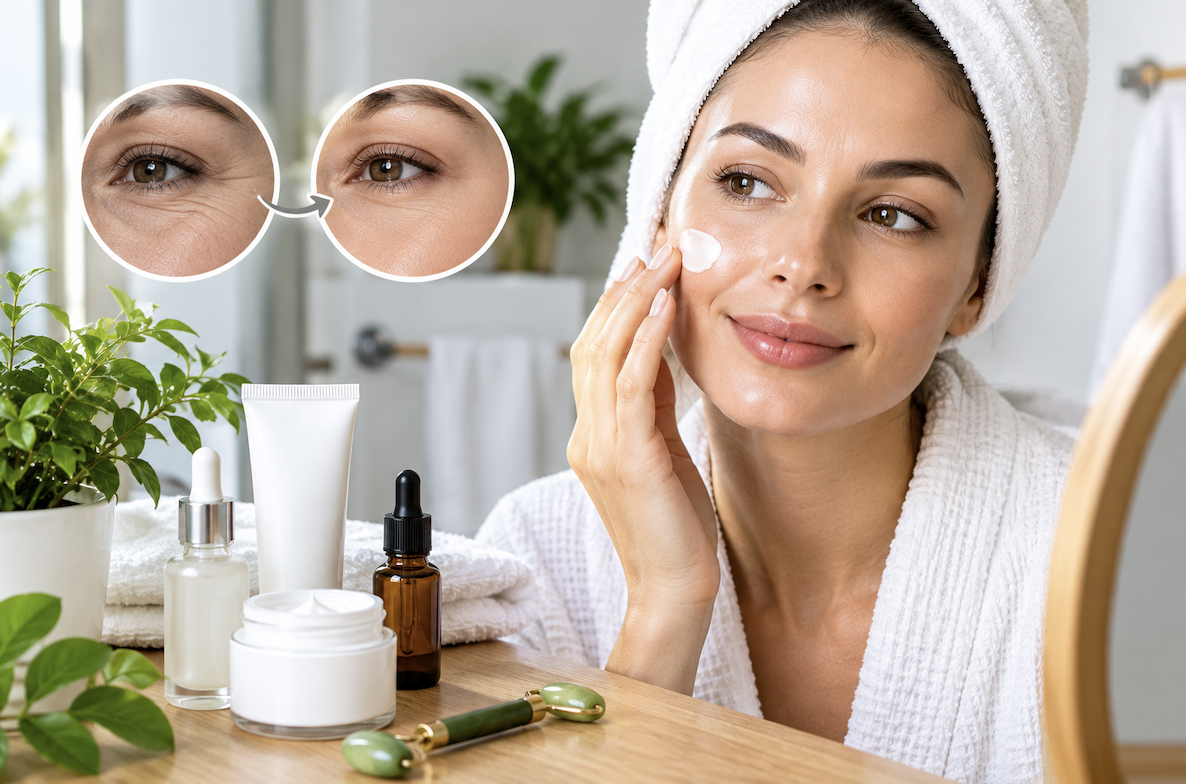
Facial massage tools like rollers and gua sha have gained popularity, and while they may offer temporary de-puffing and relaxation benefits through improved circulation, the evidence for lasting anti-aging structural change from these tools alone is considerably weaker than for the topical ingredients discussed above. They’re reasonable to enjoy as a pleasant addition to a routine, but shouldn’t be expected to replace the more substantiated ingredients covered earlier.
Procedures vs Skincare: A Brief Overview
In-office procedures like professional chemical peels, microneedling, and laser treatments can produce more dramatic, faster results than topical skincare alone, but they involve higher cost, some recovery time, and should be performed by a qualified, licensed professional. These are worth discussing with a dermatologist as a complement to, rather than a replacement for, a consistent daily skincare routine, since even procedure-based results benefit from ongoing sun protection and maintenance skincare afterward.
Reapplying Sunscreen as Part of an Anti-Aging Routine
As covered extensively in the earlier dedicated sunscreen guide, reapplication throughout the day during extended outdoor exposure matters just as much for anti-aging purposes as the initial morning application, since a single application alone doesn’t provide all-day protection against the cumulative sun exposure that drives extrinsic aging.
Building a Realistic Anti-Aging Routine on a Budget
A reasonably complete anti-aging routine doesn’t require expensive products across every category: a daily broad-spectrum sunscreen, a nightly retinol product introduced gradually, and a basic moisturizer cover the most well-supported bases. Vitamin C, peptides, and hyaluronic acid are worthwhile additions as budget allows, but shouldn’t be prioritized over the three foundational elements if budget is genuinely limited.
The Role of Diet in Skin Aging
While no single food dramatically reverses skin aging, a generally balanced diet with adequate antioxidants from fruits and vegetables supports overall skin health as one piece of a broader approach, working alongside rather than replacing the topical and sun-protective habits discussed throughout this guide.
The Role of Lifestyle Factors
Beyond topical products, adequate sleep, staying hydrated, avoiding smoking, and moderating alcohol intake all support overall skin health and can influence how skin ages over time, working alongside rather than replacing a topical routine. No skincare product fully compensates for consistently poor sleep or smoking, making these lifestyle factors worth genuine consideration alongside product choices.
Considering Professional Skin Assessment
A dermatologist can assess skin type, existing sun damage, and specific concerns to recommend a more personalized starting routine than generic guidance alone can offer, particularly valuable for anyone unsure where to begin among the many ingredients discussed throughout this guide.
Common Anti-Aging Mistakes
Chasing trending, unproven ingredients while neglecting consistent sunscreen use is one of the most common and consequential mistakes, given how much sunscreen alone contributes to preventing further visible aging. Expecting dramatic results within days, then abandoning an otherwise well-chosen routine due to impatience, is another common pattern that prevents genuinely effective ingredients from having the months needed to show their real benefit.
How Skin Aging Concerns Change With Age
The priority ingredients and concerns naturally shift over time. Younger skin often benefits most from establishing consistent sunscreen and gentle antioxidant habits preventively, while skin further along in the aging process may benefit from a more assertive combination of retinoids and in-office procedures discussed earlier. There’s no single universal starting point that fits every age, and adjusting expectations and routine intensity accordingly makes for a more realistic, sustainable long-term approach.
Conclusion
Sunscreen, retinoids, and a handful of well-supported complementary ingredients like vitamin C and peptides represent the most evidence-based approach to anti-aging skincare currently available. Consistency and realistic timeline expectations matter more for actual results than chasing whichever new ingredient is currently trending.