Winter dryness is one of the most common seasonal skin complaints, driven by a combination of cold outdoor air, low humidity, and indoor heating that strips moisture from the skin faster than it can be replenished. While plenty of skincare products address this, a number of simple, natural approaches can meaningfully help alongside or sometimes instead of a specialized product routine.
How Age Affects Skin’s Winter Response
Skin’s natural oil production tends to decline with age, which means winter dryness often becomes more pronounced later in life compared to how the same skin responded to cold weather at a younger age. This is worth keeping in mind if a routine that worked fine in past winters suddenly feels insufficient it may reflect a genuine, age-related shift rather than a flaw in the routine itself, and adjusting toward richer products accordingly is a reasonable response rather than a sign something needs fixing.
Why Skin Gets Drier in Winter
Cold air holds less moisture than warm air, and indoor heating systems further reduce humidity inside homes during winter months. This combination pulls moisture from the skin’s outer layer faster than in other seasons, which is why a moisturizer that worked fine in summer can suddenly feel insufficient once winter arrives.
Adjusting Your Diet and Hydration Habits
While topical care addresses skin from the outside, staying adequately hydrated and including sources of healthy fats in your diet can support skin’s ability to retain moisture from the inside, though this works alongside a topical routine rather than replacing it. Skin that’s already consistently moisturized externally will generally show more visible benefit from these habits than expecting diet changes alone to resolve significant dryness.
Using a Humidifier
Adding moisture back into indoor air with a humidifier addresses the problem at its source, rather than only treating the skin after moisture has already been lost. Keeping indoor humidity in a moderate range during winter months helps skin retain moisture more effectively throughout the day, and this single change often produces noticeable improvement within a week or two of consistent use, particularly in bedrooms where humidifiers run overnight.
Choosing Fabrics That Don’t Worsen Dryness
Wool and other rough, scratchy fabrics can further irritate already-dry, sensitive winter skin, particularly on the arms and torso. Choosing softer, breathable base layers underneath warmer winter
clothing, and washing new sweaters before wearing them directly against skin, reduces this additional source of irritation that’s easy to overlook when focused only on topical skincare changes.
Choosing Oil-Based Over Water-Based Moisturizers
Water-based moisturizers, often lighter and preferred in summer, can evaporate faster in the dry winter air, leaving skin feeling dry again shortly after application. Oil-based moisturizers or balms create a heavier barrier that holds moisture in longer, making them generally better suited for winter use, even for skin types that lean oily in warmer months.
Understanding Occlusives
Occlusive ingredients, like petroleum jelly, shea butter, and certain natural oils, work by forming a protective seal over the skin that prevents moisture from evaporating, rather than adding moisture directly. Applying an occlusive over a water-based product, rather than alone, tends to work better, since occlusives seal in existing moisture rather than providing much hydration on their own.
Natural Oils Worth Considering
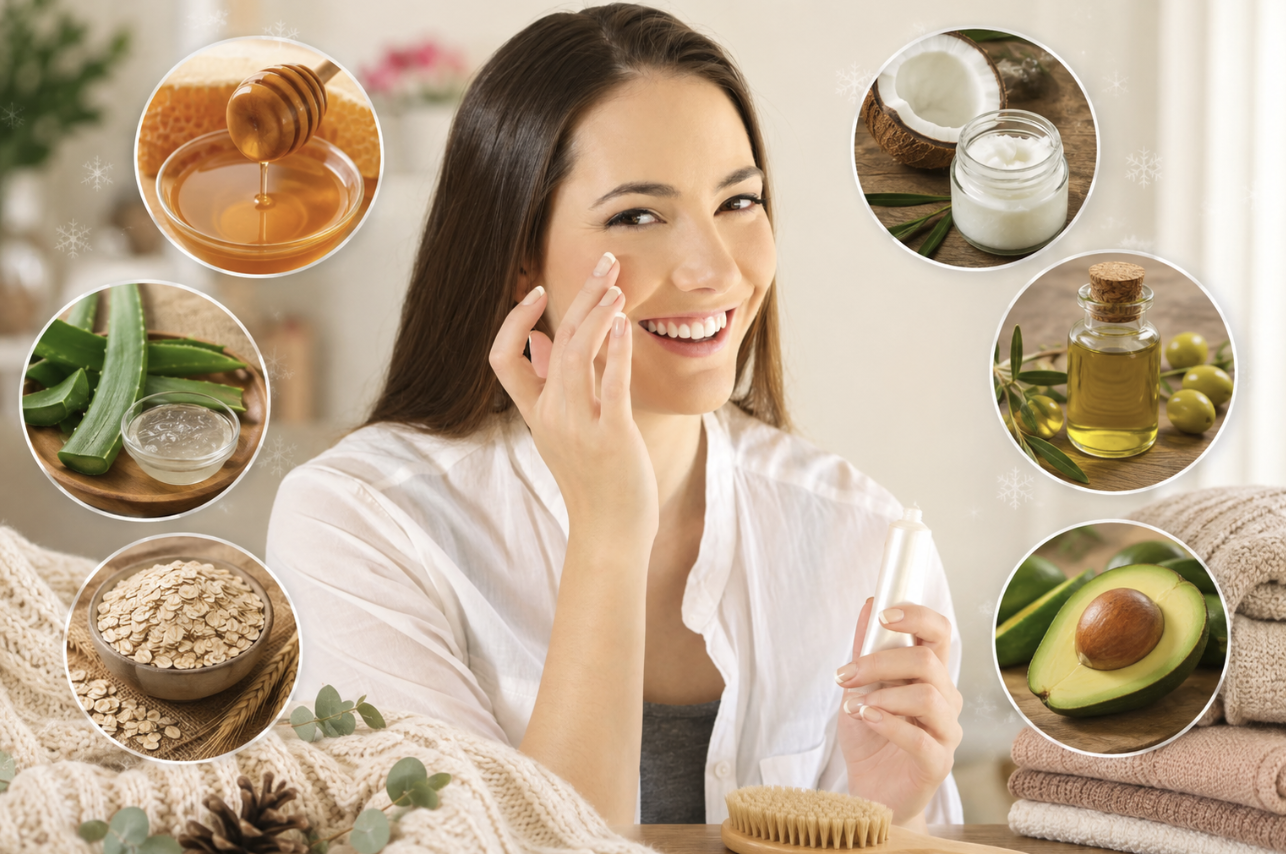
Coconut oil, jojoba oil, and sweet almond oil are commonly used natural options for dry skin, each with slightly different textures and absorption rates. Jojoba oil closely resembles the skin’s own natural oils and tends to absorb without feeling overly greasy, making it a reasonable starting point for anyone new to using natural oils on the face specifically, as opposed to body use where a heavier oil is less of a concern.
Preventing Fogging on Bathroom Mirrors and Cold Snaps
Dry winter skin can be worsened indirectly by low indoor humidity that also causes issues like static electricity and, in colder climates, visible condensation on windows during sharp temperature swings. Running a humidifier consistently, rather than only during particularly dry stretches, keeps indoor conditions more stable for skin rather than allowing it to fluctuate between reasonably humid and very dry throughout the week.
Aloe Vera for Mild Irritation
Pure aloe vera gel offers a light, soothing option for mildly irritated winter skin, though it’s generally more hydrating than deeply moisturizing on its own, meaning it works best layered under a richer moisturizer rather than used as a standalone winter treatment. It’s a reasonable option for areas prone to mild irritation, like around the nose during a cold, rather than for widespread body dryness.
Oatmeal Baths for Widespread Dryness
Colloidal oatmeal, finely ground oatmeal specifically processed for skincare use, has long been used to soothe dry, irritated skin when added to a lukewarm bath. It forms a mild protective layer on the skin and can help reduce the itching that often accompanies severe winter dryness, particularly on the arms and legs where dryness tends to be more widespread than on the face.
Honey as a Gentle Hydrating Mask
Raw honey has natural humectant properties, meaning it draws moisture toward the skin rather than sealing it in. Applied as a simple mask for ten to fifteen minutes before rinsing, it can offer a gentle hydration boost, though it works best as an occasional treatment rather than a daily-use product, given the stickiness and the need to rinse it off afterward.
Adjusting Your Cleanser for Winter
A foaming or heavily sudsing cleanser, even a mild one, can strip more natural oil than a cream-based or oil-based cleanser during a season when skin is already struggling to retain moisture. Switching to a gentler, non-foaming cleanser specifically during colder months, even if your regular cleanser works fine the rest of the year, is a small adjustment that reduces one more source of moisture loss.
Avoiding Hot Showers
Hot water strips natural oils from the skin more aggressively than lukewarm water, which can worsen winter dryness even though a hot shower feels appealing in cold weather. Shortening shower time and using lukewarm rather than hot water, then applying moisturizer within a few minutes of stepping out while skin is still slightly damp, helps lock in more moisture than applying moisturizer to fully dry skin later.
Don’t Neglect Hands and Lips
Hands and lips are often the most exposed and least protected areas during winter, and both tend to show dryness faster than the rest of the body. A thicker hand cream applied after every wash, and a natural lip balm containing beeswax or shea butter reapplied throughout the day, address two areas that general body moisturizing routines often overlook.
Layering Technique for Maximum Effect
Applying products from thinnest to thickest a hydrating toner or mist first, followed by a moisturizer, and finishing with an occlusive oil or balm on top tends to lock in more moisture than any single product used alone. This layered approach is particularly useful for severely dry winter skin that doesn’t respond adequately to a single moisturizer step.
Patch Testing Natural Ingredients
“Natural” doesn’t automatically mean risk-free for skin, and ingredients like certain essential oils or raw honey can still cause irritation or allergic reactions in some people. Testing any new natural ingredient on a small area, like the inside of the wrist, and waiting 24 hours before wider use is a reasonable precaution, especially for anyone with a history of skin sensitivity.
Considering Skin Barrier Repair Ingredients
Beyond basic moisturizing, ingredients specifically aimed at repairing the skin’s protective barrier, such as ceramides, fatty acids, and cholesterol combined together, can help address winter dryness at a more foundational level than surface hydration alone. A compromised skin barrier struggles to retain moisture regardless of how much moisturizer is applied on top, which is why persistent, severe dryness sometimes needs barrier-focused ingredients rather than simply increasing how often a standard moisturizer is applied.
When Natural Remedies Aren’t Enough
If dryness persists despite consistent moisturizing, or if skin becomes cracked, painful, or shows signs of infection, that’s a signal to move beyond home remedies and consult a dermatologist. Persistent, severe dryness can sometimes indicate an underlying skin condition that benefits from targeted treatment beyond what general moisturizing, however consistent, can resolve on its own.
Adjusting Makeup Routines for Winter Skin
Matte or long-wear makeup formulas that work well in warmer, more humid months can emphasize dry patches and flaking during winter. Switching to more dewy or hydrating makeup formulas during colder months, and ensuring skin is fully moisturized before application, helps makeup sit more smoothly and avoids drawing attention to areas of dryness that a heavier matte formula would otherwise highlight.
Common Winter Skincare Mistakes
Over-exfoliating is a common mistake during winter, since already-compromised, dry skin is more vulnerable to irritation from exfoliation than it would be in other seasons. Reducing exfoliation frequency during winter months, rather than maintaining the same routine used in summer, helps avoid compounding dryness with additional irritation.
Building a Simple Winter Skincare Checklist
A practical winter routine checklist includes: switching to a cream or oil-based cleanser, applying moisturizer to slightly damp skin after bathing, sealing with an occlusive at night, running a humidifier in main living and sleeping areas, and reapplying hand cream and lip balm throughout the day. None of these steps require an elaborate product collection, and consistency across this simple checklist tends to outperform an occasional, more expensive treatment used inconsistently.
Conclusion
Winter dryness responds well to a combination of environmental changes, like adding humidity back into indoor air, and simple, layered skincare adjustments using oil-based products and occlusives. Natural remedies like oatmeal baths and honey masks can meaningfully support a routine, but persistent or severe dryness that doesn’t improve is worth discussing with a dermatologist rather than continuing to rely on home treatment alone.