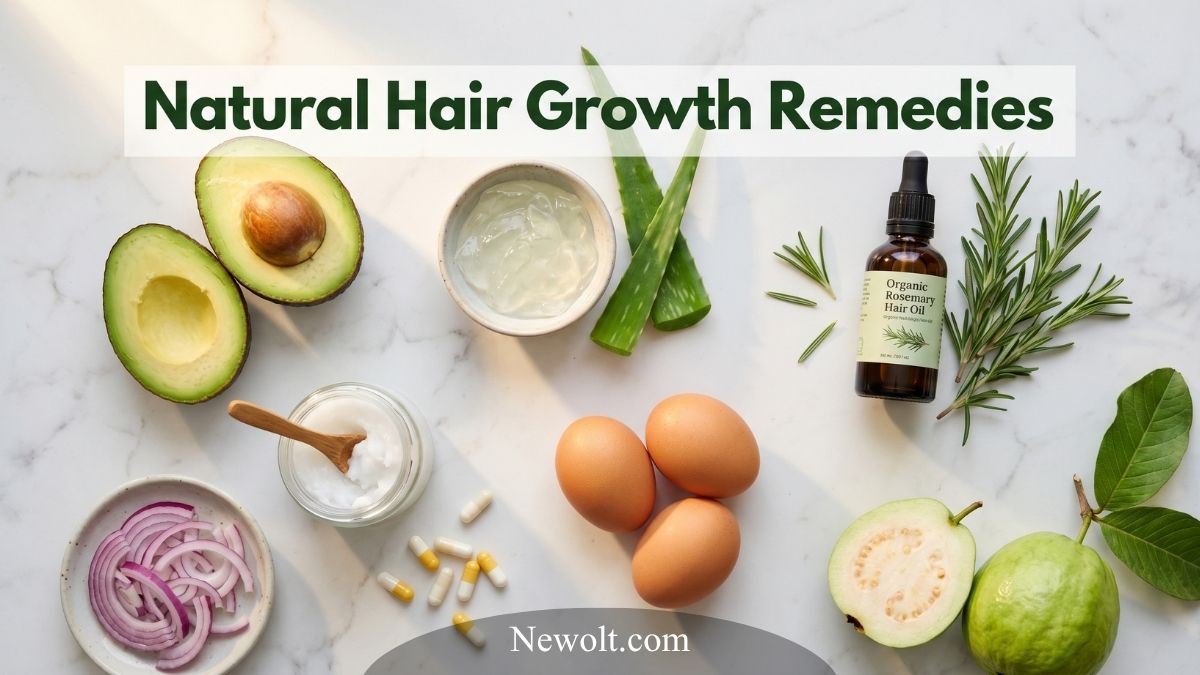
These natural hair growth remedies are simple, effective, and easy to use at home. Let’s be honest. Waking up and finding a clump of hair on your pillow is not exactly the best start to the morning. Then you check the shower drain, and there is even more hair waiting for you. You run your fingers through your hair and notice a few more strands falling out. That is usually the moment people start to worry. The good news is that many natural hair growth remedies may help support stronger, healthier hair over time. You do not need expensive salon treatments or complicated products. With the right home remedies, consistency, and care, you can improve scalp health and encourage natural hair growth.
But here is the good news. You do not need expensive salon treatments or a PhD in chemistry to fix this. Natural hair growth remedies have been around forever, they actually work, and most of them are probably already sitting in your kitchen right now.
This guide covers everything — from oils to vitamins to lifestyle habits — that genuinely helps with hair loss and brings back real hair growth. Let us get into it.
Quick Summary: The most effective natural hair growth remedies include scalp massage, rosemary oil, onion juice, biotin supplements, fish oil, and red light therapy. Results take 3–6 months. Consistency is everything.
Why Is Your Hair Falling Out in the First Place?
Before we talk fixes, let us talk causes. Because throwing aloe vera at a problem you do not understand is like putting a bandage on a broken leg.
Hair thinning and hair loss happen for many reasons. Genetics is the big one — if your parents have male pattern baldness or female pattern baldness, you might be next in line. Not exactly the inheritance you were hoping for.
Then there is hormonal imbalance. When hormones go sideways — think puberty, pregnancy, or menopause — the hair growth cycle gets disrupted. A hormone called DHT is especially nasty. Over time, it reduces hair follicles by binding to them. This involves an enzyme called 5-alpha-reductase which converts testosterone into DHT. Less follicle space means less hair. Simple but brutal.
Stress is another massive culprit. Real deep psychological pressure pushes your hair follicles into a resting phase called telogen effluvium — where hair stops growing and just falls out instead. A condition called alopecia areata happens when your immune system actually attacks your own hair follicles. That puts your body under extreme stress.
Nutritional deficiency plays a huge role too. If your body is not getting enough protein, biotin, zinc, vitamin C, vitamin E, or omega-3 fatty acids — your hair suffers. Hair is mostly made of protein. Starve it and it gives up.
Other causes include scalp infections, androgenetic alopecia, oxidative stress, certain medications, and tight hairstyles. The right natural hair growth remedies depend on understanding what is actually causing your hair fall prevention problem.
Best Natural Hair Growth Remedies — One by One
Scalp Massage — The Free Fix Nobody Uses Enough
Scalp massage is one of the most underrated home remedies out there. It costs nothing, feels amazing, and actually works.
When you massage your scalp, you increase blood circulation to the area. More blood means more oxygen and nutrients reaching your hair follicles and dermal papilla cells — the little guys sitting at the base of each follicle that control the entire hair growth cycle.
Studies show regular scalp massage increases hair thickness and hair density over time. Use your fingertips in small circular motions for at least 4 minutes daily. You can do it dry or pair it with an oil for double the benefit.
Aloe Vera — Your Scalp’s Chill Pill
Aloe vera is the grandma of all natural hair growth remedies. It soothes the scalp, reduces inflammation, unblocks clogged hair follicles, reduces dandruff, and keeps overall scalp health in good shape.
Apply pure aloe vera gel directly to your scalp a few times a week. Leave for 30 minutes then rinse. For an additional calming effect, incorporate it into your hair mask. Centuries of use across cultures strongly support aloe vera as a genuine home remedy for hair loss.
Onion Juice — Yes, Really
This one sounds disgusting. And it kind of is. But onion juice is one of the most effective natural ingredients for hair regrowth that actually has clinical evidence behind it.
It is loaded with sulfur which strengthens hair follicles, boosts keratinocyte growth factor, and improves blood circulation in the scalp. A 2014 study found that onion juice significantly helped people with alopecia areata regrow hair.
Blend a few onions, squeeze the juice, apply to your scalp, leave for at least 15 minutes, then shampoo out. Yes you will smell. Yes it is worth it.

Oils That Actually Do Something
Not all oils are equal. Here is what research actually supports:
Rosemary Oil
Rosemary oil is the superstar right now. Research shows it can be as effective as minoxidil for boosting hair regrowth. It blocks 5-alpha-reductase, reduces DHT, and improves blood circulation to the scalp. Mix a few drops into a carrier oil like jojoba oil or argan oil and massage in a few times a week.
Peppermint Oil
Peppermint oil increases blood flow to hair follicles and pushes them into the anagen phase — the active growth stage of the hair growth cycle. Prior to application, essential oils should always be diluted in a carrier oil. Never use directly on skin.
Castor Oil
Castor oil is rich in ricinoleic acid which reduces inflammation and improves blood circulation in the scalp. It lessens hair breakage by deeply moisturizing the hair shaft. Mix with coconut oil to make it easier to apply — it is thick stuff.
Coconut Oil
Coconut oil contains lauric acid which penetrates the hair shaft and reduces protein loss. It makes hair stronger from the inside. Use as a pre-wash treatment or leave-in for dry ends. A 2021 study also found it enriches the scalp microbiome.
Olive Oil
Olive oil is packed with vitamin E, omega-3 fatty acids, and antioxidants that strengthen hair roots and reduce hair fall. Warm slightly and massage into your scalp for 20-30 minutes before washing.
Jojoba Oil
Jojoba oil reduces inflammation, hydrates the scalp, and acts as a vehicle that carries other natural ingredients deeper into hair follicles. It is technically a wax, which is why it absorbs so beautifully. Great base for mixing your essential oils.
Fish Oil
Fish oil taken internally is loaded with omega-3 fatty acids that reduce inflammation, improve hair density, and support the hair growth cycle. Fish oil supplements show real improvements in hair thickness and reduced hair thinning in studies.
Red Ginseng Extract and Saw Palmetto
Red ginseng extract pushes hair follicles into the anagen phase faster, boosts dermal papilla cells, and may help prevent further hair loss. Found in many professional hair serum products and oral supplements.
Saw palmetto works similarly to finasteride — it blocks 5-alpha-reductase and reduces DHT levels. Studies show it improves hair density, slows hair thinning, and helps with both androgenetic alopecia and telogen effluvium. Available as an oil, supplement, or in hair thickening shampoo.
Pumpkin Seed Oil
Pumpkin seed oil also targets the 5-alpha-reductase enzyme. A solid human study showed a 40% increase in hair density after 24 weeks of use. Take as a supplement — 400mg daily — or apply directly in your hair care routine.

Vitamins and Supplements — Feed Your Hair From Inside
No amount of oils will fix a nutritional deficiency. From the inside out, your hair grows. Here is what actually matters:
| Nutrient | Why It Matters | Best Food Sources |
|---|---|---|
| Biotin (Vitamin B7) | Supports hair, skin, and nail health. Deficiency causes hair shedding. | Eggs, bananas, nuts, seeds, milk |
| Zinc | Critical for hair follicle function and cell repair. Deficiency = hair loss. | Oysters, beef, nuts, seeds |
| Vitamin C | Powerful antioxidant fighting oxidative stress and hair thinning. | Guava, spinach, citrus, sweet potatoes |
| Vitamin E | Protects hair follicles from oxidative stress damage. | Avocado, nuts, olive oil, seeds |
| Omega-3 Fatty Acids | Reduces scalp inflammation, improves hair density. | Salmon, sardines, mackerel, fish oil |
| Protein | Hair roots are made of protein. Not enough = hair stops growing. | Eggs, chicken, Greek yogurt, lentils |
| Iron | Delivers oxygen to hair follicles. Deficiency causes hair fall. | Spinach, lentils, fortified cereal, beef |
Take biotin supplements and zinc supplements if your diet lacks these nutrients. Always consult a healthcare professional before starting any supplement to avoid overdosing on vitamins — too much can actually cause problems.
Science-Backed Extras Worth Knowing
Red Light Therapy
Red light therapy — also called low-level light therapy — uses specific wavelengths of light to stimulate mitochondria in your scalp cells, boosting energy and encouraging hair follicles to grow. Several solid studies confirm it increases hair density and slows hair loss for both androgenetic alopecia and alopecia areata.
10–25 minute sessions, two–three times a week. Takes 4-6 months to see real results. Worth the patience because the results are genuinely impressive compared to most herbal remedies.
Caffeine
Caffeine applied to the scalp has a stimulating effect on hair follicles and can slow hair loss. Some research shows caffeine shampoo working better than minoxidil alone when combined. Do not drink ten cups of coffee thinking it will help your hair growth though — topical application is what works here. Your hair does not drink coffee. Sadly.
Melatonin
Melatonin is known as a sleep hormone but applied topically it works as an antioxidant and may slow hair loss and increase hair density in people with androgenetic alopecia. Still early research but promising enough to mention.
Your Daily Hair Care Routine for Better Growth
Consistency beats intensity every single time. Here is a simple daily hair care routine that covers all your bases:
- Morning: Take your biotin supplements, zinc supplements, and fish oil supplements with breakfast.
- Evening: Do 4-5 minutes of scalp massage with rosemary oil diluted in jojoba oil or coconut oil.
- 2-3 times a week: Apply a hair mask using aloe vera, olive oil, or avocado for deep conditioning.
- Once a week: Try onion juice treatment on your scalp for 15-20 minutes before shampooing.
- Daily: Eat a healthy diet rich in protein, omega-3 fatty acids, and fresh vegetables and fruits.
- Weekly: Use a gentle ketoconazole shampoo if you have scalp issues or dandruff alongside your hair loss treatment.
Common Mistakes That Wreck Your Hair
Half the battle with hair fall prevention is just stopping the things that damage your hair in the first place.
- Brushing wet hair — Water weakens the hair shaft. Use a wide-tooth comb gently instead.
- Too much heat — Blow dryers, flat irons, and curling irons all damage the hair shaft and cause hair breakage. Always use heat protectant spray.
- Tight hairstyles — Ponytails, braids, and buns pulled too tight damage hair roots and cause traction alopecia over time.
- Harsh chemical treatments — Perms, relaxers, and bleaching strip hair moisture and weaken strands. Space out treatments.
- Crash dieting — Starving your body of nutrients starves your hair follicles too. Leads to serious nutritional deficiency and hair thinning.
- Skipping trims — To maintain hair feeling and looking healthier and to get rid of split ends, trim roughly every six to eight weeks.
- Chlorine exposure — Pool water dries out hair and causes hair breakage. After swimming, put on a swim hat or rinse right away.
Best Foods for Hair Growth
Your healthy diet is the foundation of everything. Here are the top foods that directly support hair growth:
- Eggs — Rich in protein, biotin, and iron. The ultimate hair food.
- Salmon, sardines, mackerel — Packed with omega-3 fatty acids for scalp health and hair density.
- Greek yogurt — High in protein and vitamin B5 for better blood flow to the scalp.
- Spinach — Contains iron, vitamin A, vitamin C, folate, and beta carotene for a healthy scalp.
- Avocado — Loaded with vitamin E and healthy fats that protect hair follicles from oxidative stress.
- Sweet potatoes — Beta carotene, which your body transforms into vitamin A to keep your scalp hydrated, is abundant in sweet potatoes.
- Oysters — One of the best natural sources of zinc for hair follicle health.
- Lentils and soybeans — Plant-based protein and iron for those on vegan or vegetarian diets.
- Guava — One cup has 377mg of vitamin C — more than four times the daily recommended amount.
- Nuts and seeds — Great source of zinc, vitamin E, and omega-3 fatty acids all in one snack.

When to See a Dermatologist or Healthcare Professional
Important: Natural remedies work great for general hair thinning and mild hair loss. But some types of hair loss need medical attention. Always consult a dermatologist or healthcare professional if your hair loss is sudden, severe, or combined with other symptoms.
See a dermatologist or healthcare professional if you notice:
- Sudden or patchy hair loss that appears quickly
- Round bald patches — could be alopecia areata
- Scalp pain, redness, or severe itching alongside hair loss
- Fatigue, anxiety, or mood changes along with increased hair shedding
- Hair loss after starting a new medication
- No improvement after 6 months of consistent natural hair growth remedies
A dermatologist may recommend prescription treatments like minoxidil, finasteride, ketoconazole shampoo, or in severe cases, hair transplantation. These are more powerful than home remedies and work better for advanced androgenetic alopecia or alopecia areata.
Frequently Asked Questions
What is the best natural remedy for hair growth?
Honestly, there is no single magic answer — but if you had to pick one, scalp massage combined with rosemary oil is currently the strongest combination backed by real research. Rosemary oil blocks 5-alpha-reductase, reduces DHT, and improves blood circulation to your hair follicles — and studies show it performs as well as minoxidil for androgenetic alopecia without the nasty side effects like scalp itching. Pair that with daily scalp massage to boost blood flow to your dermal papilla cells, add biotin supplements and zinc supplements to fix any nutritional deficiency, and eat a healthy diet loaded with protein, omega-3 fatty acids, and vitamin C. That full combination — oils, scalp massage, vitamins, and good food — gives your hair growth cycle the best possible environment to thrive. Natural hair growth remedies work best when you stack them together rather than relying on just one. Give it at least 3 to 6 months of consistency and you will start seeing real differences in hair density and hair thickness.
How can I regrow my hair fast naturally?
Okay let us be real — “fast” is relative when it comes to hair regrowth. Your hair grows about half an inch per month on average. But there are definitely ways to speed up the process and reduce hair thinning at the same time. Start with daily scalp massage — even just 4 minutes a day significantly improves blood circulation to your hair follicles and pushes more of them into the anagen phase — that is the active hair growth stage. Apply rosemary oil or peppermint oil diluted in jojoba oil or coconut oil during your massage for extra stimulation. Fix your nutritional deficiency immediately — take biotin supplements, zinc supplements, and fish oil supplements daily. Eat protein-rich foods like eggs, chicken, and Greek yogurt because your hair roots are literally made of protein. Use aloe vera on your scalp to reduce inflammation and unblock hair follicles. Try red light therapy 2-3 times a week — it genuinely stimulates hair follicles at the cellular level. Manage stress because telogen effluvium from chronic stress is one of the biggest hidden causes of slow hair growth and hair fall prevention problems. Stay consistent with your hair care routine and results will come — usually within 3 to 6 months of honest effort.
What helps natural hair grow faster?
Several things genuinely help your natural hair growth speed up — and most of them are free or cheap. First, blood circulation is everything. Your hair follicles need constant blood flow bringing oxygen and nutrients to survive and grow. Scalp massage with essential oils like rosemary oil or peppermint oil is the most direct way to achieve this. Second, nutrition matters enormously. Biotin, zinc, vitamin C, vitamin E, iron, protein, and omega-3 fatty acids from a healthy diet are all directly involved in the hair growth cycle. A nutritional deficiency in any of these can seriously slow down your hair growth. Third, protect what you already have. Hair breakage along the hair shaft makes hair appear shorter even when it is growing. Use coconut oil and olive oil as deep conditioning home remedies, avoid heat tools, and ditch tight hairstyles. Fourth, sleep well. Melatonin — which your body produces during sleep — has been shown to support hair density and slow hair thinning. Poor sleep raises stress hormones like cortisol which directly disrupts your hair growth cycle. Fifth, consider red light therapy if you are serious about results. It is one of the few natural hair growth remedies with proper clinical evidence showing real improvements in hair density and hair thickness. Consistency across all these areas — not just one magic fix — is what truly accelerates natural hair growth.
How to grow hair fast in 7 days?
Alright, real talk. You are not going to grow dramatically long hair in 7 days — that is just biology doing its thing. Hair grows roughly half an inch per month and no oil, pill, or prayer changes that fundamental fact. BUT — you can absolutely do things in 7 days that set your hair growth on a seriously better track and visibly improve your scalp health. Day 1 — start daily scalp massage for 5 minutes with rosemary oil mixed in jojoba oil to wake up your hair follicles and boost blood circulation. Day 2 — apply an aloe vera hair mask to soothe your scalp, reduce inflammation, and unblock hair follicles. Day 3 — try onion juice treatment for 15 minutes to flood your hair roots with sulfur and stimulate blood flow. Day 4 — deep condition with coconut oil or olive oil overnight to reduce hair breakage and strengthen the hair shaft. Day 5 — start your biotin supplements, zinc supplements, and fish oil supplements if you have not already. Day 6 — eat a full protein-rich meal plan — eggs, salmon, Greek yogurt, lentils — everything your hair follicles need. Day 7 — wash with a gentle ketoconazole shampoo if you have scalp issues and give yourself another scalp massage with peppermint oil. In 7 days you will not have Rapunzel hair. But you will have started the most important thing — a real, consistent hair care routine that supports your hair growth cycle long term. That is what actually changes everything over the coming months.
Does Vaseline grow hair?
This is one of those internet myths that just refuses to die — bless its heart. Vaseline — also known as petroleum jelly — does NOT directly stimulate hair growth or activate your hair follicles in any way. There is zero clinical evidence that Vaseline promotes hair regrowth or helps with hair thinning. What Vaseline CAN do is seal moisture into the hair shaft, reduce hair breakage by coating the ends, and protect your hair roots from breakage caused by dryness. So it might make your hair look shinier and feel softer temporarily — which people sometimes mistake for growth. If you want something that actually helps with natural hair growth, use oils with real evidence behind them — rosemary oil, peppermint oil, castor oil, jojoba oil, or coconut oil. These contain antioxidants, omega-3 fatty acids, vitamin E, and compounds like ricinoleic acid that actively support scalp health, reduce inflammation, and improve blood circulation to your hair follicles. Vaseline has its uses — cracked heels, dry lips, protecting wounds. Growing hair is not one of them. Save the Vaseline for your elbows and use proper natural hair growth remedies for your scalp instead.