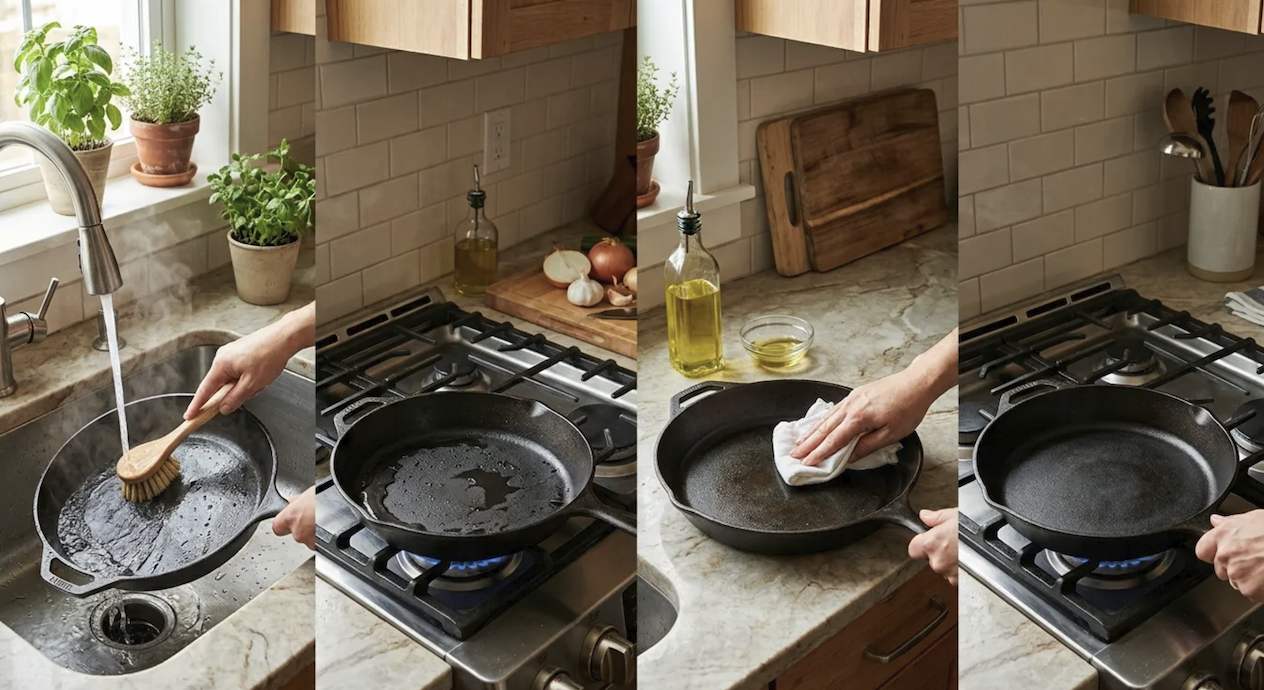
Cast iron cookware has a reputation for lasting generations, often passed down as a family heirloom that outlives several other kitchen purchases along the way.
That longevity depends almost entirely on proper seasoning and routine care, since cast iron behaves differently from nonstick or stainless cookware and punishes neglect more visibly, often in the form of rust or a sticky, uneven cooking surface.
This guide covers how to season a pan correctly, maintain that seasoning through daily use, and fix the most common problems that come up along the way.
Seasoning a New or Stripped Pan
Seasoning refers to the layer of polymerized oil baked onto the surface of cast iron, creating a naturally nonstick coating and a protective barrier against moisture and rust. Most new cast iron cookware arrives with some factory seasoning already applied, but building up additional layers at home strengthens that initial coating and improves cooking performance from the start.
The basic seasoning process involves washing the pan to remove any manufacturing residue, drying it thoroughly, applying a very thin layer of oil across the entire surface including the handle and exterior, then baking it upside down in a hot oven for roughly an hour. Repeating this process several times builds a deeper, more durable seasoning layer than a single application.
A few tips make the seasoning process more successful:
- Use a high smoke point oil: Options like vegetable oil, canola oil, or flaxseed oil withstand the high baking temperature better than oils with lower smoke points.
- Apply an extremely thin layer: Excess oil pools and creates a sticky, uneven finish rather than a smooth coating, so wiping off visible excess before baking is important.
- Bake upside down with a liner below: Placing foil or a baking sheet on a lower oven rack catches any oil drips during the baking process.
- Repeat multiple coats: Three or more thin coats build a more durable seasoning layer than one thick application.
- Let the pan cool fully in the oven: Removing a hot pan too quickly can affect how the seasoning sets.
A freshly seasoned pan will darken with continued use over the following weeks and months, developing the deep black patina associated with well-loved cast iron cookware.
Oven temperature for seasoning typically falls in a moderately high range, hot enough to fully polymerize the thin oil layer without scorching it into a brittle, flaky coating. Checking the specific smoke point of whichever oil is used, and keeping the oven temperature comfortably below it, helps the seasoning bond properly to the metal rather than breaking down prematurely from excessive heat.
Daily Cleaning Habits That Protect the Finish
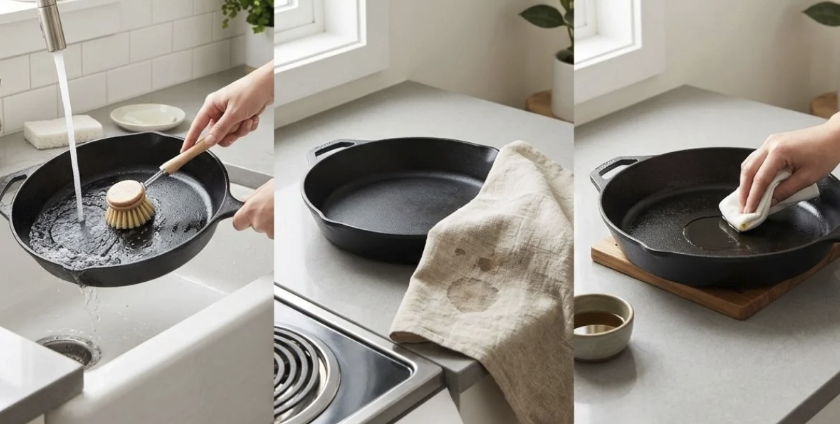
Cleaning cast iron correctly is one of the most misunderstood aspects of ownership, with many people avoiding soap entirely out of fear it will strip the seasoning. Modern dish soap is generally mild enough that a quick wash with soap and water will not notably damage a well-established seasoning layer, though prolonged soaking or scrubbing with an abrasive pad can strip it more aggressively.
The more important habit is drying the pan thoroughly and promptly after washing, since moisture left on cast iron is the primary cause of rust formation. Many cast iron owners follow washing with a brief return to a warm stovetop burner to evaporate any remaining moisture completely before storing the pan.
A reliable daily cleaning routine includes these steps:
- Wash promptly after cooking: Food residue left to harden becomes much more difficult to remove later.
- Use warm water and a soft brush or sponge: A gentle scrub removes food particles without stripping the seasoning layer underneath.
- Avoid prolonged soaking: Letting a pan sit in water for an extended period increases rust risk substantially.
- Dry immediately and thoroughly: Towel dry first, then briefly heat the pan on the stove to eliminate residual moisture.
- Apply a light oil coat after drying: A thin wipe of oil after each cleaning helps maintain the seasoning layer between uses.
Stuck-on food can often be loosened with a simmer of water directly in the pan for a few minutes, followed by gentle scraping with a wooden or plastic utensil rather than metal, which can scratch the seasoning.
Specialty cast iron cleaning tools, such as chainmail scrubbers or plastic pan scrapers designed specifically for this cookware, strike a useful balance between cleaning power and seasoning preservation. These tools remove stubborn residue without the aggressive abrasiveness of steel wool, which can strip seasoning down to bare metal if used too often. Keeping one of these dedicated tools near the stove makes it easier to clean a pan promptly rather than letting it sit and accumulate harder, more stubborn residue.
Cooking Choices That Build Better Seasoning
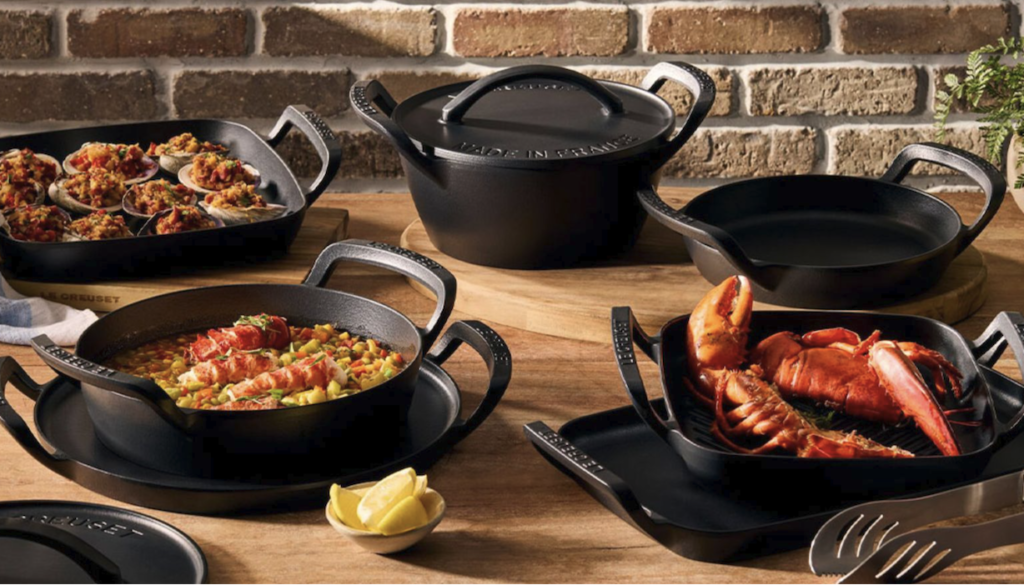
What you cook in cast iron, and how often, directly affects how the seasoning develops over time. Cooking with a moderate amount of oil or fat regularly helps reinforce the seasoning layer, since each cooking session effectively adds a thin reinforcing coat similar to the original seasoning process, though at a lower, more gradual intensity.
Highly acidic foods, such as tomato-based sauces or dishes with substantial vinegar or citrus content, can gradually break down seasoning with prolonged contact, especially in a pan with thinner or less established seasoning. This does not mean acidic foods must be avoided entirely, but extended simmering of highly acidic dishes in a newer or thinly seasoned pan may require re-seasoning more often than cooking primarily with neutral or fatty ingredients.
Searing meats, frying, and cooking with consistent fat content tend to be ideal uses for cast iron, both because the pan excels at retaining and distributing heat evenly for these methods and because the fat content involved continues to build seasoning with regular use. Over time, a pan used frequently for these types of cooking often develops better natural nonstick performance than one used sparingly or primarily for delicate, low-fat dishes.
Temperature management while cooking also affects seasoning health over time. Preheating gradually over medium heat, rather than jumping straight to the highest burner setting, gives the pan a chance to warm evenly and reduces the thermal shock that can contribute to uneven seasoning wear in certain spots. This gradual approach also improves cooking results directly, since an evenly heated pan sears more consistently than one with hot and cool spots from an abrupt temperature jump.
Storing and Stacking Safely
Proper storage prevents two of the most common cast iron problems: rust from trapped moisture and scratches from careless stacking with other cookware. Storing a pan in a dry location, away from areas prone to humidity like under a sink near plumbing, reduces rust risk quite a bit compared to a damp storage spot.
When stacking cast iron with other pans, placing a soft barrier like a paper towel, cloth, or dedicated pan protector between pieces prevents the rough cast iron surface from scratching itself or other cookware during storage. This becomes especially relevant for enameled cast iron, where the enamel coating can chip from direct contact with another heavy pan.
A few storage practices worth adopting:
- Store in a dry environment: Avoid damp cabinets or areas near plumbing that could introduce moisture over time.
- Use protective liners when stacking: A paper towel or felt liner between stacked pans reduces scratching.
- Leave lids slightly ajar during storage: Fully sealed lids can trap residual moisture and encourage rust formation.
- Hang pans when possible: Hanging storage on a rack avoids stacking issues entirely and keeps pans accessible.
- Apply a light oil coat before extended storage: An extra protective layer before storing a pan for weeks or months at a time adds an additional buffer against moisture.
Climate plays a bigger role in storage decisions than many owners initially realize. Homes in especially humid regions may need to check stored cast iron more frequently for early rust spots, even when following all the usual precautions, simply because ambient moisture in the air works against even a well-applied seasoning layer. A small silica gel packet placed near stored pans can help absorb excess humidity in especially damp kitchens or storage areas.
Fixing Rust and Other Common Problems
Rust on cast iron looks alarming but is usually fixable without replacing the pan entirely. Light surface rust can often be removed with a scouring pad and warm water, followed by complete drying and a fresh application of seasoning to restore the protective layer. More substantial rust may require a more thorough stripping process, sometimes using a vinegar and water soak for a limited time, followed by a full re-seasoning from scratch similar to treating a brand-new pan.
Sticky or tacky seasoning, another common complaint, usually results from applying too much oil during the seasoning process or not baking at a high enough temperature to fully polymerize the oil layer. Correcting this typically involves another round of baking at a higher temperature, or in more stubborn cases, stripping the problematic layer and starting the seasoning process over with thinner oil applications.
A few other common issues and their general fixes:
- Uneven seasoning patches: Often resolved with an additional thin-coat seasoning round focused on the affected area.
- Food sticking despite established seasoning: May indicate the pan was not preheated sufficiently before adding food, since cast iron benefits from gradual, thorough preheating.
- Flaking seasoning: Usually a sign of seasoning applied too thick in earlier rounds, requiring a stripping and re-seasoning process.
- Persistent metallic smell or taste: Often resolves naturally with continued seasoning and regular cooking use over time.
- Warping from extreme heat changes: Avoid placing a very hot pan into cold water, which can stress the metal and contribute to warping over time.
Patience is often the most useful tool when troubleshooting a cast iron problem, since many issues improve gradually with continued use rather than through a single dramatic fix. A pan that still looks patchy after a round of re-seasoning will often even out further after several more cooking sessions, as each use adds another thin layer that fills in gaps left by the initial repair. Resisting the urge to strip and restart repeatedly, instead giving a repaired pan a few weeks of normal cooking, tends to produce a better long-term result.
Picking the Right Piece for Your Kitchen
Not every cast iron purchase needs to be a large, heavy skillet, and matching the specific piece to your cooking habits improves the experience of ownership quite a bit. A classic ten or twelve-inch skillet handles most everyday cooking tasks, while a smaller eight-inch pan suits single servings or tasks like frying an egg where a large pan would be unwieldy.
Specialty pieces like a cast iron griddle, a deep Dutch oven, or a grill pan with raised ridges serve more specific purposes, and whether these are worthwhile additions depends on how often you would realistically use them. Enameled cast iron, which adds a glass-like coating over the base metal, eliminates the need for traditional oil-based seasoning and resists rust more easily, though it generally costs more and cannot achieve quite the same high-heat searing performance as bare cast iron.
A few factors to weigh when choosing a new piece:
- Weight and handling comfort: Cast iron is quite a bit heavier than most other cookware, so considering your own strength and typical use case matters before buying a large piece.
- Pre-seasoned versus bare cast iron: Pre-seasoned pans offer a head start, while bare cast iron allows full control over the seasoning process from the very first use.
- Enameled versus traditional: Enameled pieces suit acidic, long-simmering dishes better, while traditional cast iron excels at high-heat searing and frying.
- Handle design: Some pans include a helper handle on the opposite side, useful for safely maneuvering a heavy, full pan with two hands.
- Intended primary use: Matching pan size and shape to your most frequent cooking tasks, rather than buying the largest available option, tends to produce better long-term satisfaction.
Budget also plays a reasonable role in this decision, since cast iron spans a wide price range from basic bare pans to premium enameled pieces from specialty brands. Starting with a single versatile skillet, rather than purchasing an entire set at once, lets a new owner build confidence with seasoning and maintenance before expanding into more specialized pieces, avoiding the disappointment of several underused pans taking up cabinet space.
Final Thoughts
Cast iron cookware rewards a bit of upfront learning with decades of reliable performance, provided the seasoning is built correctly and basic care habits, like prompt drying and avoiding prolonged soaking, become routine.
Rust, stickiness, and uneven seasoning are all fixable problems rather than reasons to discard a pan, and most issues resolve with a round of re-seasoning and a return to consistent maintenance.
With reasonable care, a single well-chosen cast iron piece can realistically become a kitchen staple used for generations, often outlasting several other pots and pans purchased and replaced in the same timeframe.
Starting with one solid skillet, learning its particular habits, and building the simple daily routines covered in this guide sets up a foundation that can later support a wider collection of specialty pieces if desired.
Frequently Asked Questions
Can I use soap on cast iron without ruining the seasoning?
A quick wash with mild dish soap and a soft sponge will not notably damage a well-established seasoning layer, despite a persistent myth suggesting otherwise. The real risk to seasoning comes from prolonged soaking, aggressive scrubbing with harsh abrasives, or running the pan through a dishwasher cycle, not from a brief soap-and-water wash at the sink.
How often does cast iron need to be re-seasoned?
Frequency depends heavily on how often the pan is used and what it is used for, but a well-maintained pan used regularly for cooking with some fat content may only need a full re-seasoning occasionally, perhaps once or twice a year, with lighter touch-up applications applied as needed between those full re-seasoning sessions.
Is it safe to cook acidic foods like tomato sauce in cast iron?
Cooking acidic foods occasionally in a well-seasoned pan is generally fine, though extended simmering of highly acidic dishes can gradually wear down seasoning faster than neutral cooking, especially in newer or thinly seasoned pans. A well-established, thick seasoning layer handles occasional acidic cooking with minimal issue or visible wear.
Why does my food stick even though the pan looks seasoned?
Sticking often results from insufficient preheating before adding food, since cast iron performs best when allowed to heat gradually and evenly before cooking begins. Adding a reasonable amount of oil or fat and ensuring the pan is properly hot before introducing food typically resolves most sticking issues in an otherwise well-seasoned pan over just a few cooking attempts.
Can cast iron go in the dishwasher?
Dishwashers combine prolonged water exposure, harsh detergent, and extended drying delays, all of which work against maintaining a healthy seasoning layer, so hand washing remains the recommended approach for traditional cast iron. Enameled cast iron is somewhat more dishwasher-tolerant, though hand washing is still generally gentler on the enamel coating over the long term and reduces the risk of chipping from contact with other items.
Is cast iron cookware worth the higher upfront cost compared to nonstick pans?
Cast iron typically lasts far longer than most nonstick cookware, which tends to degrade and need replacement every few years as the coating wears down, making cast iron a reasonable long-term value despite its higher initial price for quality pieces built to last. The tradeoff is a steeper learning curve around seasoning and maintenance compared to the simpler care routine nonstick pans typically require, though that curve flattens quickly once the basic habits described throughout this guide become routine.