Priya spent two years chasing clear skin with an ever-growing shelf of active ingredients, retinol, exfoliating acids, vitamin C, all stacked together in the name of faster results. Instead of clearer skin, she got redness, flaking, and a constant stinging sensation that no amount of moisturizer seemed to calm. A dermatologist looked at her routine for about thirty seconds and said the problem wasn’t any single product, it was that her skin barrier had essentially stopped functioning. Rebuilding it meant doing almost nothing for six weeks straight.
What the Skin Barrier Actually Does
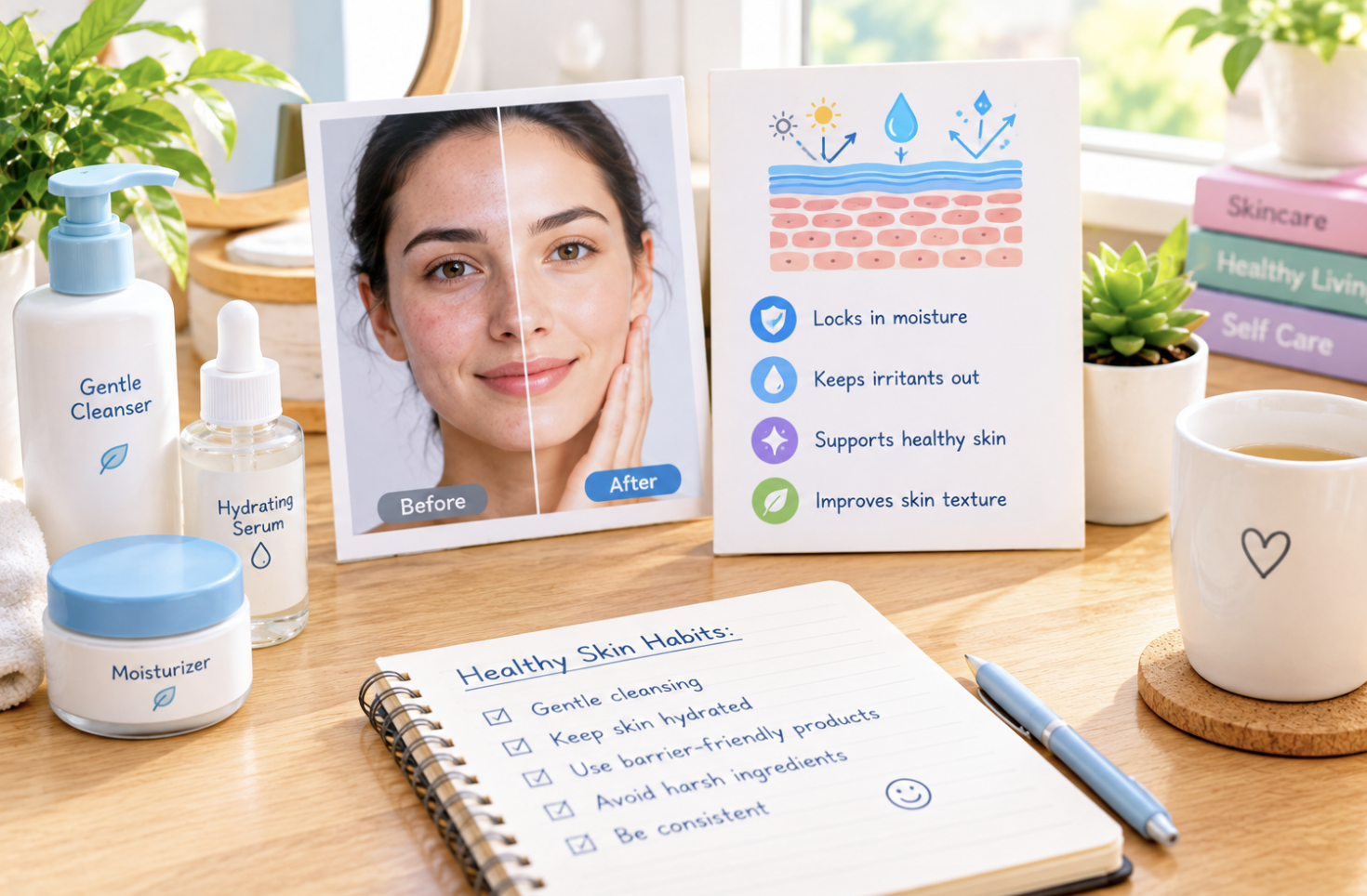
The skin barrier, sometimes called the stratum corneum, is the outermost layer of skin, made up of skin cells held together by a mixture of lipids including ceramides, cholesterol, and fatty acids. This structure is often compared to a brick wall, with skin cells acting as bricks and the lipid mixture acting as mortar holding everything in place.
A healthy barrier keeps moisture inside the skin while keeping irritants, allergens, and bacteria out. When that structure gets compromised, both of those functions fail at once, moisture escapes more easily, and outside irritants penetrate more easily too.
Recognizing the Signs of a Damaged Barrier
A compromised skin barrier tends to produce a recognizable set of symptoms, though they’re often mistaken for other skin issues.
- Persistent redness or a flushed appearance that doesn’t have an obvious trigger
- Stinging or burning sensations when applying products that previously felt fine
- Rough, flaky texture despite regular moisturizing
- Skin that feels tight or dehydrated shortly after cleansing
- Increased sensitivity to sun exposure, temperature changes, or fragrance
These symptoms overlap significantly with general dryness or sensitivity, which is part of why barrier damage often goes unrecognized until it’s fairly advanced, with people reaching for stronger products rather than gentler ones in response.
The Most Common Causes of Barrier Damage
Skin barrier damage rarely comes from a single cause, it’s usually the cumulative result of several habits working against the skin at once. Over-exfoliation, whether through physical scrubs or frequent use of chemical exfoliants, is one of the most common culprits, stripping away skin cells faster than the body can replace them.
Using multiple active ingredients simultaneously, such as retinol layered with strong acids, compounds this stress rather than accelerating results. Harsh, stripping cleansers, excessively hot water, and dry climate conditions all contribute as well, often in combination rather than isolation, which is why identifying the specific cause sometimes takes real trial and error.
Why Simplification Is the First Step in Recovery
The instinct when skin looks and feels bad is often to add more products, but barrier repair almost always requires the opposite approach. Stripping a routine down to the essentials, a gentle cleanser, a barrier-supporting moisturizer, and sun protection, removes the ongoing stress that’s preventing the barrier from rebuilding itself.
Every active ingredient, exfoliant, and fragranced product introduces a new variable that can slow recovery, even ones that were previously well tolerated. This simplified phase typically needs to last several weeks, since skin barrier repair happens at the pace of natural cell turnover, not overnight.
Ingredients That Actually Support Barrier Repair
Certain ingredients are specifically suited to rebuilding a compromised barrier rather than just moisturizing the skin’s surface temporarily.
- Ceramides, which directly replace the lipids the barrier needs to stay intact
- Niacinamide, which supports barrier function and helps calm visible redness
- Hyaluronic acid, which draws moisture into the skin without disrupting the barrier itself
- Fatty acids and cholesterol, often included alongside ceramides in barrier-focused formulas
- Petrolatum or similar occlusive ingredients, which seal in moisture and reduce water loss
Products specifically formulated as “barrier repair” or “barrier cream” typically combine several of these ingredients in ratios designed to mimic the skin’s natural lipid composition, which tends to work better than assembling single-ingredient products individually.
Ingredients and Habits to Avoid During Recovery
Just as important as what to add is what to remove entirely during a recovery period.
- Physical exfoliants and any product containing visible scrubbing particles
- Chemical exfoliants like strong acids, used at high concentrations or frequency
- Retinoids, which should be paused until the barrier has visibly recovered
- Fragranced products, including some natural fragrances that can still irritate compromised skin
- Very hot water during cleansing or showering, which strips natural oils further
Reintroducing any of these should happen slowly and one at a time once the skin has stabilized, rather than returning to a full routine all at once, which risks undoing weeks of recovery in a matter of days.
How Long Barrier Repair Actually Takes
Skin barrier recovery timelines vary depending on how much damage has occurred and how consistently a simplified routine is followed, but a general range of two to six weeks is common for noticeable improvement. Mild barrier disruption from occasional over-exfoliation might resolve within a couple of weeks of gentler care.
More significant damage from months of aggressive product use, or damage compounded by an underlying skin condition, can take considerably longer and may benefit from a dermatologist’s guidance rather than self-directed recovery alone.
When to Involve a Dermatologist
- Some situations call for professional evaluation rather than an at-home simplified routine.
- Symptoms that don’t improve after several weeks of a simplified routine
- Signs of infection, such as pus-filled bumps, warmth, or spreading redness
- Barrier damage accompanied by an underlying condition like eczema or rosacea
- Persistent symptoms severe enough to interfere with daily comfort or sleep
A dermatologist can distinguish between simple barrier damage and an underlying skin condition presenting with similar symptoms, which matters because the appropriate treatment can differ significantly between the two.
The Difference Between Barrier Damage and a Skin Allergy
Barrier damage and a true skin allergy can look remarkably similar on the surface, both often presenting with redness, irritation, and discomfort, but the underlying mechanisms and appropriate responses differ considerably.
Barrier damage is a physical breakdown in the skin’s protective structure, generally caused by external stress like over-exfoliation or harsh products, and it typically improves with a simplified, barrier-supporting routine. A true allergic reaction involves the immune system responding to a specific allergen, and it generally won’t resolve simply by simplifying a routine if the trigger ingredient remains present in any product still being used.
- Barrier damage tends to develop gradually over weeks of cumulative product stress
- An allergic reaction often appears more suddenly after exposure to a specific new ingredient or product
- Patch testing can help identify a specific allergen, while barrier damage doesn’t respond to a single isolated trigger
- Barrier damage generally improves within weeks of simplification, while an unaddressed allergy persists regardless of routine changes
Anyone uncertain which situation they’re dealing with, especially if symptoms don’t meaningfully improve after several weeks of a simplified routine, benefits from a dermatologist’s evaluation, since patch testing and professional assessment can distinguish between the two conditions far more reliably than self-diagnosis based on symptoms alone.
Building a Long-Term Routine That Prevents Future Damage
Recovering from skin barrier damage once is a valuable lesson, but preventing a repeat episode requires building sustainable habits into an ongoing routine rather than returning immediately to whatever caused the original damage. A gradual, cautious approach to reintroducing active ingredients, one new product at a time, with several days between additions to monitor for reaction, reduces the risk of overwhelming the skin barrier the way a rapid, multi-product routine often does.
- Introducing no more than one new active ingredient at a time, waiting at least a week before adding another
- Monitoring skin’s response to sun exposure, weather changes, and stress, which can all affect barrier resilience
- Choosing fragrance-free formulations for daily-use products, reserving fragranced products for occasional use
- Scheduling periodic simplified “reset” weeks even when skin feels healthy, as a preventive rather than reactive measure
This more measured approach to skincare often feels frustratingly slow compared to the appeal of a routine promising fast, dramatic results, but it reflects how skin barrier function actually works: gradually, through consistent care rather than aggressive intervention. Building this patience into a long-term routine tends to prevent the exact cycle of damage and recovery that brings many people to research barrier repair in the first place.
How Environmental Factors Compound Barrier Vulnerability
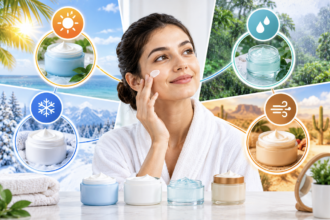
Skin barrier health doesn’t exist in isolation from the broader environment, and several external factors can compound vulnerability even when a skincare routine itself is well chosen. Cold, dry air strips moisture from skin more aggressively than warm, humid conditions, which is part of why barrier issues often become more noticeable during winter months regardless of routine changes.
Indoor heating and air conditioning both reduce ambient humidity further, compounding the problem for people who assume their skincare routine alone should be sufficient regardless of season.
- Low humidity environments accelerate moisture loss through the skin barrier
- Indoor heating and air conditioning both reduce ambient humidity, independent of outdoor weather
- Hard water, containing higher mineral content, can leave residue that irritates already-compromised skin
- Air pollution has been associated with increased oxidative stress affecting skin barrier function over time
Adjusting a routine seasonally, rather than maintaining an identical approach year-round, accounts for these environmental shifts more effectively. A humidifier during dry winter months, slightly richer moisturizing formulas in cold weather, and awareness of how a specific local environment affects skin all contribute to a more resilient barrier than skincare products alone can provide.
How Diet Culture Messaging Can Undermine Skin Barrier Recovery
Skincare marketing and diet culture messaging share an uncomfortable overlap that’s worth naming directly: both often promise fast, dramatic transformation through aggressive intervention, which runs directly counter to how skin barrier repair actually works.
Marketing language promising visible results within days pressures people toward exactly the kind of aggressive, multi-active routines that damaged the barrier in the first place, creating a cycle where each new “solution” risks becoming the next problem.
- Marketing claims promising rapid transformation often encourage exactly the over-treatment that causes barrier damage
- Comparing a personal skincare timeline to curated social media results rarely reflects realistic recovery timelines
- Professional dermatological guidance tends to recommend far simpler, slower routines than most product marketing suggests
- Recognizing marketing pressure as pressure, rather than a skincare need, is itself a protective skill worth developing
Approaching skincare with the same skepticism toward “fast results” messaging that’s become more common around diet and fitness marketing tends to produce both better skin outcomes and a healthier overall relationship with skincare as routine maintenance rather than a constant pursuit of dramatic transformation.
The Influence of Hormonal Changes on Skin Barrier Function
Hormonal fluctuations, whether from a menstrual cycle, pregnancy, menopause, or other causes, can meaningfully affect skin barrier resilience independent of any changes in skincare routine. Shifting hormone levels influence oil production, skin thickness, and water retention, which means a routine that worked well for months can suddenly feel inadequate during a period of hormonal change, even without any product changes triggering the shift.
- Hormonal fluctuations can temporarily increase skin sensitivity and barrier vulnerability
- Oil production changes tied to hormonal shifts may require temporary routine adjustments
- Recognizing a hormonal cause, rather than assuming a product suddenly stopped working, prevents unnecessary routine overhauls
- Tracking skin changes alongside broader hormonal patterns can reveal a connection worth discussing with a healthcare provider
Anyone noticing a pattern of skin barrier issues that correlates with a predictable hormonal cycle may benefit from planning slightly more conservative, barrier-supportive routines during those specific windows, rather than reacting to each flare-up as an isolated, unexplained problem requiring a completely new set of products.
How Climate-Controlled Environments Affect Long-Term Skin Habits
People who spend most of their time in tightly climate-controlled environments, such as office buildings with aggressive air conditioning or homes with constant heating, often develop barrier vulnerabilities that differ from those with more variable daily environments.
Constant exposure to artificially dry air, without the natural humidity fluctuations a more mixed indoor-outdoor routine provides, can create a baseline of mild, chronic barrier stress that isn’t always obviously connected to skincare choices at all.
Recognizing a consistently controlled indoor environment as a contributing factor, alongside product choices, gives a more complete picture when troubleshooting persistent barrier issues that don’t seem to respond fully to routine changes alone.
Traveling Without Disrupting a Barrier Repair Routine
Travel introduces its own set of barrier-related challenges, from airplane cabin air with notoriously low humidity to unfamiliar tap water and shifting climates between destinations. Packing a simplified, barrier-focused travel kit rather than attempting to bring an entire skincare routine reduces the risk of a flare-up during a trip, when the ability to respond quickly to irritation is also more limited.
A travel-sized barrier cream, a gentle cleanser, and sunscreen cover most situations without adding excess weight or complexity to a suitcase already carrying enough decisions to make.
Final Thoughts
A damaged skin barrier rarely responds well to more products or stronger ingredients, it responds to less, applied consistently, until the skin’s natural protective structure has a real chance to rebuild itself. Recognizing the signs early, simplifying a routine before damage becomes severe, and giving recovery the several weeks it requires prevents the frustrating cycle of adding new products to fix problems the previous products caused.
Frequently Asked Questions
How do I know if my skin barrier is actually damaged versus just naturally dry?
Barrier damage typically involves stinging or burning with products that previously felt comfortable, along with persistent redness and sensitivity that develops somewhat suddenly rather than being a long-standing baseline trait. Naturally dry skin tends to be a more consistent, stable characteristic without that same sudden shift in sensitivity.
Can moisturizer alone fix a damaged skin barrier?
Moisturizer helps but usually isn’t sufficient on its own if the underlying cause, such as over-exfoliation or too many active ingredients, isn’t also addressed. Recovery typically requires both adding barrier-supporting ingredients and removing whatever originally caused the damage.
Is it safe to use sunscreen during skin barrier recovery?
Yes, and it’s actually essential. Compromised skin is more vulnerable to UV damage, making daily sun protection especially important during recovery. Mineral sunscreens are sometimes better tolerated than chemical formulas for sensitive, recovering skin, though individual tolerance varies.
How many products should a simplified barrier repair routine include?
A minimal routine of a gentle cleanser, a barrier-repair moisturizer, and sunscreen during the day is generally sufficient during active recovery. Adding anything beyond these three categories during the recovery period risks reintroducing the irritation the simplified routine is meant to resolve.
Can diet affect skin barrier health?
Adequate intake of essential fatty acids and overall hydration can support skin barrier function from the inside, though diet alone typically can’t resolve barrier damage caused primarily by external factors like over-exfoliation or harsh products. Addressing the external cause remains the priority.
How can I tell when it’s safe to reintroduce active ingredients like retinol?
A reasonable signal is when the skin no longer stings or reacts to the current simplified routine and redness has visibly calmed. Reintroducing one active ingredient at a time, starting with a lower concentration and frequency than before, reduces the risk of triggering another setback.