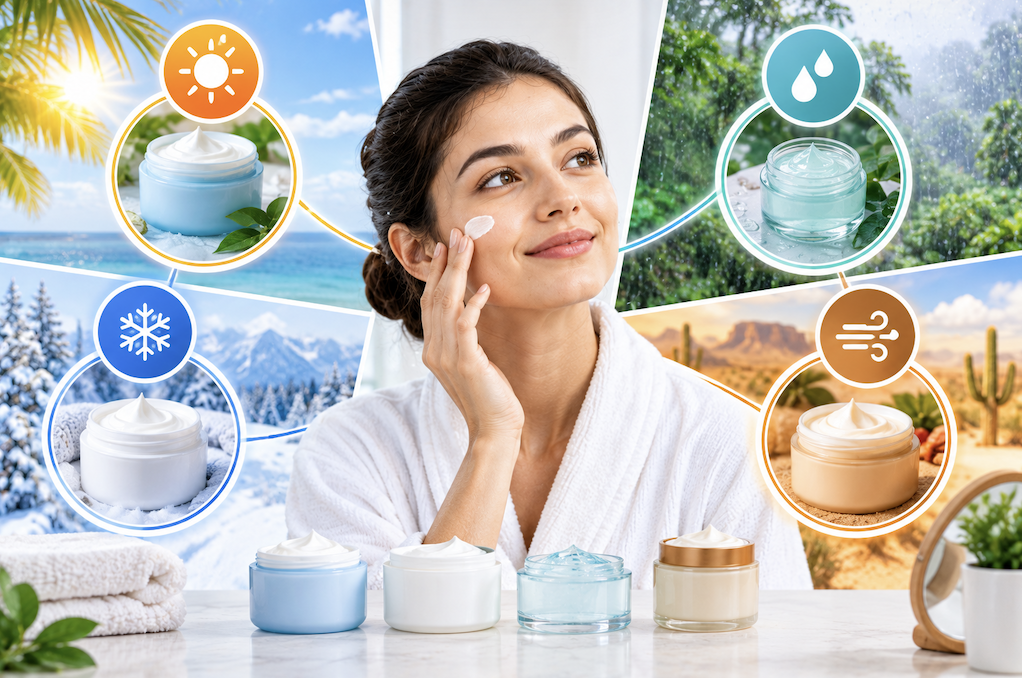
A moisturizer that works well in one climate can feel completely wrong in another, which is why someone moving between regions, or even adjusting between seasons within the same region, often needs to rethink their moisturizer choice rather than assuming one formula works everywhere equally well.
Transepidermal Water Loss
The rate at which skin loses water to the surrounding environment, called transepidermal water loss, increases with lower humidity, wind exposure, and temperature extremes, providing the underlying scientific basis for why climate affects moisturizer needs so significantly beyond just general comfort preference. A moisturizer’s job is essentially to counteract this process, whether by adding moisture directly, drawing it in from the air, or sealing existing moisture in, which is why the specific climate context determines which of these mechanisms matters most.
Why Climate Affects Moisturizer Needs So Significantly
Humidity, temperature, and wind exposure all directly affect how quickly skin loses moisture to the surrounding environment, meaning the same skin type can behave quite differently depending on climate conditions alone. This is why moisturizer recommendations based purely on skin type, without considering climate, only tell part of the story for choosing the right formula.
Choosing for Humid Climates
In consistently humid climates, skin generally retains moisture more easily from the surrounding air itself, meaning a heavier, more occlusive moisturizer can feel uncomfortably greasy and may contribute to congestion or breakouts, particularly for oily or acne-prone skin types discussed in earlier guides. A lightweight, gel-based, or water-based moisturizer generally provides sufficient hydration without the heavy, occlusive layer that a humid environment doesn’t require to the same degree a drier climate would.
Managing Humid Climate Skin Concerns Beyond Moisturizer
In humid climates, oil and sweat can combine with a heavier moisturizer to feel uncomfortable throughout the day, which is part of why a mattifying or oil-absorbing product applied midday, separate from the morning moisturizer itself, is a common and reasonable addition specifically for humid environments rather than trying to solve midday shine with the morning moisturizer choice alone.
Choosing for Dry or Arid Climates
Arid climates, with low ambient humidity, pull moisture from skin more aggressively, making a richer, more occlusive moisturizer necessary rather than optional, even for skin types that would otherwise be considered oily in a more humid environment. Ingredients like ceramides and occlusive agents, discussed in the earlier winter skincare guide, become relevant here regardless of season, since arid climates present this dry-air challenge year-round rather than just in winter.
Desert and Semi-Arid Regional Considerations
Desert and semi-arid regions often combine very low humidity with intense daytime sun and significant temperature swings between day and night, meaning both the richer moisturizer approach discussed above and vigilant sun protection, covered extensively in the earlier sunscreen guide, deserve equal priority rather than treating moisture and sun protection as separate, unrelated concerns in this specific climate type.
Choosing for Cold Climates
Cold climates combine low humidity with wind exposure and indoor heating, all compounding moisture loss beyond what temperature alone would suggest, making the winter skincare adjustments discussed in an earlier guide particularly relevant here as a year-round baseline rather than a purely seasonal consideration for anyone living in a consistently cold region.
Windburn and Cold-Weather Skin Protection
Beyond general dryness, cold, windy conditions can cause a stinging, chapped sensation similar to windburn, particularly on exposed areas like cheeks and lips. A thicker, more protective balm on these specific exposed areas during outdoor cold-weather activities, separate from the all-over facial moisturizer, provides more targeted protection for this specific, more intense cold-weather concern.
Choosing for Hot Climates
Hot climates increase sweating and oil production for many people, making a lightweight, non-comedogenic moisturizer that won’t feel heavy or contribute to clogged pores during increased perspiration generally more comfortable and practical than a rich, heavy formula better suited to cold or arid conditions.
Coastal and Maritime Climate Considerations
Coastal climates often combine moderate humidity with salt air exposure and consistent breeze, creating a somewhat unique combination that doesn’t fit neatly into the purely humid, dry, or cold categories discussed elsewhere in this guide. A medium-weight moisturizer, adjusted seasonally as needed, generally suits this in-between climate type better than committing fully to either a very light or very rich formula.
Navigating Seasonal Transitions Within One Region
For anyone living somewhere with meaningful seasonal variation, transitioning between a lighter summer formula and a richer winter formula, similar to the seasonal adjustment principle discussed in the earlier winter skincare guide, makes more sense than using one formula year-round regardless of the season’s actual humidity and temperature conditions.
Monsoon and Highly Variable Climate Considerations
For climates with a pronounced monsoon or rainy season followed by a distinctly different dry season, treating these as two separate skincare seasons, similar to the winter-to-summer transition discussed elsewhere in this guide, produces better results than trying to find one compromise formula that handles both extremes adequately.
How Indoor Climate Control Affects Skin
Air conditioning and indoor heating both reduce indoor humidity compared to outdoor conditions, meaning someone spending most of their time in a climate-controlled office or home may need a richer moisturizer than the outdoor climate alone would suggest, particularly in hot climates where air conditioning runs frequently or cold climates where heating runs consistently through winter months.
Air Travel and Cabin Humidity
Airplane cabin air is notably drier than typical ground-level environments, making a richer moisturizer or a hydrating facial mist worth packing for longer flights specifically, regardless of your home or destination climate, since cabin conditions present their own distinct, temporary dry-air challenge independent of either endpoint’s actual climate.
Using a Humidifier to Supplement Moisturizer
As discussed in the earlier winter skincare guide, adding humidity back into indoor air through a humidifier addresses moisture loss at its environmental source, complementing rather than replacing an appropriately chosen moisturizer, and this principle applies to any climate-controlled indoor environment with low humidity, not exclusively winter conditions specifically.
Layering Approach by Climate
In dry or cold climates, the layering technique discussed in earlier winter skincare guides, hydrating serum, moisturizer, then an occlusive on top, helps combat more aggressive moisture loss. In humid or hot climates, a simpler single-step lightweight moisturizer, sometimes combined with sunscreen as a two-in-one product, is often sufficient without needing the same multi-layer approach that drier conditions call for.
Considering Fragrance Sensitivity Across Climates
Hot, humid climates can sometimes make fragranced products feel more noticeable or irritating due to increased sweating and skin sensitivity from heat exposure, making a fragrance-free formula worth prioritizing specifically in these conditions, even for skin that tolerates fragranced products without issue in milder climates.
Ingredient Considerations by Climate
Humectant ingredients like hyaluronic acid and glycerin, which draw moisture toward the skin, work particularly well in humid climates where there’s ambient moisture in the air for them to draw from, but can actually pull moisture out of the skin in very dry, low-humidity conditions if not paired with an occlusive to seal that moisture in afterward, making the pairing of humectants with occlusives especially important in arid or cold climates specifically.
Considering SPF Integration by Climate
In consistently sunny, hot climates, a moisturizer with built-in SPF simplifies the morning routine by combining two essential steps, though as discussed in the earlier sunscreen guide, checking that the SPF level and application amount meet protection needs matters more than the convenience of a combined product alone.
Adjusting for High-Altitude Climates
High-altitude environments combine lower humidity with more intense UV exposure, discussed similarly in the earlier sunscreen guide’s travel section, meaning both a richer moisturizer than the temperature alone might suggest and more vigilant sun protection are appropriate for anyone living at or traveling to higher elevations.
Adjusting Your Entire Routine, Not Just Moisturizer
Climate affects more than moisturizer choice alone cleanser type, whether to use a toner, and exfoliation frequency, discussed in earlier dedicated guides, all reasonably shift alongside moisturizer when adapting to a new or seasonally changing climate, rather than treating moisturizer as the only routine element that needs climate-specific adjustment.
Recognizing When Your Climate Has Changed Your Skin
For anyone who has relocated to a meaningfully different climate, giving skin several weeks to adjust before assuming a moisturizer choice is wrong helps distinguish a mismatch from a temporary adjustment period, since skin’s oil production and moisture retention patterns can take time to recalibrate to new environmental conditions.
Common Climate-Related Moisturizer Mistakes
Continuing to use a moisturizer formulated for a previous climate after a significant relocation, without reassessing whether it still suits the new environment, is a common and easily corrected mistake. Assuming a single “best” moisturizer exists universally, rather than recognizing that climate meaningfully changes what formula actually works well, is another common misconception that leads to ongoing dissatisfaction with an otherwise reasonable product simply used in the wrong environmental context.
Adjusting for Travel to a Different Climate
Similar to the destination climate packing guidance covered in the earlier travel makeup bag guide, bringing a moisturizer suited to your destination’s actual climate, rather than assuming your regular home formula will translate well, avoids discomfort during a trip to a meaningfully different environment than what your skin has adjusted to at home.
Considering Regional Water Hardness Alongside Climate
Beyond air humidity, local water hardness, discussed in the earlier water heater maintenance guide in a different context, can also affect how skin feels after cleansing, with harder water sometimes leaving a filmy residue that affects how well a moisturizer subsequently absorbs. This is worth considering alongside climate as another environmental factor affecting overall skin comfort, particularly for anyone who has relocated and noticed their skin behaving differently despite a similar climate to their previous location.
Considering Skin Barrier Recovery Timeframes Across Climates
Skin transitioning into a notably harsher new climate, whether more arid or more humid than previously accustomed to, may take longer than the few weeks mentioned earlier to fully stabilize if the climate difference is especially dramatic, making patience during this adjustment window particularly important before concluding a chosen moisturizer formula is wrong for the new environment.
Building a Climate-Appropriate Skincare Wardrobe
Similar to the capsule wardrobe concept applied to makeup in an earlier guide, maintaining two moisturizer options, a lighter formula and a richer one, allows adjusting to seasonal shifts or travel without needing to constantly search for and purchase new products every time conditions change meaningfully throughout the year.
Considering Body Moisturizer Alongside Facial Products
The same climate-based principles discussed throughout this guide for facial moisturizer apply equally to body lotion and cream choices, and it’s worth applying the same humid-versus-arid, hot-versus-cold reasoning to body care products rather than only adjusting the facial routine while leaving body care on a fixed, unchanging formula regardless of climate.
Considering a Combined Moisturizer and Antioxidant Approach
Regardless of climate, pairing a climate-appropriate moisturizer with the antioxidant benefits of vitamin C discussed in the earlier anti-aging guide addresses two somewhat independent skin needs, environmental moisture management and protection against oxidative stress, that don’t automatically overlap just because both are part of a morning routine.
Consulting a Dermatologist for Persistent Climate-Related Issues
For anyone whose skin struggles significantly despite reasonable climate-appropriate adjustments, a dermatologist can help rule out an underlying skin condition being mistaken for a simple climate-related mismatch, ensuring the right underlying issue is actually being addressed rather than continuing to experiment with moisturizer formulas alone.
Building Your Own Climate-Adjustment Notes Over Time
Keeping a simple personal note of which specific formulas worked well in which specific climate conditions, similar to the personal shade-reference habit recommended in the earlier foundation guide, builds a useful personal reference that speeds up future product decisions far more than starting the trial-and-error process over from scratch with each new climate or season.
Considering Hybrid Work-From-Home Climate Adjustments
For anyone splitting time between a climate-controlled office and outdoor commuting or errands within the same day, skin experiences more frequent humidity and temperature swings than someone staying in one consistent environment, making a versatile, medium-weight moisturizer often more practical for this specific lifestyle pattern than either extreme formula discussed for a single, consistent climate.
Conclusion
The right moisturizer depends significantly on your specific climate’s humidity, temperature, and indoor climate control patterns, not on skin type alone. Adjusting formula richness and layering approach based on your actual environment, and reassessing after a significant climate change or seasonal shift, produces better comfort and results than assuming one formula works everywhere and every season equally well. Keeping a couple of formula options on hand for seasonal or travel shifts remains more practical than searching for one universal product to cover every condition.