Exfoliation is a genuinely useful step in most skincare routines, but the choice between physical and chemical methods, and how often to use either, causes more confusion and irritation than almost any other skincare decision. Understanding the actual mechanisms behind each type clarifies which fits your skin best.
What Exfoliation Actually Does
Exfoliation removes dead skin cells from the skin’s surface, which can improve texture, reduce dullness, and help other products absorb more effectively once that surface buildup is cleared. This overlaps with, but is a distinct process from, the cell turnover effects of ingredients like retinol discussed in earlier guides, which work at a deeper level over a longer timeframe.
Physical Exfoliants Explained
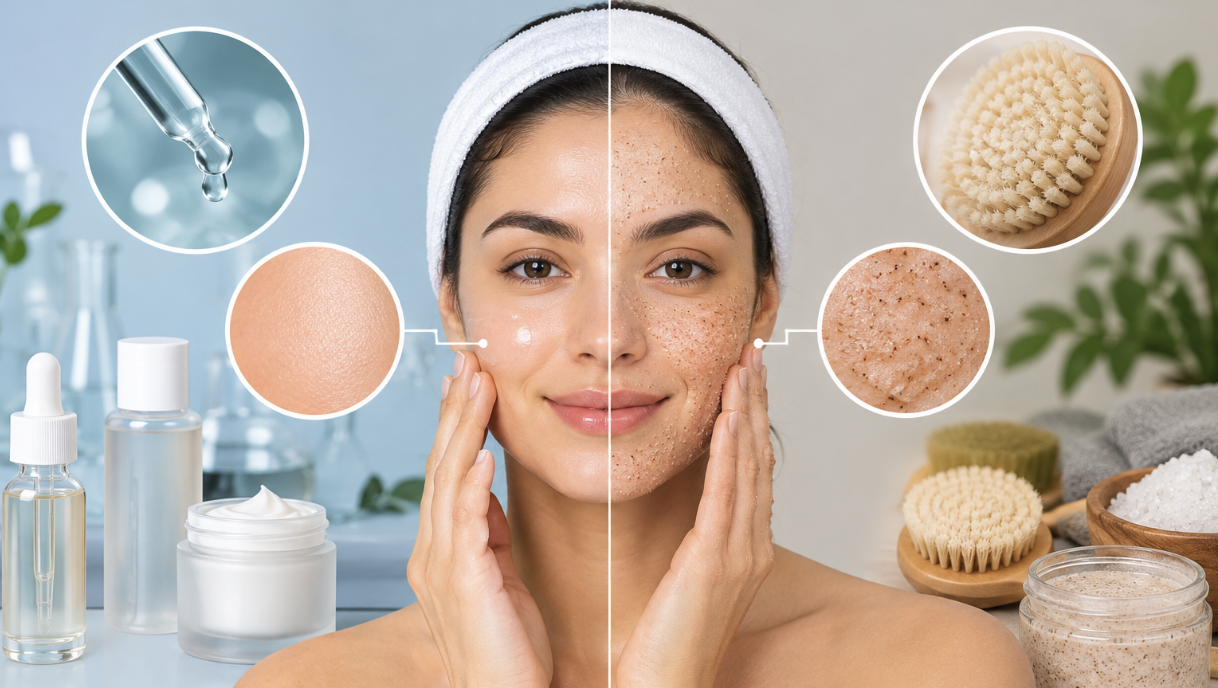
Physical exfoliants use texture and manual friction to remove dead skin cells, including scrubs with granular particles, exfoliating brushes, and textured cloths. The mechanism is straightforward, physically dislodging cells from the surface, but this also means the intensity is directly tied to how much pressure and how coarse a particle size is used, making it easier to unintentionally over-exfoliate compared to a chemical method.
Chemical Exfoliants Explained
Chemical exfoliants use acids to dissolve the bonds holding dead skin cells together, allowing them to shed more evenly without manual scrubbing. Alpha hydroxy acids (AHAs), like glycolic and lactic acid, work primarily on the skin’s surface and suit dry or sun-damaged skin particularly well. Beta hydroxy acid (BHA), primarily salicylic acid, is oil-soluble and can penetrate into pores, making it especially useful for oily or acne-prone skin, as covered in the earlier hormonal acne guide. Polyhydroxy acids (PHAs) offer a gentler alternative with larger molecules that penetrate more slowly, suiting more sensitive skin types that find AHAs and BHAs too intense.
Enzyme Exfoliants as a Third Category
Enzyme-based exfoliants, often derived from fruit like papaya or pineapple, offer another gentle option that works somewhat differently from AHAs and BHAs, breaking down surface proteins holding dead skin cells in place rather than dissolving bonds through acidity. These tend to be very gentle and are often marketed toward sensitive skin, though the overall body of research supporting their effectiveness is smaller than for AHA and BHA acids specifically.
The “Gentler” Myth
A common misconception holds that physical exfoliants are automatically gentler than chemical ones, when in reality, a coarse physical scrub used aggressively can cause more micro-tearing and irritation than a well-formulated, appropriately concentrated chemical exfoliant used correctly. The actual gentleness depends more on the specific product and technique than on the general physical-versus-chemical category alone.
Exfoliating Tools Beyond Scrubs
Cleansing brushes and textured cloths offer a gentler, more consistent form of physical exfoliation than a coarse granular scrub, since the pressure is more evenly distributed and typically less intense than manually rubbing a gritty product into the skin. These tools still count as physical exfoliation and should follow the same frequency guidelines discussed later in this guide, rather than being treated as gentle enough for daily use simply because they lack visible granules.
Choosing Based on Skin Type
Oily or acne-prone skin generally benefits most from BHA specifically, given its ability to penetrate into oil-filled pores discussed above. Dry or sensitive skin often does better with a gentle AHA like lactic acid, or a PHA for particularly reactive skin, rather than a physical scrub that can aggravate an already-compromised skin barrier. Normal or combination skin has more flexibility to use either type, though many people find a chemical exfoliant easier to use consistently without the risk of applying too much pressure.
Choosing Based on Specific Concerns
For dullness and uneven texture, either exfoliant type can help, though a chemical exfoliant tends to produce more even results across the whole face. For active acne specifically, BHA’s oil solubility gives it a meaningful advantage over physical exfoliation, which can sometimes irritate active breakouts rather than helping them. For sun damage and fine lines, a glycolic acid-based AHA has the most supporting evidence among exfoliant types specifically for these concerns.
Exfoliating Acids and Sun Sensitivity
Similar to retinol, AHA exfoliants in particular increase skin’s sensitivity to UV damage, reinforcing the importance of consistent daily sunscreen for anyone incorporating regular chemical exfoliation into their routine, beyond the general sunscreen guidance already covered extensively in earlier guides.
Frequency Guidelines
Most chemical exfoliants are designed for two to three uses per week to start, with some formulas supporting daily use once skin has built tolerance, though this varies by concentration and individual skin sensitivity. Physical exfoliants are generally best limited to one to two uses per week given their more mechanically intense action, with more frequent use significantly raising the risk of irritation and barrier damage.
Combining Exfoliation With Other Actives
As covered extensively in the earlier ingredient-combining guide, exfoliants (whether physical or chemical) shouldn’t be combined with retinol on the same night, and using multiple different chemical exfoliants together compounds intensity beyond what either was designed to deliver individually. Choosing one exfoliation method per session and alternating with other actives across different days, following the same rotation principles discussed previously, remains the safest general approach.
Recognizing Signs of Over-Exfoliation
Persistent redness, a tight or stinging sensation that doesn’t resolve, increased sensitivity to products that previously caused no reaction, and a compromised, shiny or overly reflective skin appearance are all signs of over-exfoliation and a damaged skin barrier. This calls for immediately stopping all exfoliation and simplifying the routine, similar to the reset approach discussed in the earlier ingredient-combining guide, until skin recovers.
Rebuilding the Skin Barrier After Over-Exfoliation
Recovering from over-exfoliation generally takes a few weeks of a simplified routine focused on gentle cleansing, barrier-supporting moisturizer, and consistent sunscreen, similar to the barrier-repair approach discussed in earlier winter skincare guides, before cautiously reintroducing any exfoliation at a reduced frequency.
Exfoliating the Body vs the Face
Body skin is generally thicker and more tolerant of physical exfoliation than facial skin, making a body scrub in the shower a reasonable, lower-risk use of physical exfoliation compared to using the same coarse product on the more delicate facial skin. Chemical exfoliants formulated specifically for the body, often at higher concentrations than facial products, address rough texture on areas like elbows, knees, and the backs of arms more effectively than a facial-strength chemical exfoliant would.
Exfoliating Sensitive Areas Like the Neck and Chest
The neck and chest often show visible aging and texture changes similarly to the face but are frequently neglected in a typical skincare routine. Extending gentle exfoliation to these areas, using the same skin-type-based product selection principles covered throughout this guide, addresses a commonly overlooked area with skin nearly as delicate as facial skin.
Introducing a New Exfoliant Gradually
Similar to the retinol introduction approach covered in earlier guides, starting any new exfoliant at a lower frequency than the product’s maximum recommended use, then gradually increasing as skin demonstrates tolerance, reduces the irritation risk that comes from immediately using a new, unfamiliar product at full recommended frequency.
Exfoliation and Makeup Application
Well-exfoliated skin, free of flaky texture, generally allows makeup to apply more smoothly and evenly, which is part of why some people specifically exfoliate the day before a special occasion. This should still follow the same frequency and gentleness principles discussed throughout this guide,
rather than exfoliating more aggressively than usual right before an event, which risks irritation rather than the smoother finish intended.
Reading Ingredient Concentrations
For chemical exfoliants specifically, checking the listed acid concentration, where provided, gives a useful sense of intensity beyond the product’s marketing description alone, since two products both labeled as containing glycolic acid can vary significantly in actual concentration and resulting intensity.
Exfoliation Myths Worth Dismissing
A visible “peeling” feeling isn’t a required sign that an exfoliant is working effectively, in fact, noticeable peeling is often a sign of irritation rather than beneficial exfoliation, reinforcing that gradual, consistent use producing subtle improvement is the goal, not a dramatic visible reaction during or after application.
Layering Exfoliation With Vitamin C and Other Antioxidants
Freshly exfoliated skin can absorb subsequently applied serums slightly more effectively, making a vitamin C serum applied after chemical exfoliation, on the mornings following an evening exfoliation session, a reasonable pairing, provided the exfoliant itself was used the night before rather than layered directly with vitamin C in the same application.
Common Exfoliation Mistakes
Using a physical scrub with visibly sharp or irregular particles, rather than smooth, rounded granules, is a common cause of unnecessary micro-tearing that many people don’t associate with their specific exfoliating product. Exfoliating too frequently, chasing a smoother feeling immediately after each use without recognizing the cumulative barrier damage building underneath, is another common pattern that eventually backfires into increased sensitivity and irritation.
Considering Professional Exfoliation Treatments
For more intensive exfoliation than at-home products provide, professional chemical peels performed by a licensed esthetician or dermatologist, discussed briefly in the earlier anti-aging guide, offer stronger results under professional supervision, worth considering as a periodic complement to a consistent at-home routine rather than a replacement for it.
Adjusting Your Routine Alongside Seasonal Skin Changes
Similar to the winter skincare adjustments covered in an earlier guide, exfoliation frequency sometimes needs to decrease during colder, drier months when skin is already more vulnerable to irritation, then can reasonably return to a normal frequency once skin’s baseline hydration and resilience improve in milder seasons.
Conclusion
Neither physical nor chemical exfoliation is universally superior, the right choice depends on skin type, specific concerns, and careful attention to frequency and technique. BHA generally suits oily and acne-prone skin best, while gentler AHAs or PHAs suit dry and sensitive skin, and moderation matters more than the specific method chosen for avoiding the irritation that over-exfoliation reliably causes. Consistent daily sunscreen remains essential alongside any regular exfoliation routine.