
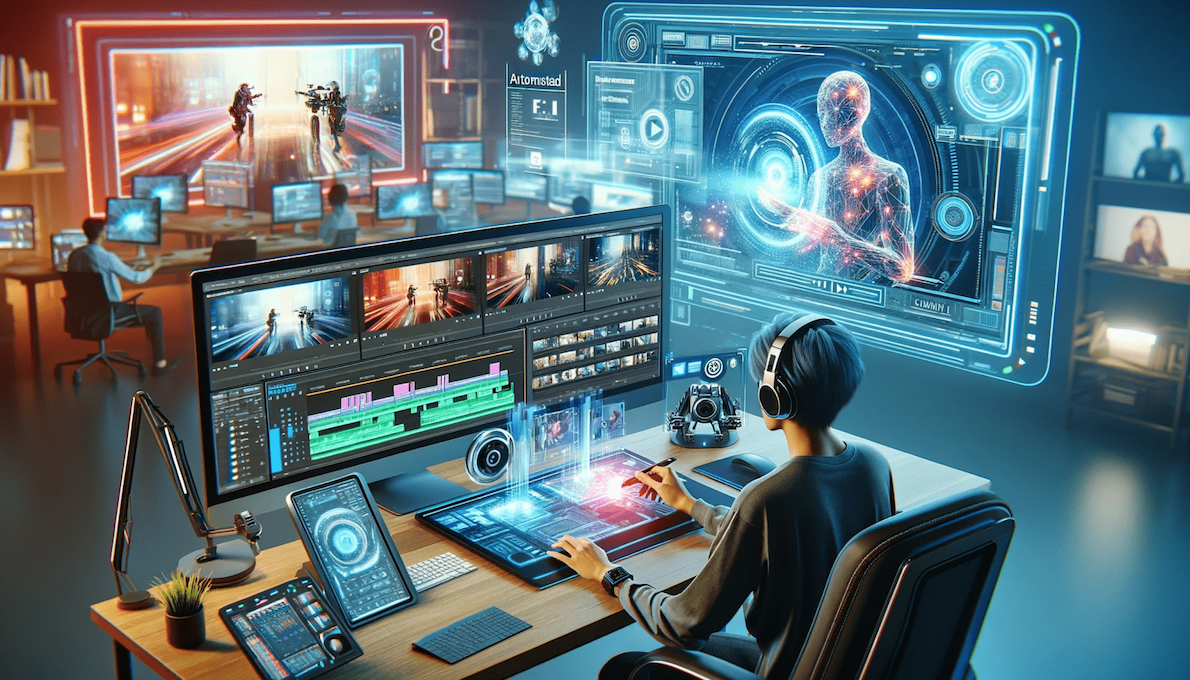
For decades, artificial intelligence served as the ultimate villain, sidekick, or philosophical puzzle on the big screen, but today, it has quietly stepped out of the script and into the director’s chair. The cinematic world is undergoing a massive transformation, and it is not just because of the stories we are watching.
Artificial intelligence, once a mere trope in science fiction, has become the invisible backbone of modern filmmaking. This shift is not some far-off future waiting to happen; it is happening right now, fundamentally altering how movies are imagined, produced, and delivered to our screens. To really grasp how we got here, we have to look at the slow but steady evolution from basic computer tools to the brilliant algorithms that now help us create movie magic.
From Basic Calculators to Digital Foundations
In the beginning, computers in film were mostly just really fancy calculators. Back then, computer-generated imagery relied on heavy, manual number-crunching, a far stretch from the seamless automation we see today. Artists spent weeks calculating geometry and light reflections by hand. Studios had to rely on massive render farms, whole warehouses filled with networked computers just to process the sheer amount of data needed for a few minutes of CGI. This laid the foundation for the digital worlds we build now.
Similarly, motion capture technology started out clunky, with actors covered in reflective markers bouncing light back to rigid cameras. Over time, the algorithms processing that data grew smarter, evolving into markerless systems that naturally translate an actor’s physical performance into a digital character with fluid grace. These early steps were crucial, setting the stage for a technological revolution that would forever change how visual stories are told.
The Machine Learning Spark in the Editing Room
The real game-changer arrived when machine learning started creeping into the editing room. Suddenly, software was no longer just a passive tool; it was an active assistant. Take rotoscoping, for example, the painstaking process of tracing over footage frame by frame to separate a character from the background.
What used to take days of grueling manual labor can now be done in a fraction of the time by AI that intuitively knows exactly where the foreground ends and the background begins. Color grading got a similar upgrade. Instead of spending hours tweaking hues to match across different shots, colorists now have AI tools that can suggest the perfect palette and maintain visual consistency, turning a tedious chore into a breeze. This shift allowed artists to spend less time on repetitive tasks and more time on pure creative expression.
Co-Writing the Script: AI as a Creative Partner
But AI is not just fixing things behind the scenes; it is starting to sit at the creative table. When a movie is just a spark of an idea, algorithms are already weighing in. We now have systems that can devour thousands of scripts, analyzing story structures, character archetypes, and plot twists.
By breaking down popular genres, AI can help producers predict what kind of story will resonate with specific audiences. It can even spit out a rough first draft of a script or offer alternative dialogue options when a writer hits a wall.
While a computer is not winning an Oscar for screenwriting anytime soon, it is proving to be an excellent brainstorming partner. Writers can use these generated concepts as a springboard, taking a rough algorithmic premise and infusing it with genuine human emotion, irony, and depth that machines still lack.
Pre-Visualizing the Dream
Before a single camera rolls, directors have to plan out their vision, and AI is completely revamping this pre-visualization stage. Virtual production sets, like the massive LED walls used in recent blockbuster shows, rely on AI to manipulate digital environments in real-time. A director can walk around a virtual set, change the lighting, and move the camera before stepping foot on a physical lot.
AI can even suggest the best camera angles based on the emotional tone of a scene or analyze an actor’s past performances and vocal tones to help casting directors find the perfect fit for a role. This means that by the time the crew arrives on set, the creative blueprint is already rock-solid, saving countless hours of trial and error.
Orchestrating the Set with Algorithmic Precision
Once filming actually begins, the logistical nightmare of managing a movie set gets a major upgrade thanks to artificial intelligence. Making a movie is like solving a giant puzzle of locations, crew schedules, and equipment. AI algorithms can chew through all these variables to build a shooting schedule that saves time and keeps the budget from spiraling out of control. It can match crew members to tasks based on their specific skills and availability, ensuring the set runs like a well-oiled machine. This means less time waiting around and more time actually capturing the magic.
Producers can now pivot quickly when a location falls through or the weather turns bad, as the AI instantly recalculates the entire production schedule to keep things moving forward without missing a beat.
Crafting Spectacle: Digital Doubles and Beyond
Then there is the visual spectacle itself. The breathtaking effects we expect from modern cinema are increasingly born from AI. Creating a digital double of an actor used to look slightly rubbery, but now, AI maps every subtle micro-expression, pore, and strand of hair, making these digital stand-ins almost impossible to distinguish from the real person.
Entire worlds, whether a sprawling futuristic city or a distant alien planet, are no longer built by hand, polygon by polygon. Instead, AI can procedurally generate these massive environments with jaw-dropping detail, allowing filmmakers to create grander visuals without breaking the bank. Even the magic of making an actor look decades younger or older is now driven by AI, seamlessly erasing or adding years to a face with a level of photorealism that completely fools the naked eye.
The AI-Assisted Edit and Sound Suite
After the cameras stop rolling, the real fine-tuning begins, and AI is taking over the editing bay in fascinating ways. Imagine feeding a script and hours of raw footage into a program that spits out a perfectly decent rough cut. It picks out the best takes, feels out the pacing, and strings together a solid narrative baseline.
Human editors are still absolutely crucial, but they no longer start from a blank slate. In the audio department, AI acts like a miracle worker, stripping away annoying background noise and balancing dialogue without destroying the natural ambiance. It can even compose original music or generate custom sound effects that hit the exact emotional beat a scene requires, giving composers a vast library of synthetic sounds to blend with their traditional orchestral scores.
Reviving the Past and Breaking Barriers
AI also plays a massive role in how we experience older films and how accessible new ones are. Classic movies that look blurry by today’s standards are being run through AI upscalers, which don’t just stretch the image but actually guess and add in the missing details, restoring cinematic history to its former glory.
For global audiences, AI is breaking down walls with automatic, highly accurate subtitling and dubbing that actually matches the actors’ voices and lip movements. This technology ensures that a film made in Seoul or Mumbai can be enjoyed seamlessly by viewers in New York or London. At the same time, studios are using AI as a defense mechanism, building tools to detect malicious deepfakes and protect the integrity of digital media from manipulation.
The Ethical Crossroads: Ownership and Jobs
Of course, this brave new world comes with a heavy load of ethical baggage. When an algorithm helps write a script or design a visual effect from scratch, who actually owns the copyright? The writer? The programmer? The machine? It is a legal and philosophical gray area we are still trying to figure out. There is also a very real fear about jobs. While the industry likes to call AI an “assistant,” the truth is that roles involving basic animation, rotoscoping, or entry-level editing are facing a genuine threat of displacement.
Furthermore, if we train these systems on old movies with outdated stereotypes, the AI will just keep regurgitating those same biases, potentially flattening the diversity of future stories instead of expanding it. Creative guilds and unions are actively fighting to ensure algorithms don’t replace the human touch that makes art meaningful.
The Future Viewer: Immersion and Interaction
For the audience, the evolution of AI means our relationship with movies is bound to change. We have all seen a digitally created character that looks almost human, but something feels slightly off, that eerie space known as the uncanny valley. As the tech gets better, that gap will close, but the feeling of watching hyper-real imagery will always be a curious psychological trip. Looking further ahead, we might see movies that adapt to us.
Imagine a film that changes its ending based on your mood, or an interactive story where AI generates new plotlines based on your real-time choices. It raises a fascinating question: what happens to the shared cultural experience when everyone watches their own personalized version of a movie? The watercooler conversation might never be the same.
Final Thoughts
The intersection of cinema and artificial intelligence is an ongoing, ever-evolving journey. We are not just watching a tech trend fade in and out; we are standing in the middle of a total reinvention of an art form. The capabilities of these systems are expanding daily, offering filmmakers tools that promise faster workflows and unimaginable creative heights.
Yet, with this immense power comes an equally deep responsibility. The industry must protect its workers, tackle ethical dilemmas head-on, and never lose sight of the human heartbeat that makes a story worth telling. Ultimately, the movies of tomorrow will be defined not by what machines can build, but by the human soul we choose to pour into them.