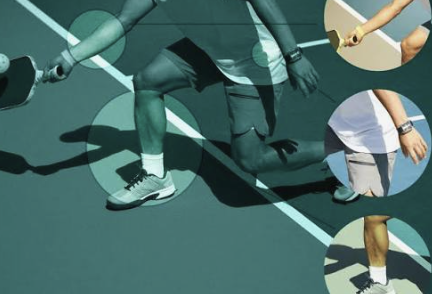
Pickleball has grown into one of the most popular paddle sports because it is easy to start, sociable and affordable. Almost anyone can learn the basic rules in an afternoon, and the small court makes rallies lively without demanding huge running distances.
In this article we will discuss how the game is played, how serving and scoring work, what gear is worth buying, how to warm up, which injuries are most common and how to ease into regular play safely.
Pickleball combines ideas from three older racket sports
Pickleball borrows from tennis, badminton and table tennis, and that mix explains why newcomers pick it up so quickly. Players use a solid paddle rather than a stringed racket, hit a perforated plastic ball over a low net, and play on a court about the size of a badminton court. The ball moves more slowly than a tennis ball and the paddle is lighter and shorter than a racket, so you can start rallying within minutes. Most games are played as doubles, though singles is also common.
The pace of the game suits a wide range of ages and abilities. A seventy-year-old and a twenty-year-old can enjoy a close match because placement, patience and teamwork often matter more than raw power. Many community centers, parks, gyms and clubs now offer introductory sessions where loan paddles are provided. Trying a session before you buy anything is a low-cost way to find out whether you enjoy it.
The sport has an official rulebook maintained by national governing bodies, and local clubs sometimes adjust details for casual play. That means a rule you learned in one place may differ slightly elsewhere, for example in how the serve is delivered or how tie-breaks are handled. For tournaments or league play, always check the current rules published by the governing body that runs the event. For friendly games, a quick chat with the other players before the first point avoids confusion.
Physical demands are real, even though the court is small. You will make short, quick moves, sudden stops, side steps and reaches, and you will repeat them many times in an hour. These actions load the ankles, knees, hips, shoulders and wrists in ways that some beginners are not used to, especially if they have been inactive. Knowing this from the start helps you build a sensible routine rather than being surprised by sore muscles the next day.
Finally, the social side deserves mention because it is a large part of the appeal. Doubles play involves constant conversation and teamwork, and many facilities run open play or ladder systems that match you with people of similar skill. This friendly structure makes it easy to meet new people. It also means you can find games at your level instead of being thrown in against experienced competitors.
Court layout and the kitchen rule
A standard pickleball court is commonly described as twenty feet wide and forty-four feet long, the same size for singles and doubles. The net is a little lower than a tennis net, commonly thirty-six inches at the posts and thirty-four inches at the center. On each side of the net, a marked area extends seven feet toward the baseline, and this is the non-volley zone, nicknamed the kitchen. The remaining area behind it is split into left and right service courts by a center line.
The kitchen rule is the single most important idea for a beginner to learn. You may not hit the ball out of the air while standing in the kitchen or touching its lines, and your momentum must not carry you into it after a volley. A volley means hitting the ball before it bounces. You are free to step into the kitchen at any time to play a ball that has already bounced, but you must leave before you volley again.
The rule exists to stop players from standing at the net and smashing every ball downward, which would reward height and power over skill. It is why you will see experienced players trade soft shots from just behind the kitchen line, a style often called dinking. These gentle shots land in or near the kitchen and force the opponents to hit upward. Learning to play patiently at this line is one of the biggest steps toward enjoying the game.
Line calls are straightforward once you know the basics. A ball that lands on any line except the kitchen line during a serve is in, and the serve must clear the kitchen and land in the correct diagonal service court. During a rally, a ball touching a boundary line counts as in. When in doubt, the player nearest the landing spot usually makes the call in casual play, and a doubtful ball is given to the opponent.
Court surfaces vary, and this matters for footing and the way the ball bounces. Outdoor courts are often made of textured concrete or acrylic, while indoor courts may be wood or sport flooring. Some players use converted tennis courts with temporary lines, so lines and nets may look slightly different from place to place. Check the surface before you play, and look for wet patches, loose debris and cracks that could cause a slip.
A good habit for newcomers is to practice moving as a pair toward the kitchen line after the return of serve. The receiving team usually steps forward to the line as soon as the ball has bounced twice, because the team that controls the line often controls the point. Staying back near the baseline leaves you exposed to soft shots that land just over the net. Walking through this movement slowly with a partner before a game builds the habit without pressure.
Serving and scoring follow a fixed pattern
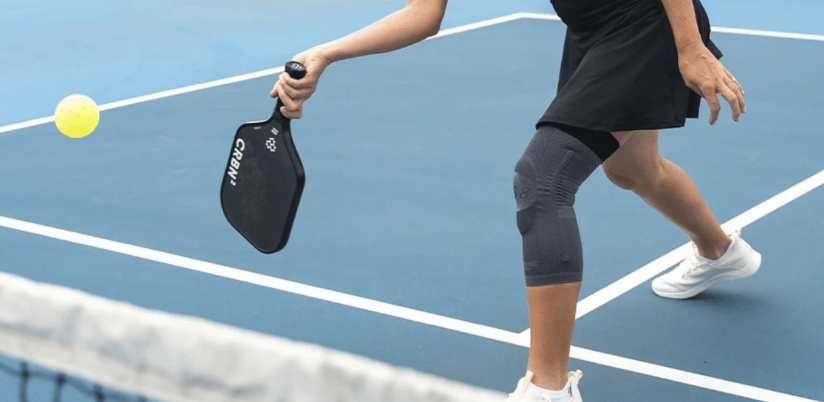
The serve in pickleball is delivered underhand, and in the common rule version the paddle must contact the ball below the waist. You stand behind the baseline, hit the ball diagonally across the net, and it must land in the opposite service court beyond the kitchen. Many rule sets allow a drop serve, in which you let the ball bounce and then hit it, with fewer restrictions on the swing. Only one attempt is normally allowed, apart from a ball that touches the net and lands in the correct court, which is usually replayed in current rules.
After the serve there is a rule that surprises most beginners, called the two-bounce rule. The receiving team must let the serve bounce before returning it, and the serving team must let that return bounce before hitting it. After those two bounces, volleys are allowed outside the kitchen. This rule gives the serving team time to move forward and prevents the serving side from rushing the net immediately.
Scoring has an unusual feature: only the serving side can win a point in the traditional scoring system. If the serving side wins the rally, it earns a point and the server switches sides and serves again. If the receiving side wins the rally, there is no point, but the serve passes on. In doubles, each partner usually gets a turn to serve before the serve goes to the other team, except at the start of the game.
Doubles scores are called with three numbers: the serving team’s score, the receiving team’s score and the server number, which is one or two. At the start of a game, the first serving team gets only one server, so the opening call is commonly zero, zero, two. Beginners often find this call confusing, so it helps to say the score aloud before every serve. Most casual games are played to 11 points and must be won by two, although some events play to 15 or 21.
Some venues also use rally scoring, in which every rally produces a point, mainly in certain leagues and timed formats. Because formats vary, always ask what scoring is in use before the first game. The table below sets out the key scoring and serving points for quick reference, though details can differ by event.
| Topic | Common standard approach | What to check locally |
| Serve style | Underhand, diagonal, behind the baseline | Whether a drop serve is allowed |
| Two-bounce rule | Serve and return must both bounce | Rarely changed in casual play |
| Who scores | Serving side only | Whether rally scoring is used |
| Game length | To 11, win by two | Some events use 15 or 21 |
| Score call | Server score, receiver score, server number | Singles uses two numbers |
If you get a chance, watch a few minutes of games before joining in. Notice where players stand when they serve, where they move after a return, and how often they let balls go out. Watching helps you pick up the rhythm of the game and the local customs faster than reading alone. It also helps you decide whether to start in a beginner group or a mixed open session.
Paddles, balls and shoes are the gear that matters
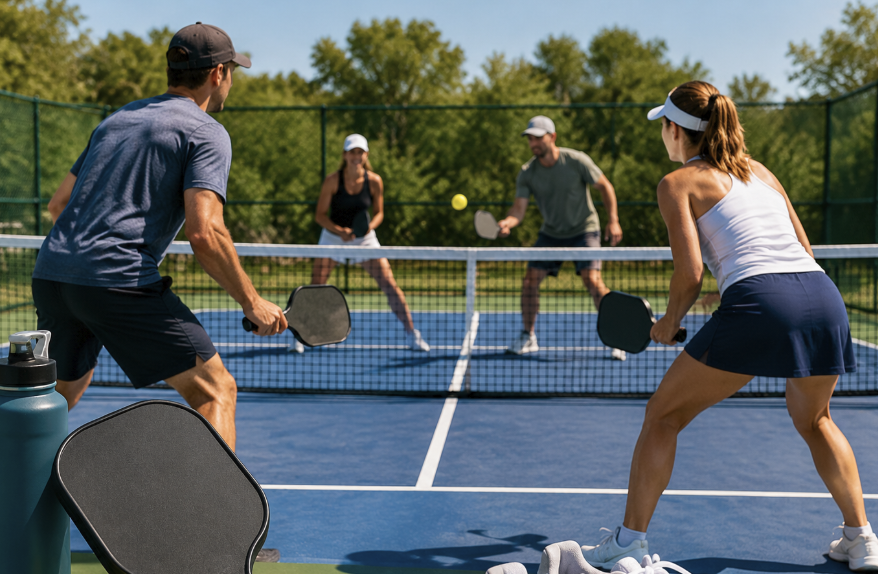
You do not need much equipment to start, and spending a lot at the beginning is rarely worthwhile. Paddles come in a wide range of materials, including wood, composite and graphite-faced designs, with different weights, grip sizes and shapes. For a first purchase, a mid-priced composite paddle of medium weight is a sensible choice because it balances control, power and comfort. Borrow paddles at a club or from friends first so you can feel the differences before you buy.
Weight and grip size affect both performance and injury risk. A paddle that is too heavy can tire the shoulder and elbow, while one that is too light may transmit more shock to the hand. A grip that is too small can encourage you to squeeze too hard, which strains the forearm, and one that is too large makes wrist movement harder. Hold the paddle as you would on court and check that your fingers wrap comfortably without strain.
The ball matters more than many people expect. Outdoor balls are typically harder with smaller holes, so they resist wind and perform on rough surfaces, while indoor balls are generally softer with larger holes. Using the wrong type can change the bounce and make the game frustrating. Ask what the venue uses, and buy a small set of the matching kind, since balls crack and wear out with use.
Footwear is the most overlooked item and one of the most important for safety. Running shoes are built for forward motion and often have a high, soft heel that rolls easily when you move sideways. Court shoes designed for tennis, volleyball or pickleball have firmer sides and a flatter sole that grip the surface during quick lateral movements. Wearing the wrong shoes is a leading contributor to ankle sprains, so this is the place to spend money first.
A few small extras are helpful. Protective eyewear is commonly recommended because the ball can strike the face at close range, especially in doubles at the net. Comfortable moisture-wicking clothing, a hat or sun protection for outdoor courts, a water bottle and a small towel are also useful. Knee or ankle supports may help some players, but they are no replacement for good footwear and conditioning. If you already have a joint problem, ask a doctor or physiotherapist whether a brace would suit you.
Bag choice and a few spare items are minor details, yet they save frustration. A small bag with a spare ball, a towel, a water bottle, sunscreen and a snack keeps you comfortable on a long session. Replace worn grip tape or an overgrip when it turns slick, because a damp or slipping handle makes you squeeze harder. Check that the paddle edge guard is not cracked, as sharp or damaged edges can cut a hand or the ball.
Warming up properly protects shoulders, knees and ankles
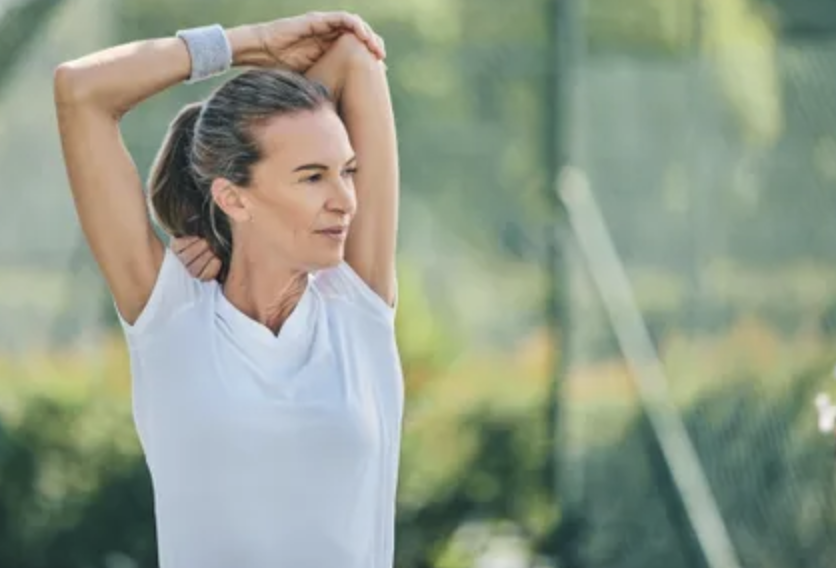
Many beginners walk onto the court cold and start playing hard, and this is a major route to avoidable strains. A warm-up raises your heart rate and body temperature and prepares joints and muscles for sudden movement. Spend five to ten minutes on it before you play, even if it feels unnecessary. A short routine takes little time and can spare you weeks of discomfort.
A simple warm-up works in three steps. First, begin with gentle movement for two or three minutes, such as brisk walking, light jogging on the spot or easy side steps along the baseline. Second, add dynamic movements that mimic the game: leg swings, shallow lunges, arm circles and torso twists, done smoothly without bouncing. Third, hit some soft shots with a partner, starting close to the net and gradually increasing pace and distance as your body loosens.
Strength and balance work off the court make a big difference over the longer term. Exercises for the calves, hips, thighs and core build the stability needed for quick direction changes. Shoulder and upper-back exercises help protect the joint during repeated overhead and reaching shots. Balance practice, such as standing on one leg while brushing your teeth, strengthens the small muscles around the ankle.
Stretching after play is a good habit, as muscles are warm and more flexible. Hold gentle stretches for the calves, hamstrings, quadriceps, hips, chest and forearms for around twenty to thirty seconds each. Do not push into sharp pain, and breathe normally. A short cool-down walk before stretching helps your heart rate settle.
Build your playing time up gradually, especially if you have been inactive. Begin with one or two sessions a week of about an hour, with rest days between, and increase only when you recover easily. Drink water before, during and after play, and take extra care in hot weather, when heat illness is a real risk. If you are older, have a long-term condition such as heart disease, diabetes or joint problems, or have not exercised in a long time, speak with a doctor before starting a new activity.
Recovery habits count as much as the warm-up. Sleep, regular meals with enough protein, and steady hydration help your body repair after hard sessions. Alternate days of play with easy walking, cycling or swimming if you want to stay active without loading the same joints. If one area keeps feeling tight, a physiotherapist can assess your movement and suggest exercises tailored to you.
Common injuries and how they happen
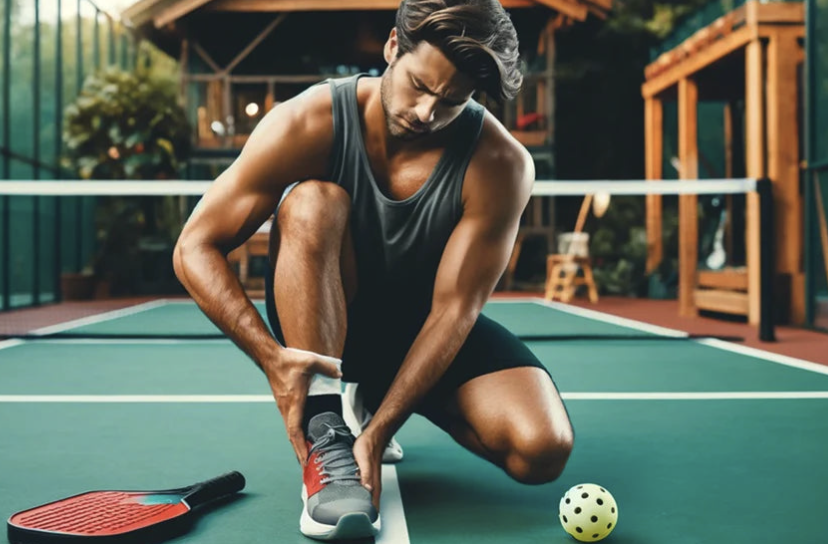
Most pickleball injuries come from a few predictable patterns, and knowing them helps you avoid them. Ankle sprains are among the most frequent and usually happen during a sudden sideways step, a pivot or a step backward onto an uneven surface. Knee and hip strains result from repeated quick stops and starts, and calf or Achilles problems often appear in players who return after a long break. Falls, especially backward falls while retreating for a lob, can cause wrist fractures, hip injuries or head knocks.
Overuse injuries develop slowly. Tennis elbow, which is pain on the outer side of the elbow, can follow repeated gripping and swinging, especially with a grip that is too tight or a paddle that is too heavy. Shoulder pain is linked to repeated reaching, overhead shots and poor mechanics, while wrist and hand pain may come from gripping hard or hitting off-center. Lower back soreness often follows bending and twisting without bending the knees. Early signs, such as a dull ache that fades after play, are a signal to adjust your technique, your equipment or your playing time.
There are some practical steps that help prevent most of these problems. Use the correct footwear and replace it when the sole is worn, and check the court for wet spots or debris before play. Keep your knees slightly bent and your weight on the balls of your feet in the ready position. Take small steps rather than lunging, and avoid backpedaling quickly, since turning and moving backward with side steps is safer. Let your partner call a ball and communicate on every shot to prevent collisions.
For mild injuries, a common general approach in the first day or two is to rest the area, apply a cold pack wrapped in cloth for short periods, use gentle compression and keep the limb raised if swollen. Return to play gradually when the pain has eased and movement is normal. Over-the-counter pain relief may help some people, but check the label and ask a pharmacist or doctor if you have other conditions or take other medicines. Do not play through pain that changes how you move.
Seek medical advice promptly for a swollen joint, a pop at the moment of injury, inability to put weight on a leg, numbness or tingling, a visibly deformed limb, or pain that does not improve after several days. Get urgent help for chest pain, severe shortness of breath, fainting, confusion or a head injury with headache, vomiting or drowsiness. Heat-related symptoms such as dizziness, nausea and heavy sweating with weakness also need a stop to play, a cool place and, if they persist, medical attention. A professional can diagnose the problem and plan a safe return to the sport.
Mental habits help as well, since beginners tend to be hard on themselves. Aim to hit the next ball back into play rather than chasing a flashy winner, and treat each point as a fresh start. Set small goals, such as getting eight serves in a row or keeping ten soft shots going with a partner. Tracking these simple targets shows your progress and keeps practice enjoyable.
Etiquette and finding games make the first weeks easier
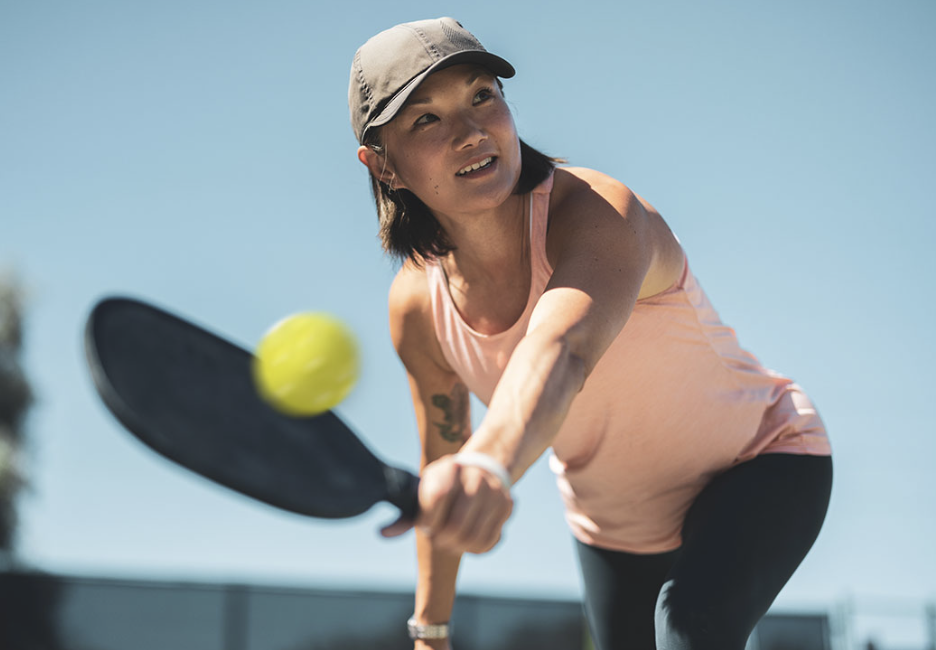
Good etiquette makes the game more enjoyable and helps newcomers feel welcome. Greet the other players, introduce yourself, and tell them that you are new, since most regulars are glad to explain the local customs. Call the score clearly before each serve, and be honest with line calls on your own side of the net. If a ball from another court rolls onto yours, stop play when it is safe and call out to the players, who will usually return it quickly.
Most venues use a paddle rack or a simple queue to organize who plays next. You place your paddle in the line or on the rack, and when a court becomes free, the next group takes the court. Ask a regular how the system works at your venue, because methods differ. Take care not to hold a court longer than the local rules allow, as courts are often shared by many players.
To find games, check community centers, recreation departments, gyms, parks and local clubs, many of which publish schedules for beginner sessions. Online groups and club pages often list open play times and the skill level expected. Look for sessions labeled as beginner, newcomer or learn-to-play, as these usually include a short coaching element. A few lessons from a qualified instructor at the start can improve technique and prevent bad habits.
Practice with purpose in the early weeks. Spend time on the serve, because a reliable serve keeps you in the game. Work on soft shots in the kitchen area, since patience at the net wins more rallies than power does. Practice the return of serve, and try to hit most returns deep into the court to give yourself time to move forward.
Teamwork is a key element of doubles, so talk with your partner. Agree on who takes balls down the middle, call the ball when you are going for it and move together as a pair. Compliment good shots and shrug off mistakes, since both partners will make plenty. Over time, this communication will improve your results more quickly than hard hitting alone.
Final Thoughts
Start by finding a local beginner session and borrowing a paddle, so that you can try the game before spending money. Learn the three ideas that matter most: the underhand diagonal serve, the two-bounce rule and the kitchen rule. Wear proper court shoes, bring water, and add protective eyewear if you can. Before your first game, do a warm-up of five to ten minutes, and agree with the group on the scoring format.
In your first month, play two or three times a week at most, with rest days in between, and stop at the first sign of sharp pain. Add simple strength and balance exercises for your legs, hips and shoulders on non-playing days. Consider two or three lessons with a qualified coach to build sound technique early. Once you enjoy the game, buy a mid-priced paddle that suits your hand and the correct ball for your venue.
This article gives general information and is not medical advice. If you have a heart condition, high blood pressure, diabetes, joint disease, balance problems, are pregnant or are returning from an injury, check with a doctor or physiotherapist before you begin. Rules, court sizes and equipment standards can vary by country, venue and event, so rely on your local governing body and venue staff for the final word.
Read more about Newolt