
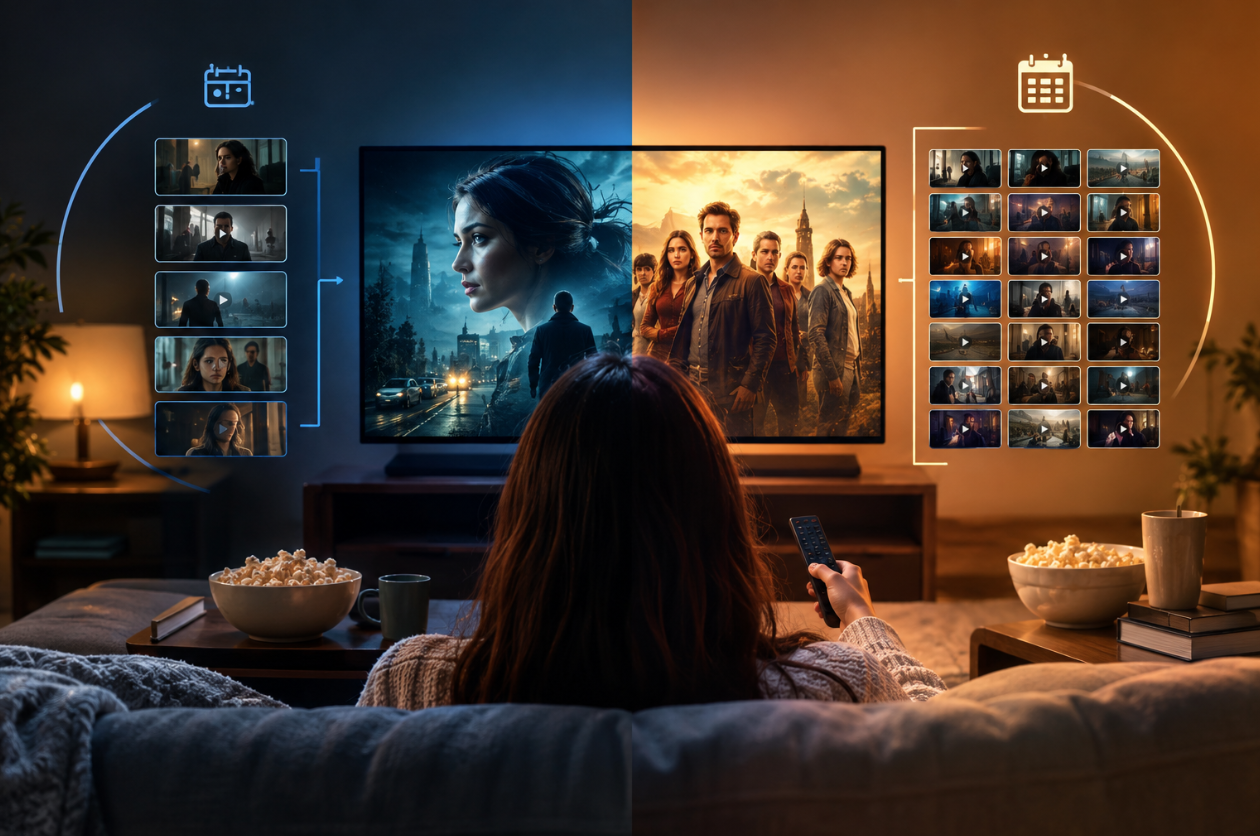
Halfway through a gripping eight-episode drama, Sana found herself checking whether the show had been renewed for a second season, only to discover it had been billed as a “limited series” from the start a phrase she had skimmed past in the description without a second thought, a complete story with a planned ending, not the first chapter of something ongoing. She’d spent the whole binge unconsciously waiting for a cliffhanger setup that was never coming, because everything about the pacing, the season-long story arc compressed into eight tight episodes, felt different from the twenty-two-episode network dramas she grew up watching, which stretched storylines across years without ever quite resolving them.
By the time the finale wrapped every major thread in a tidy, deliberate conclusion, Sana realized she’d been watching a fundamentally different kind of television than the kind she’d spent most of her life consuming, one built around an ending rather than around indefinite continuation.
That difference in pacing isn’t accidental it reflects a fundamental shift in how television gets made and consumed since streaming platforms reshaped the economics and creative incentives behind episode counts, season lengths, and whether a story is designed to end at all. Viewers who grew up on decades-long soap operas and sprawling procedural dramas are, in a sense, relearning how to watch television built on an entirely different set of structural assumptions.
A Weekend Binge That Ended Too Soon
Limited series are built around a defined endpoint from the outset, which changes how writers approach pacing compared to an open-ended show designed to run for multiple seasons. Every episode in a well-constructed limited series serves the larger arc, since there’s no need to manufacture filler content to stretch a story toward an uncertain future renewal.
That structural difference shows up clearly in how scenes get written and edited. A traditional network drama, built to fill a season order regardless of how much story material exists in reality, often includes subplot detours, recurring guest characters, or episode-of-the-week structures designed to pad runtime. A limited series, with its story fully mapped from the first outline, tends to cut anything that doesn’t directly serve the central arc, producing a tighter, more deliberately paced viewing experience from the opening scene to the last.
This compressed structure creates a different viewing experience than traditional season-based television. Pacing that would feel rushed stretched across a traditional twenty-two episode order instead feels tight and purposeful within a shorter, pre-planned run. Viewers accustomed to sprawling, multi-season shows sometimes find limited series satisfying precisely because they deliver a complete story without the risk of a show getting cancelled mid-arc or dragging past its natural conclusion for commercial reasons, a frustration common with shows that outlive their creative momentum.
Anthology Formats and Their Creative Freedom
Anthology series, where each season tells a self-contained story with a new cast and setting, represent a related but distinct format from the traditional limited series. This distinction sometimes gets lost in everyday conversation, where the two terms are used almost interchangeably despite describing structurally different approaches to storytelling. Shows like “American Horror Story” and “True Detective” popularized this structure, letting creators explore different genres, casts, and tones season to season without being locked into continuing a single storyline indefinitely.
This format offers creative freedom that traditional continuing series don’t, since writers aren’t obligated to maintain consistency with years of accumulated plot history. It also creates flexibility for casting, allowing high-profile actors to commit to a single season rather than an open-ended, multi-year contract, which has made anthology formats attractive to film actors who might otherwise avoid television commitments altogether.
This casting flexibility has reshaped how prestige television gets marketed, with major film stars now appearing in limited series and anthology seasons as a matter of course rather than as a novelty. The reduced time commitment, often a few months of filming rather than a multi-year contractual obligation, makes television a more attractive option for actors balancing a film career with television work, which in turn has raised the overall production value and star power audiences now expect from top-tier limited series.
Streaming Economics Behind Episode Counts
Episode counts and season lengths aren’t purely creative decisions they’re shaped heavily by the economics streaming platforms operate under, which differ substantially from traditional network television.
- Subscriber retention over ad revenue: streaming platforms prioritize content that keeps subscribers engaged and paying monthly, rather than content optimized for advertising slots and time-of-day scheduling.
- Shorter seasons reducing production costs: eight to ten episode seasons cost less to produce than traditional twenty-two episode network orders, letting platforms fund more distinct shows with the same budget.
- Data-driven renewal decisions: streaming platforms track viewership data closely and make renewal decisions based on completion rates and engagement metrics rather than traditional ratings systems.
- International licensing considerations: shorter, self-contained seasons or limited series can be easier to license and market internationally compared to long-running shows requiring years of catch-up viewing.
These economic pressures explain why the twenty-two-episode network season, once the industry standard, has become far less common outside of traditional broadcast networks still operating under older advertising models.
Traditional broadcast networks that still rely heavily on advertising revenue have largely held onto the longer episode order, since more episodes mean more ad slots sold across a season, a business model streaming platforms built around subscription revenue don’t share. This divergence has created two somewhat parallel television ecosystems operating under different economic logic, one still built around episode volume and the other increasingly built around tightly produced, story-driven seasons regardless of length.
Writers Rooms Adjusting to Shorter Orders
The shift toward shorter season orders changed how writers rooms function, and not always in ways that benefited the people working in them. Traditional network seasons employed writers for extended stretches, building experience and providing steadier income across a long production cycle. Shorter streaming seasons compress that same creative work into fewer weeks, which can mean less job security and more competition for the next opportunity once a short season wraps.
On the creative side, some writers report that shorter orders demand tighter plotting and less room for the meandering subplots that filled out longer network seasons, a constraint some find creatively energizing and others find limiting when a story naturally wants more room to breathe. Industry discussions around fair compensation and job stability for writers working under these shorter, more compressed production cycles became a significant point of labor negotiations in recent years.
A shorter order changes several practical aspects of how a writers room operates day to day:
- Team size: smaller rooms staffed for a compressed timeline rather than the larger teams a long network season traditionally supported.
- Pre-production planning: more of the season’s arc gets mapped before the first script is written, since there’s less room to improvise once filming begins.
- Overlap with production: writing and filming schedules run closer together, leaving less buffer to revise earlier episodes based on how later ones develop.
- Contract structure: shorter, more project-based commitments replacing the longer-term staffing arrangements common on traditional network shows.
Compressed production windows also changed how writers rooms staff and structure their work, with some shows now employing smaller writing teams working more intensively over a shorter span rather than a larger team spread across a longer season. This shift has ripple effects on mentorship and career development within the industry, since junior writers traditionally learned much of their craft during the longer stretches of a traditional network season, opportunities that shorter, more compressed productions don’t always replicate in the same way.
Audience Habits: Bingeing Versus Weekly Drops
How a season is released shapes viewing behavior as much as how it’s structured creatively. Full-season drops, where every episode becomes available simultaneously, encourage binge-watching, while weekly release schedules, still used by platforms like Apple TV+ and HBO for many shows, encourage more traditional appointment viewing and sustained cultural conversation across weeks rather than days.
- Full-season drops: maximize binge behavior and immediate subscriber engagement, but can compress a show’s cultural conversation into a short window before attention moves elsewhere.
- Weekly releases: sustain conversation and anticipation over a longer period, giving a show more sustained visibility and organic word-of-mouth marketing.
- Hybrid releases: some platforms drop a batch of episodes upfront followed by weekly releases for the remainder, attempting to capture benefits of both approaches.
- Split-season releases: releasing a season in two separate parts months apart, a strategy some platforms use to maintain subscriber engagement across a longer stretch.
Platforms continue experimenting with release strategy, suggesting there’s no settled consensus on which approach best balances subscriber retention against sustained audience engagement.
Some shows have even switched release strategies between seasons based on how the previous season performed, dropping an entire season at once after a weekly release underperformed, or shifting to weekly episodes after a full-season drop failed to sustain conversation past the first weekend. This willingness to experiment mid-series reflects how unsettled the release-strategy question remains across the industry, even among platforms with years of accumulated viewership data to draw on.
Case Studies From Netflix, HBO, and Apple TV+
Looking at how specific platforms approach season structure illustrates the range of strategies at play across the industry.
- Netflix: generally favors full-season drops and has produced numerous acclaimed limited series alongside long-running multi-season shows, often making renewal decisions based on internal viewership data not always shared publicly.
- HBO (and HBO Max): has leaned heavily into weekly releases for prestige dramas, maintaining a tradition of appointment television even as streaming became the dominant distribution method, alongside a strong track record of limited series.
- Apple TV+: has used weekly releases consistently across most of its original programming, positioning itself around sustained cultural conversation rather than binge consumption, while producing a mix of limited series and ongoing shows.
Each platform’s strategy reflects its broader subscriber goals some prioritize rapid content consumption to reduce churn, while others prioritize appointment viewing to keep subscribers engaged over longer stretches between major releases.
Smaller and newer streaming platforms have generally followed whichever larger competitor’s strategy seems to be working best at a given moment, rather than establishing a distinct release philosophy of their own from the outset. This imitation has led to periodic shifts across the industry as a whole, with full-season drops falling in and out of favor roughly in step with how well they appear to be performing for the largest platforms driving the broader conversation around release strategy.
Renewal Pressure and Its Effect on Pacing
Shows designed for multiple seasons face a different pacing challenge than limited series: the uncertainty of whether renewal will happen. This uncertainty can visibly affect how a show is written, especially in earlier seasons when creators don’t yet know how much time they’ll have to tell their full story.
Some showrunners plan story arcs with built-in flexibility, designing seasons that can function as a satisfying conclusion if cancelled or as a stepping stone if renewed. Others commit fully to a multi-season vision and risk leaving a story unresolved if a platform cancels the show before the planned ending, a fate that has affected numerous ambitious series over the years and remains a real point of frustration for audiences who invest in stories that never reach their intended conclusion.
Social media campaigns urging platforms to reverse cancellation decisions have become a recurring feature of this frustration, occasionally succeeding in securing a truncated final season or a wrap-up special, though far more often failing to change a platform’s underlying data-driven decision. This dynamic has made some viewers more hesitant to invest emotionally in a new multi-season show until it has proven durable enough to earn a second or third season, a caution that limited series don’t require since their ending is guaranteed from the start.
Deciding What a Story Needs
The choice between a limited series and an ongoing multi-season format ultimately comes down to what a given story requires to be told well, rather than defaulting to whichever format is currently favored by the industry or a specific platform’s strategy.
Stories built around a central mystery, a defined historical event, or a character arc with a natural endpoint often work better as limited series, avoiding the padding that can result from stretching a resolved story across additional seasons purely for commercial reasons. Writers and showrunners increasingly pitch projects with an explicit format in mind from the earliest development stages, rather than defaulting to an open-ended series and figuring out the shape later, which has arguably produced more intentionally structured television across the board.
Stories built around an ensemble world with room for ongoing development, ongoing relationships, and evolving circumstances often benefit from an open-ended structure that lets characters grow across years rather than being compressed into a single tight arc. Increasingly, creators and platforms alike seem to be treating this as a real creative decision rather than a default, which has arguably improved the overall quality and focus of television being produced across both formats.
Final Thoughts
Streaming didn’t just change how television gets distributed it reshaped the creative and economic incentives behind how stories get structured, from tightly contained limited series to sprawling multi-season worlds built for years of ongoing development. Neither format is inherently superior, and the best television tends to emerge when creators choose a structure that fits the story rather than defaulting to whatever a platform’s current strategy favors.
As audiences continue adjusting their expectations around episode counts and release schedules, the range of formats available today offers more flexibility for storytellers than the rigid network season structure ever did.
Read more about Newolt
Frequently Asked Questions
1. What defines a limited series versus a regular TV show?
A limited series is generally structured to tell a complete story within a single season, with no planned continuation, while a regular TV show is built with the expectation of multiple seasons and an ongoing storyline. Some shows marketed as limited series have later been extended into additional seasons due to popularity, blurring the original definition somewhat.
2. Why do streaming shows have fewer episodes than old network shows?
Streaming platforms generally favor shorter, tightly plotted seasons that cost less to produce and align with subscriber engagement goals rather than the advertising-driven scheduling that shaped traditional twenty-two episode network seasons. This shift also reflects changing writing approaches that favor serialized storytelling over the more episodic structure common in older network television.
3. Are anthology series and limited series the same thing?
Not exactly. A limited series typically tells one complete story across a single season with no continuation, while an anthology series usually continues across multiple seasons, with each season introducing an entirely new self-contained story, often with a different cast and setting.
4. Do limited series get renewed for additional seasons?
It happens occasionally when a limited series performs well and creators see potential for continuation, though it goes against the format’s original premise of a complete, self-contained story. Audience and critical reaction to these extensions has been mixed, since the tight pacing that made the original season work doesn’t always translate to an unplanned continuation.
5. Why do some shows release weekly instead of all at once?
Weekly releases help sustain audience engagement and cultural conversation over a longer period, benefiting platforms that want ongoing subscriber engagement between major content drops.
Full-season drops, by contrast, prioritize immediate binge consumption, which can drive a concentrated spike in engagement followed by a quicker drop-off in conversation.
6. Is binge-watching a full season better than watching weekly?
Neither approach is objectively better, since it depends on personal viewing preferences and how a specific show is paced. Some viewers prefer the immersive momentum of a full binge, while others enjoy the anticipation and shared conversation that comes with waiting for weekly episodes alongside other viewers.