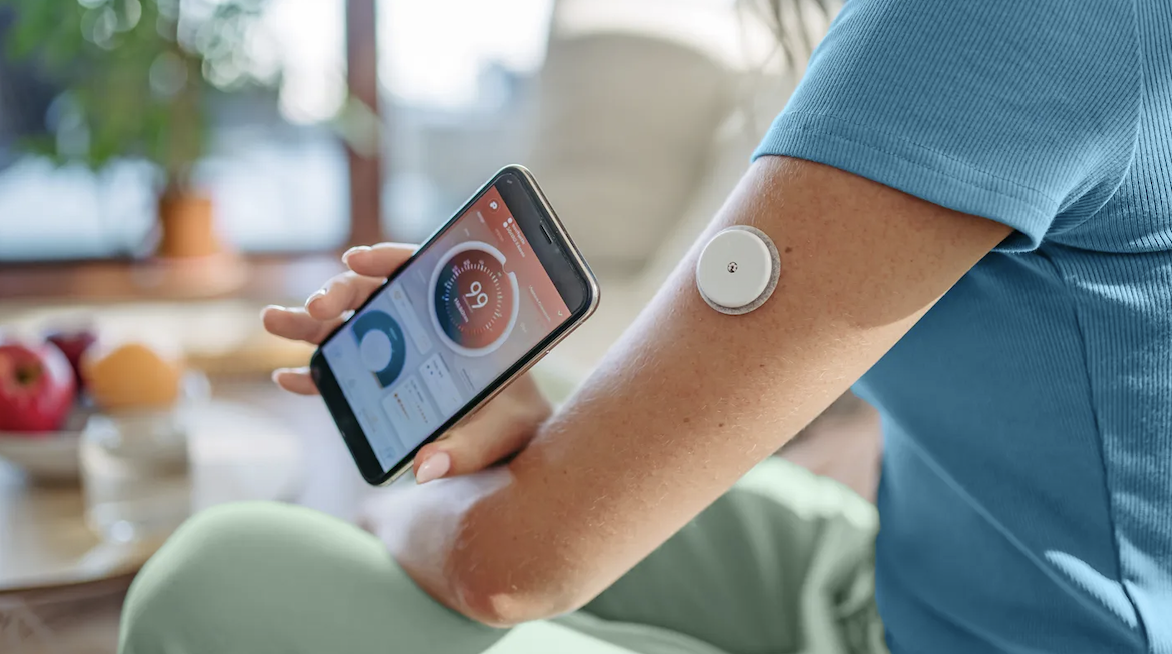
Jake, a thirty-four-year-old marathon runner with no history of diabetes, strapped on a continuous glucose monitor out of curiosity after a friend mentioned using one to fine-tune race-day nutrition. Within a week, he noticed his glucose spiked and crashed hard after his usual pre-run bagel, while a version of the same meal with added protein produced a much flatter curve.
Nothing about his blood sugar was abnormal by clinical standards he wasn’t prediabetic, and a standard fasting glucose test would have shown nothing noteworthy. But the sensor revealed patterns in his day-to-day eating that a single blood draw never could have captured. A single lab visit, scheduled at a random moment weeks apart, would have shown a normal fasting number and told him nothing about what happened in the hours after his usual breakfast, which is exactly the gap continuous monitoring was built to fill.
That kind of discovery is exactly what’s driving a wave of interest in continuous glucose monitors among people without diabetes. Devices once reserved almost exclusively for insulin management are now marketed directly to a general wellness audience curious about how their own bodies respond to food, exercise, sleep, and stress in real time.
This shift mirrors a broader pattern in consumer health technology, where tools developed for managing a diagnosed condition eventually get repackaged for a wellness-curious audience with no diagnosis at all. Fitness trackers followed a similar path decades earlier, moving from clinical and athletic settings into everyday consumer products, and CGMs appear to be following a comparable trajectory as sensor costs decline and consumer appetite for personal health data grows.
A Curious Spike After Breakfast
The core appeal of a CGM for someone without diabetes comes down to visibility into a process that normally happens invisibly. Blood glucose fluctuates throughout the day in response to meals, movement, sleep quality, and stress hormones, but without continuous monitoring, none of that fluctuation is visible unless someone happens to get a blood draw at exactly the right moment.
A CGM changes that by measuring glucose levels in interstitial fluid every few minutes around the clock, generating a continuous curve rather than a single snapshot. For someone like Jake, that continuous view turned an assumption (“bagels are a fine pre-run snack”) into a data point worth reconsidering, not because his glucose response was dangerous, but because it wasn’t what he expected.
The value of that continuous view comes less from any single data point and more from the pattern that emerges across days and weeks. One unusual spike after an unfamiliar meal tells a wearer relatively little on its own, but the same spike showing up consistently after a specific food, at a specific time of day, or following a specific type of workout starts to look like a real pattern worth adjusting behavior around, rather than a one-off fluctuation that doesn’t warrant a second thought.
Dexcom Stelo, Abbott Lingo, and the New Consumer Category
Several companies have launched CGM products specifically targeted at non-diabetic consumers, separate from their medical-grade devices designed for diabetes management.
- Dexcom Stelo: marketed as a biosensor for general wellness and metabolic health tracking, available without the same prescription requirements as Dexcom’s diabetes-focused devices.
- Abbott Lingo: built on Abbott’s established FreeStyle Libre sensor technology, repositioned with an app experience focused on glucose insights for people without diabetes.
- Various app-based platforms: several wellness companies now build subscription programs around these consumer CGMs, pairing sensor data with coaching, meal recommendations, or broader metabolic tracking.
This consumer category represents a meaningful shift from the devices’ original medical purpose, and it’s worth remembering that these products are generally positioned as wellness tools rather than diagnostic devices, a distinction that matters for how the data should be interpreted.
Pricing and accessibility differ notably between these consumer-focused products and their medical-grade counterparts, partly because consumer versions typically skip some of the regulatory and clinical validation processes required for devices intended to guide insulin dosing decisions. That doesn’t make the underlying sensor technology fundamentally different, since many consumer CGMs use similar hardware to their prescription counterparts, but it does mean the surrounding app experience, customer support, and marketing language are built around a different audience with different goals and different risk tolerances.
Reading Glucose Curves Without a Diagnosis
Interpreting CGM data without diabetes requires a different lens than interpreting it for diabetes management, since the goals and reference points differ. Where a diabetic patient and their care team
are watching for dangerous highs and lows requiring intervention, someone without diabetes is generally looking at more subtle patterns within a normal range.
- Post-meal spikes: how sharply glucose rises after eating and how quickly it returns to baseline.
- Overnight stability: whether glucose stays relatively flat during sleep or shows unexpected fluctuations.
- Exercise response: how different types and intensities of activity affect glucose in the hours during and after.
- Recovery time: how long it takes glucose to return to a stable baseline after a spike, sometimes considered alongside spike height.
- Day-to-day variability: whether patterns stay consistent or shift noticeably based on stress, sleep, or other lifestyle factors.
None of these patterns carry the same clinical weight as they would for someone managing diagnosed diabetes, and interpreting them without professional guidance risks reading too much into normal biological variation.
New users often fall into one of two interpretation traps early on. Some dismiss every fluctuation as meaningless noise, missing real, useful patterns buried in weeks of data. Others treat every minor spike as a health crisis requiring immediate dietary overhaul, reading far more significance into normal glucose variation than the data supports in reality. Neither response serves the wearer especially well, and striking a middle ground, treating the data as a loose guide for noticing broad patterns rather than a precise diagnostic readout, tends to produce more useful takeaways over time.
Foods That Trigger Unexpected Reactions
One of the most commonly reported experiences among non-diabetic CGM users involves discovering that certain foods produce a steeper glucose response than expected, often foods that don’t carry an obvious “sugary” label.
White rice, certain fruit combinations eaten alone versus with protein or fat, and some packaged snack foods often produce sharper spikes than users anticipated, while pairing carbohydrates with protein, fiber, or fat tends to blunt the response in many people’s data. It’s worth being cautious about overgeneralizing from personal data, though, since glucose response to specific foods varies notably between individuals based on factors like gut microbiome composition, activity level, and genetics a food that spikes one person’s glucose might barely register for another.
This individual variability is one of the more surprising findings to come out of broader glucose research in recent years, and it helps explain why generic nutrition advice sometimes feels like it doesn’t quite match personal experience. A food widely labeled as a healthy choice might still produce a sharper glucose response in one person than a food generally considered less healthy, simply due to differences in how that individual’s body processes it, which is part of what makes personal CGM data feel more actionable to some users than generic dietary guidelines.
Exercise, Sleep, and Stress Effects on Glucose
Food isn’t the only factor CGM users report noticing changes around exercise, sleep quality, and stress all show up in glucose data in ways that surprise many first-time users.
- Post-exercise dips or rises: depending on exercise intensity and type, glucose can drop during sustained aerobic activity or temporarily rise during high-intensity efforts due to stress hormone release.
- Poor sleep effects: many users report higher and less stable glucose patterns following nights of inadequate or disrupted sleep.
- Acute stress spikes: stressful events or deadlines sometimes correlate with glucose increases independent of any food intake, tied to cortisol and adrenaline release.
- Illness and inflammation: some users notice glucose pattern shifts during minor illness, even before other symptoms become obvious.
These correlations can be truly interesting to observe, though attributing a specific glucose change to a single cause with confidence is harder than the clean narratives sometimes suggested in wellness marketing.
Sleep in particular tends to surprise first-time CGM users more than almost any other factor, since the connection between a poor night’s rest and next-day glucose stability isn’t something most people associate with blood sugar at all. Seeing that connection show up repeatedly in personal data can be a stronger motivator for prioritizing sleep than generic advice about its importance ever was, simply because the feedback feels immediate and specific rather than abstract and general.
Limitations of Wearing a Sensor Without Diabetes
CGMs have real limitations worth weighing before committing to one, especially for people without a medical reason to monitor glucose closely.
Sensor accuracy can vary, especially at the edges of the normal glucose range, and interstitial fluid readings lag slightly behind actual blood glucose levels, which matters more for rapid changes than for general trend-watching.
There’s also a psychological dimension worth considering: some people find continuous glucose data useful and motivating, while others find it creates unnecessary anxiety around normal eating patterns or fosters an unhealthy fixation on minor fluctuations that don’t carry meaningful health implications for someone without a metabolic condition. Sensors also require periodic replacement, typically every one to two weeks depending on the device, and adhesive sensitivity or skin irritation at the wear site affects some users more than others.
Data overload is a less discussed but real limitation for some users, especially those inclined toward obsessive tracking behavior in other areas of life. Checking a glucose app dozens of times a day, or making minor food decisions based on small, statistically insignificant fluctuations, can turn a curiosity tool into a source of stress rather than insight. Setting boundaries around how often to check the data, similar to boundaries some people set around step counts or calorie tracking, helps keep the experience useful rather than consuming.
Cost and Access Outside Clinical Settings
Unlike CGMs prescribed for diabetes management, which are often covered at least partially by insurance, consumer-focused CGMs marketed to non-diabetics are generally an out-of-pocket wellness expense, and the ongoing cost of sensors adds up over months of continuous use.
- Sensor subscription costs: most consumer CGM programs operate on a recurring subscription model covering a set number of sensors per month.
- App and coaching add-ons: some platforms bundle sensor costs with additional coaching or nutrition guidance features at a higher tier.
- Insurance coverage limitations: coverage for non-diabetic use is uncommon, though policies vary and some flexible spending or health savings accounts may apply toward the cost.
- Trial periods: several brands offer short trial programs, letting curious users test the experience before committing to an ongoing subscription.
Weighing this ongoing cost against the actual insights gained is worth doing honestly after the novelty of the first few weeks wears off, since the most valuable discoveries often happen early, with diminishing new information after the initial pattern-recognition period.
Some users choose a cyclical approach instead of a continuous subscription, wearing a sensor for a few weeks a couple of times a year rather than maintaining year-round coverage. This pattern captures most of the educational value at a fraction of the ongoing cost, especially useful for revisiting glucose patterns after a major lifestyle change, such as a new exercise routine or a significant shift in diet, without committing to the expense of continuous monitoring indefinitely.
Talking to a Doctor About What You See
Data from a consumer CGM, while interesting, isn’t a diagnostic tool, and unusual patterns showing up in the data are worth discussing with a doctor rather than self-diagnosing based on sensor readings alone. A pattern that looks concerning in a wellness app might reflect normal variation, a sensor calibration quirk, or truly something worth a follow-up conversation, and a doctor is best positioned to tell the difference using proper clinical context and, if needed, standard diagnostic testing.
Anyone with a family history of diabetes, prediabetes risk factors, or existing metabolic concerns should treat a consumer CGM as a supplementary curiosity tool rather than a substitute for regular checkups and standard blood work, which remain the established path for diagnosing or monitoring metabolic conditions. A doctor can also help distinguish a truly concerning pattern from ordinary variation tied to factors like menstrual cycle phase, recent illness, or a poor night’s sleep, context that a wellness app’s automated insights typically can’t account for on its own.
Final Thoughts
Continuous glucose monitors have opened a new window into everyday metabolic patterns for people who would never have considered wearing one a few years ago, turning abstract nutrition advice into visible, personal data. That visibility can be truly useful for building awareness around how specific foods, exercise, and stress affect an individual’s body, but it works best as a curiosity tool rather than a diagnostic one.
Anyone noticing patterns that seem concerning, or anyone with existing risk factors for metabolic conditions, should bring that data to a doctor rather than drawing conclusions alone, since proper context and standard testing remain the reliable path to gauging actual health status.
Frequently Asked Questions
1. Are CGMs accurate for people without diabetes?
Consumer CGMs generally use similar sensor technology to medical-grade devices, though accuracy can vary somewhat at the edges of the normal glucose range and readings lag slightly behind actual blood glucose. For general trend-watching and pattern recognition, most users find them reasonably reliable, though they aren’t positioned as diagnostic-grade tools.
2. Do I need a prescription for a consumer CGM?
Some consumer-focused CGMs, like Dexcom Stelo, are available without the prescription process required for medical-grade diabetes devices, while others may still involve an online consultation step depending on the brand and region. Checking a specific product’s requirements before purchasing is worthwhile since policies vary.
3. Can a CGM help with weight management?
Some users find that visibility into glucose spikes helps them make more informed food choices that indirectly support weight goals, though a CGM alone isn’t a weight loss tool and shouldn’t be treated as one. Sustainable weight management typically involves broader factors like overall diet quality, activity, and sleep that a CGM only partially illuminates.
4. How long can I wear a single CGM sensor?
Most consumer CGM sensors are designed to be worn for one to two weeks before requiring replacement, depending on the specific brand and model. Some users choose to wear sensors continuously across a subscription period, while others use them intermittently for shorter observation windows.
5. Will a CGM show if I’m prediabetic?
A CGM can reveal glucose patterns that might prompt a conversation with a doctor, but it isn’t a diagnostic tool for prediabetes or diabetes on its own. Proper diagnosis relies on standard clinical tests like fasting glucose, A1C, or an oral glucose tolerance test administered and interpreted by a medical professional.
6. Is it worth using a CGM if I have no metabolic concerns?
That depends on personal curiosity and budget, since the practical health benefit for someone with no metabolic risk factors is less clear-cut than for someone managing an existing condition. Many people find a short trial period truly informative for gauging personal food and lifestyle responses, even without an ongoing subscription afterward.