
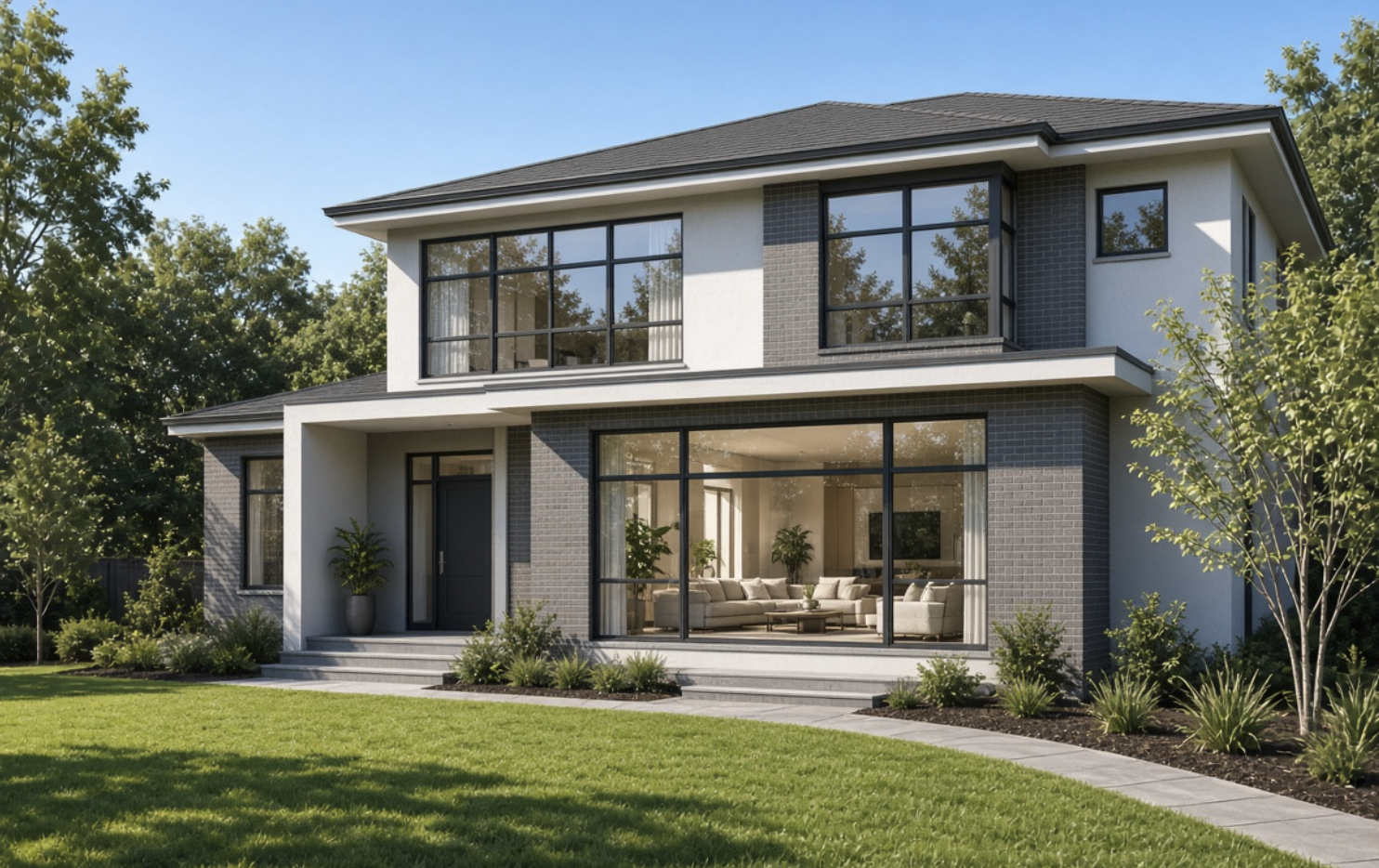
Window replacement is consistently one of the more expensive home improvement decisions a homeowner can make, which makes it worth understanding exactly what you’re paying for before committing. This guide breaks down the ratings that actually matter, the realistic energy savings you can expect, and when a cheaper fix might make more sense than full replacement.
Timing Your Replacement Project
Scheduling window replacement during milder weather, typically spring or fall, reduces the discomfort of having openings temporarily exposed during installation and generally aligns with when installers have more availability, since summer and the lead-up to winter tend to be their busiest booking periods. Booking further in advance during these popular seasons is worth planning for, since installer schedules can fill up weeks or even months ahead during peak demand.
Signs Your Current Windows Are Underperforming
Noticeable drafts near the window frame, visible condensation between panes (a sign the seal has failed on double-pane windows), difficulty opening or closing smoothly, and rooms near windows that feel consistently colder or hotter than the rest of the house are all practical signs worth investigating before assuming a full replacement is the only fix.
Tax Credits and Rebate Programs
Depending on your location, energy-efficient window replacements may qualify for tax credits or utility rebate programs, which can meaningfully offset the upfront cost and shorten the payback period discussed later in this guide. Checking current programs before finalizing a purchase, and confirming the specific windows you’re considering meet the efficiency requirements for that program, is worth the extra research time given the potential savings involved.
Understanding U-Factor
U-factor measures how well a window prevents heat from escaping, with lower numbers indicating better insulation. This is arguably the single most important rating for climates with cold winters, since it directly reflects how much heat loss you can expect through the window during colder months.
Understanding Solar Heat Gain Coefficient (SHGC)
SHGC measures how much solar heat passes through the window into your home, with lower numbers indicating less heat gain. This rating matters most in hot climates or for windows that receive significant direct sun exposure, where a lower SHGC helps keep interior spaces cooler without relying as heavily on air conditioning.
In practice, many homeowners in mixed climates need to balance these two ratings rather than optimizing purely for one, since a window that’s excellent for winter heat retention isn’t always the best choice for summer heat rejection.
What an Energy Star Label Actually Means
An Energy Star certification indicates a window meets specific efficiency thresholds for its climate zone, since the ideal U-factor and SHGC combination varies by region. This makes it a useful shortcut for comparing options without needing to interpret every rating manually, though it’s still worth checking the specific numbers behind the certification for your particular climate.
Single, Double, and Triple Pane Explained
Single-pane windows, common in older homes, offer minimal insulation and are the least energy-efficient option available today. Double-pane windows, the current standard in most new construction, use two glass layers with an insulating gas fill between them, offering a significant efficiency improvement over single-pane. Triple-pane windows add a third glass layer for even better insulation, but the additional efficiency gain over double-pane is often smaller than the added cost justifies, except in particularly harsh, cold climates.
Low-E Coatings and Gas Fills
Low-emissivity (Low-E) coatings are a thin, virtually invisible layer applied to the glass that reflects heat while still allowing visible light through, improving efficiency without noticeably darkening the window. Between panes, argon or krypton gas fill (rather than plain air) further improves insulation, with krypton offering slightly better performance but at a higher cost, making argon the more common choice for most residential applications.
How Window Orientation Affects the Right Choice
South-facing windows in colder climates can actually benefit from higher solar heat gain, since that extra warmth reduces heating needs during winter, while the same high-SHGC window on a west-facing wall in a hot climate can significantly increase cooling costs during summer afternoons. Considering each window’s orientation individually, rather than choosing a single SHGC rating for the entire home, can improve overall efficiency more than a uniform approach.
Comparing Frame Materials
Vinyl frames are the most budget-friendly option and offer solid insulation with minimal maintenance, making them the most common choice for standard residential replacements. Wood frames offer a classic appearance and good natural insulation but require more ongoing maintenance to prevent rot and warping over time. Fiberglass frames offer excellent durability and insulation with less expansion and contraction than vinyl in extreme temperatures, though at a higher price point. Aluminum frames are durable and low-maintenance but conduct heat more readily than the other materials, making them the least efficient choice for climates with significant temperature swings.
Realistic Energy Savings Expectations
Window replacement marketing sometimes implies dramatic energy bill reductions, but windows typically represent a smaller share of a home’s total heat loss than insulation, air sealing, and duct leaks combined. For homes with reasonably well-maintained windows already, the realistic energy savings from upgrading may be more modest than expected, whereas homes with genuinely failing, drafty, single-pane windows tend to see a more noticeable difference.
Noise Reduction as an Overlooked Benefit
Beyond energy efficiency, newer windows with multiple panes and improved sealing also reduce outside noise more effectively than older, single-pane or poorly sealed windows. For homes near busy roads or in noisier neighborhoods, this noise reduction is sometimes a bigger day-to-day quality-of-life improvement than the energy savings themselves, and it’s worth factoring into the overall value assessment even though it doesn’t show up on an energy bill.
Calculating a Realistic Payback Period
Because window replacement is a significant upfront cost, it’s worth calculating a rough payback period, how many years of energy savings it would take to offset the replacement cost, rather than assuming the investment pays for itself quickly. For many homes, this payback period extends well beyond a decade based on energy savings alone, which means the decision often makes more sense when factoring in comfort, noise reduction, reduced maintenance, and home value alongside pure energy cost savings, rather than energy savings as the sole justification.
Financing and Bulk Discount Considerations
For homes needing many windows replaced at once, many installers offer package pricing or financing options that can make the upfront cost more manageable, even if the total cost remains the same. It’s worth asking directly about phased replacement, doing the most problematic windows first and the rest over subsequent years, as an alternative to financing the entire home’s windows in a single, larger project.
Cheaper Alternatives to Full Replacement
Before committing to full replacement, weatherstripping around existing window frames, caulking gaps, and adding storm windows or window film can meaningfully improve efficiency at a fraction of the cost. These fixes are particularly worth trying first if your windows are structurally sound but simply drafty, since replacement is a much larger investment that doesn’t always outperform a well-executed lower-cost fix by the margin homeowners expect.
When Full Replacement Genuinely Makes Sense
Full replacement becomes the more clearly justified choice when windows show structural issues like rotting frames, failed seals causing persistent condensation between panes, or damage that repair can’t reasonably address. It also makes sense as part of a broader renovation where matching new windows to updated architectural style or layout is already part of the plan.
Full-Frame vs Insert Replacement
Full-frame replacement removes the entire existing window frame down to the studs, offering the most thorough fix but at a higher cost and longer installation time. Insert replacement, sometimes called a pocket replacement, fits a new window inside the existing frame, which is faster and less expensive but only makes sense when the existing frame is still structurally sound. Getting an honest
assessment of your existing frame’s condition helps determine which approach is actually appropriate, rather than defaulting to the more expensive full-frame option unnecessarily.
Choosing an Installer
Poor installation can undermine even a high-quality window’s efficiency rating, since gaps or improper sealing around the frame create the same drafts a new window is meant to eliminate. Getting multiple quotes, checking installer reviews specifically for window installation (rather than general contracting reviews), and confirming the installer’s warranty covers both the product and the installation labor are worth the extra research time before committing.
Considering Window Placement in the Renovation Plan
If replacement is happening alongside a broader renovation, it’s worth reconsidering window placement and size at the same time, rather than simply replacing existing windows in their current locations. Adjusting window size or adding a window where natural light is lacking can improve both comfort and home value beyond what efficiency upgrades alone provide, making this a reasonable time to evaluate layout changes that would be far more disruptive to make later as a standalone project.
Understanding Manufacturer Warranties
Window warranties vary significantly between manufacturers, with some covering only the glass unit itself and others covering hardware, seals, and finish separately, often with different coverage lengths for each component. Reading the specific warranty terms, rather than assuming a stated warranty length covers everything equally, helps set realistic expectations if an issue arises several years after installation.
Conclusion
Energy-efficient windows do improve comfort and can reduce energy costs, but the realistic payback period is often longer than marketing suggests, particularly for homes without genuinely failing windows already. Cheaper fixes like weatherstripping and caulking are worth trying first for drafty but structurally sound windows, while full replacement makes the most sense when windows show real structural failure or as part of a broader renovation already in progress.
- Read more about Newolt!