
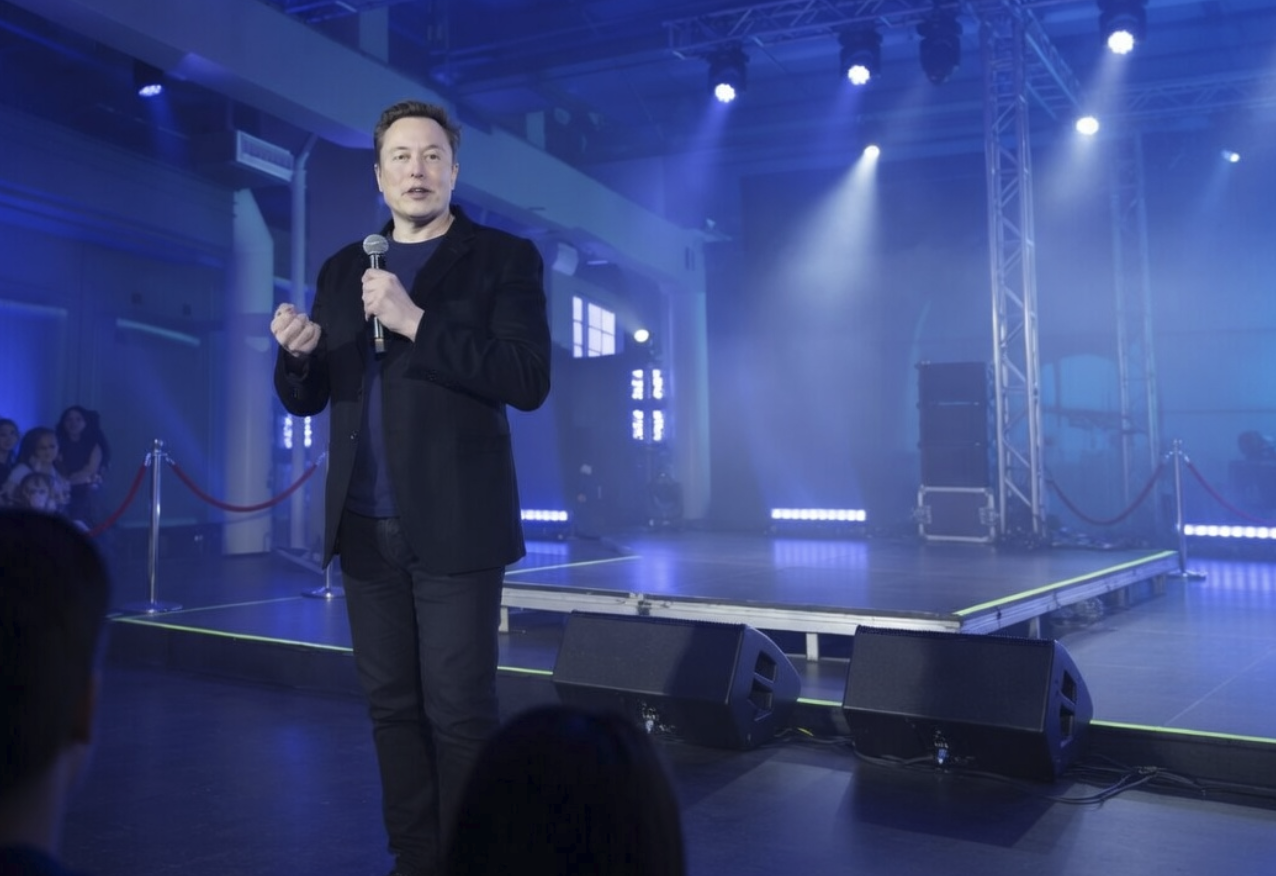
As we navigate the technological landscape of 2026, one name continues to dominate headlines, stock markets, and the dreams of aspiring entrepreneurs, Elon Musk. Now 55 years old, the South African-born business magnate has evolved from a restless teenager with a coding obsession into the architect of humanity’s multi-planetary future. His story is not just one of accumulating wealth, though with a net worth hovering around half a trillion dollars, he remains the wealthiest person on the planet, but one of relentless problem-solving on a cosmic scale. From the electric vehicles populating our highways to the Starlink satellites connecting remote corners of the globe, Musk’s influence is ubiquitous, driving a shift in how we perceive energy, transportation, and communication.
The Formative Years in Pretoria
Elon Reeve Musk entered the world on June 28, 1971, in Pretoria, South Africa. He was born to Maye Musk, a Canadian model and nutritionist whose career spanned decades and broke barriers in the fashion industry, and Errol Musk, a South African electromechanical engineer, pilot, and property developer. This unique blend of scientific rigor and public presence in his parent’s undoubtedly shaped his worldview from a very young age. His childhood was marked by intellectual curiosity but also significant family turbulence. After his parents divorced, a young Elon made the difficult decision to live with his father, a choice he later described with regret due to his father’s strict and often intense parenting style. Despite these personal challenges, the Musk siblings formed a tight-knit unit.
A Family of Achievers
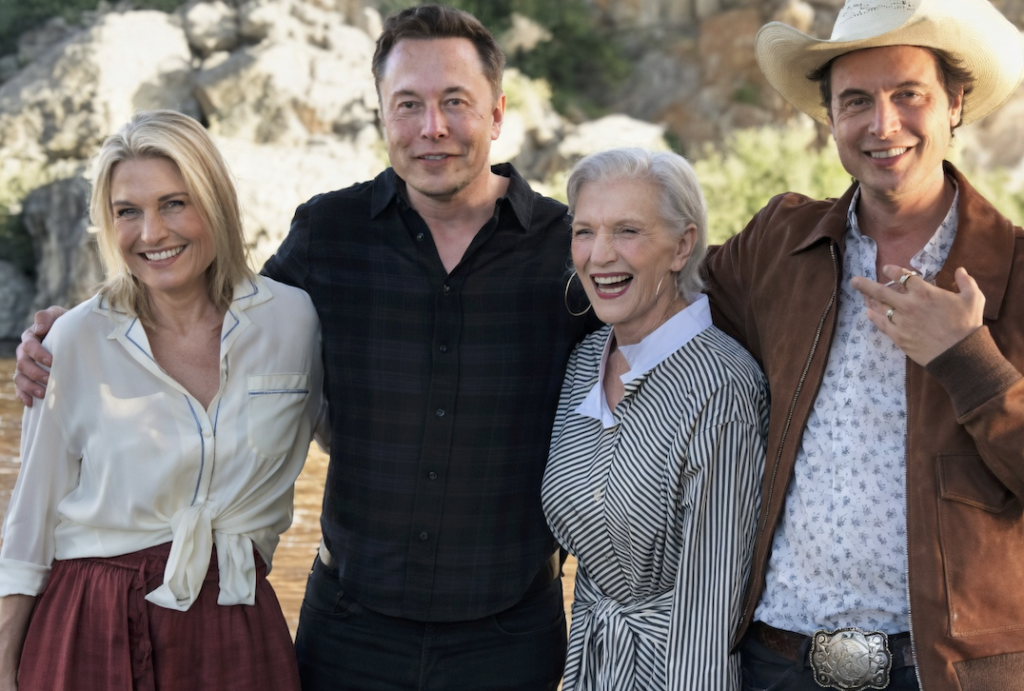
The ambition in the Musk bloodline is undeniable. His younger brother, Kimbal Musk, born in 1972, is now a celebrated restaurateur and entrepreneur behind The Kitchen Restaurant Group, which focuses on farm-to-table dining. Kimbal holds significant stakes in Tesla and SpaceX, but he’s also made his own mark by co-founding Square Roots, an urban farming company. His younger sister, Tosca Musk, born in 1974, is a successful filmmaker and co-founder of the streaming service Passionflix, proving that the drive to create and innovate runs deep in the family.
Even as a child, Musk’s intellect set him apart. He was introspective, often lost in books ranging from encyclopedias to science fiction novels, and displayed a precocious talent for technology. At the mere age of 12, he demonstrated his first knack for business and coding by inventing a video game called “Blaster”, which he sold to a technology magazine for $500. This small victory was a harbinger of the massive tech empire he would one day build, showing an early ability to merge technical skill with commercial opportunity.
Education and the Call of Silicon Valley
Musk’s educational path was anything but conventional. Seeking to avoid mandatory military service in South Africa and drawn to the promise of North America, he left home at 17. He initially enrolled at Queen’s University in Ontario, Canada, before transferring to the University of Pennsylvania in the United States. There, he earned dual bachelor’s degrees in Physics and Economics, a combination that perfectly explains his ability to merge hard science with aggressive business strategy.
His academic journey nearly continued at Stanford University, where he enrolled in a PhD program for energy physics. However, the explosive growth of the internet in 1995 proved too tempting to ignore. He dropped out after just two days, a decision that arguably changed the trajectory of the tech world, to launch his first startup.
Building the Empire: From Zip2 to PayPal
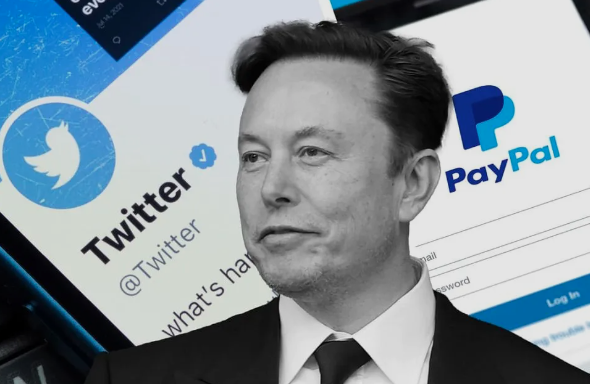
Musk’s entry into the business world was gritty and high-stakes. In 1995, alongside his brother Kimbal, he founded Zip2, a software company that provided online city guides for newspapers. The brothers worked tirelessly, often sleeping in their office to save money and coding through the night. The gamble paid off in 1999 when Compaq acquired Zip2 for nearly $307 million. Musk, then in his late 20s, suddenly found himself a multi-millionaire with the capital to dream bigger.
Rather than retiring, he doubled down. He immediately invested his earnings into X.com, an online payment company that would eventually merge with Confinity to become PayPal. Under his vision, PayPal revolutionized digital commerce, making online transactions seamless for millions. When eBay acquired the company in 2002 for $1.5 billion, Musk had the capital to pursue his true, more audacious passions, space exploration and sustainable energy.
Tesla and the Global Energy Transition
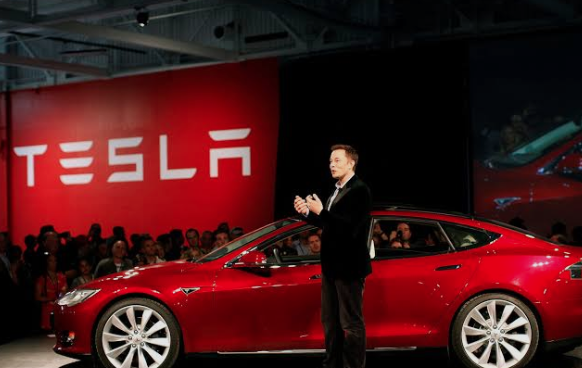
While Musk did not found Tesla, his entry into the company in 2004 as a major investor and chairman was the turning point for the electric vehicle industry. He eventually took the helm as CEO, steering the company through what he famously called “production hell” to become the world’s most valuable automaker by market capitalization. Tesla is no longer just a car company; it is an energy ecosystem.
The Master Plan and Gigafactories
Tesla’s success is anchored in Musk’s “Master Plan”, a strategy that moved from high-end luxury vehicles like the Roadster to mass-market cars like the Model 3 and Model Y, and eventually to autonomous driving and energy storage. To support this massive scale, Musk pioneered the concept of Gigafactories. These massive manufacturing facilities are essential to Tesla’s vertical integration, producing everything from battery cells to electric motors.
By 2026, Tesla will operate a vast network of these factories worldwide. The original Gigafactory in Storey County, Nevada, began operations in 2016, followed by Gigafactory 2 in Buffalo, New York, focused on solar technology. The massive Shanghai complex in China, known as Gigafactory 3, revolutionized Tesla’s presence in Asia, while Gigafactory 4 in Grunheide, Germany, and Gigafactory 5 in Austin, Texas, have further expanded Tesla’s global footprint. Musk often describes these facilities as “the machine that builds the machine”, turning the company into a production powerhouse that traditional automakers struggle to rival.
Electric Vehicles and Superchargers
Tesla’s impact on the automotive industry is immeasurable. The company proved that electric cars could be desirable, high-performance machines rather than glorified golf carts. Models like the luxury sedan Model S, the SUV Model X, and the compact Model Y have dominated sales charts globally. Furthermore, Tesla built a proprietary network of Superchargers across the United States and Europe, allowing owners to charge their vehicles quickly and conveniently, often for free, solving one of the biggest hurdles to EV adoption range anxiety.
SpaceX and the Dream of Mars
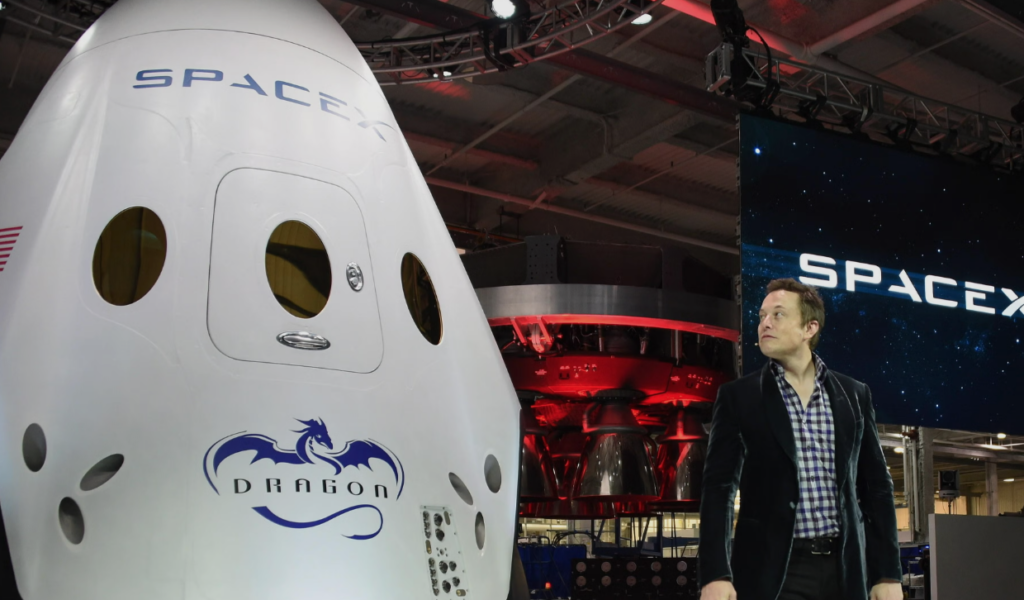
Perhaps Musk’s most profound contribution to humanity is SpaceX. Founded in 2002 with the seemingly impossible goal of reducing space transportation costs to enable the colonization of Mars, the company faced near-collapse after three failed rocket launches. Musk had poured his personal fortune into the venture, and it all came down to a fourth attempt. The successful launch of Falcon 1 in 2008 secured a crucial contract with NASA, saving the company and cementing Musk’s reputation as a risk-taker who delivers.
Starship and Multi-Planetary Life
Today, SpaceX is the leader in the aerospace industry. The Falcon 9 rocket, with its reusable first stage, revolutionized the economics of spaceflight by landing boosters vertically. But Musk’s eyes are fixed on Mars. The development of the Starship rocket, a fully reusable super-heavy launch vehicle, is the cornerstone of his plan to build a self-sustaining city on the Red Planet. Musk has shared aspirational timelines suggesting that a city could be established by 2050, and he has even proposed granting loans to early settlers to buy tickets, making the dream of space travel accessible to more than just billionaires.
Starlink and Global Connectivity
Beyond rockets, SpaceX has changed life on Earth through Starlink. This constellation of thousands of satellites in low Earth orbit provides high-speed internet access to rural and remote areas, a project that has proved vital in global communications and humanitarian efforts. By controlling the launch costs and building the satellites in-house, SpaceX has created a lucrative revenue stream that funds the ambitious Mars program.
Neuralink, The Boring Company, and Other Ventures
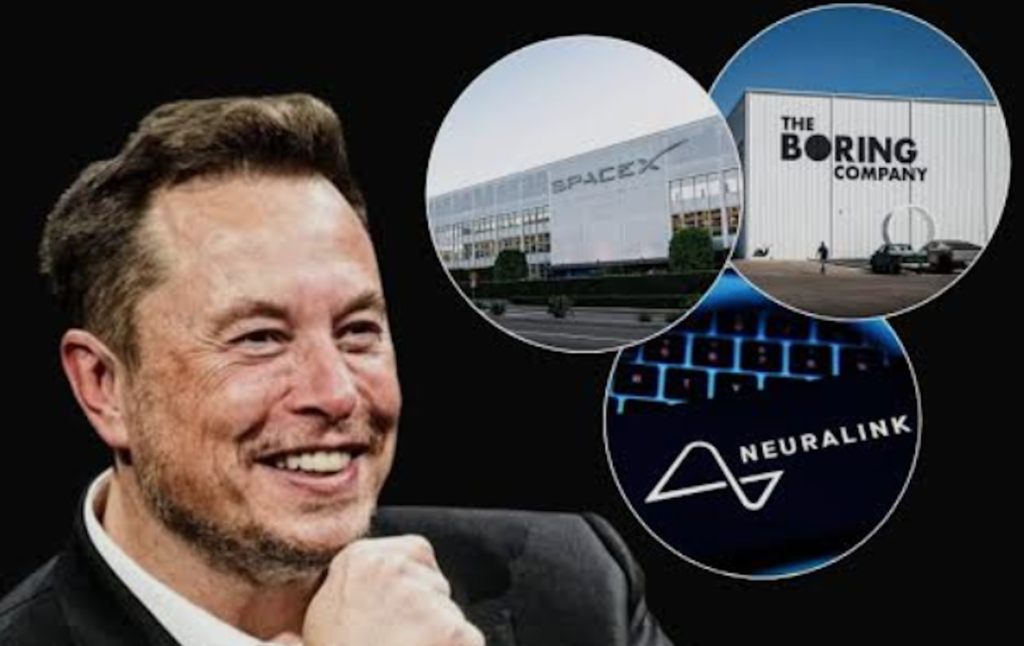
Musk’s ambition refuses to be contained to just cars and rockets. He co-founded Neuralink, a neurotechnology company founded in 2016 with the dual goals of treating neurological disorders like Parkinson’s and, eventually, achieving “symbiosis” between the human brain and artificial intelligence. The company is developing a brain-machine interface, or “brain chip”, using electrodes embedded in the brain to address neural injuries and potentially allow humans to communicate with computers at the speed of thought.
To solve the soul-crushing traffic of major cities, Musk started The Boring Company. By digging underground tunnels, the company aims to create high-speed transit loops. Following the success of the Las Vegas Convention Center Loop, the company is actively testing and expanding in other urban centers like Los Angeles. Initially a subsidiary of SpaceX, it became an independent company in 2018, with SpaceX retaining a small share.
Furthermore, his acquisition of Twitter, now rebranded as X, in 2022 fundamentally altered the social media landscape. While controversial, the move solidified his control over a global public square, influencing politics, culture, and finance. He also co-founded OpenAI in 2015, an organization dedicated to developing safeartificial intelligence, though he has since distanced himself from its operations.
Personal Life: Relationships and Family
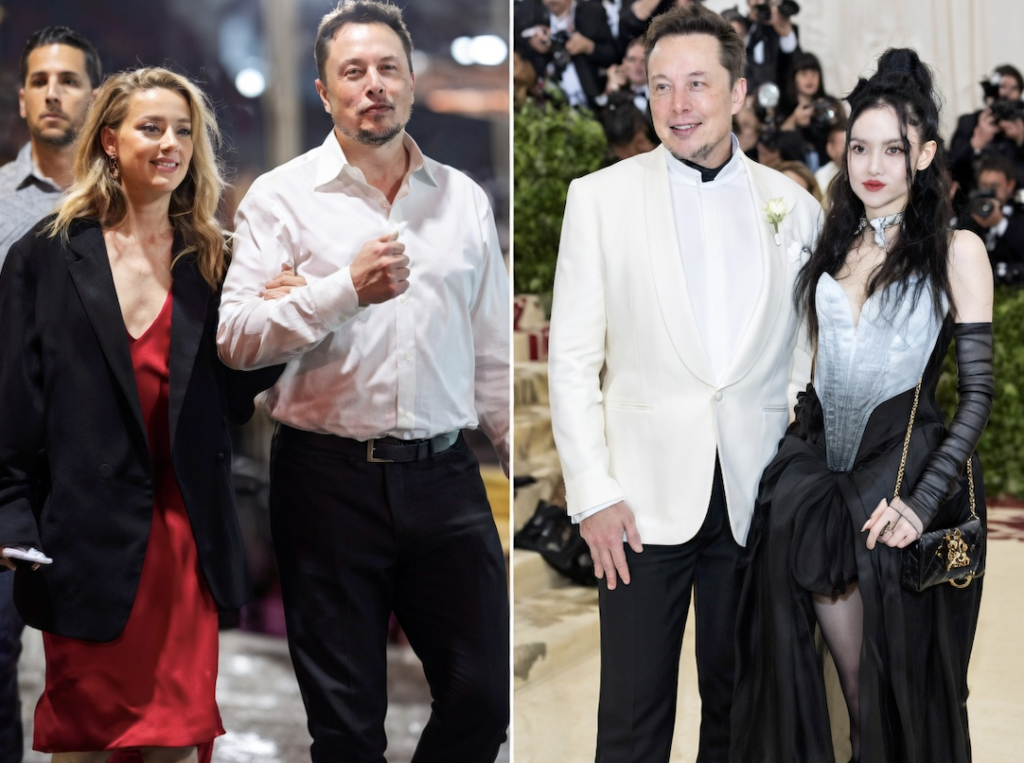
Elon Musk’s personal life is as complex and scrutinized as his business dealings. He has been married twice, first to Canadian author Justine Wilson, with whom he was married from 2000 to 2008, and later to Britishactress Talulah Riley, a relationship that spanned two marriages from 2010 to 2016. His high-profile relationship with musicianGrimes (Claire Boucher) captured the public’s imagination, resulting in two children, a son named X AE A-Xii and a daughter, Exa Dark Sidereal Musk, who was born via surrogacy.
A Large and Growing Family
Musk is a father to seven surviving children. Tragically, his first son, Nevada, passed away as an infant due to illness. With his first wife, Justine, he shares five sons, twins Griffin and Xavier, born in 2004, and triplets Kai, Saxon, and Damien, born in 2006. He also briefly dated actress Amber Heard in 2016 following her divorce, though they parted ways due to scheduling conflicts. The Musk family tree extends further to include his cousins, Peter and Lyndon Rive, who founded SolarCity, a company Tesla eventually acquired.
A Minimalist Lifestyle
Despite his immense wealth, Musk has adopted a surprisingly minimalist lifestyle in recent years. After famously selling his collection of six mansions, he reportedly lives in a modest rental property in Texas, valued at around $50,000, near the SpaceX facilities. He claims this downsizing allows him to focus entirely on his mission without the distraction of material possessions. He is known for his intense work ethic, often sleeping only six hours a night and skipping meals to maximize productivity.
Net Worth and Financial Power in 2026
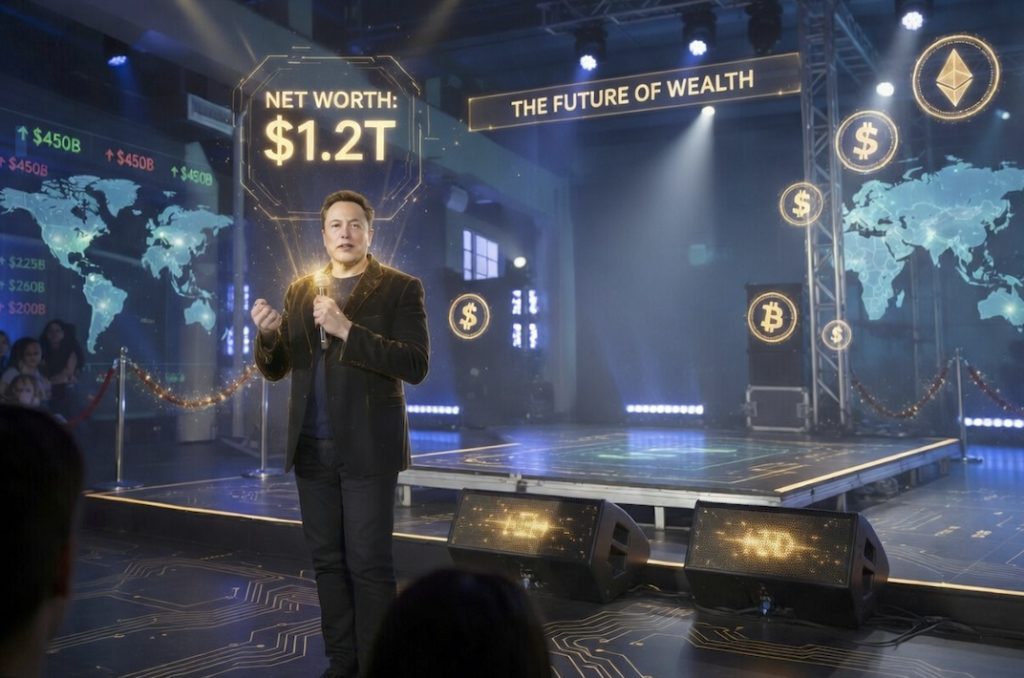
The financial figures surrounding Elon Musk in 2026 are staggering. As the richest man in the world, his net worth is estimated to be between $470 billion and $500 billion, according to reports from sources like Republic World. However, these numbers are fluid, fluctuating wildly with the performance of Tesla stock on Wall Street. He remains the largest shareholder in Tesla, holding approximately 17% of the company’s equity, which translates to roughly 172 million shares.
To visualize his wealth, consider his daily income. While not a fixed salary, the appreciation of his assets can sometimes earn him tens of millions of dollars in a single day, sometimes exceeding $39 million daily, depending on market bull runs. His portfolio also includes significant equity in SpaceX and his holdings in cryptocurrencies like Bitcoin, Ethereum, and Dogecoin, markets he frequently influences with his commentary. He has stated publicly that he owns these digital assets and does not plan to sell them.
Rivalries and Philosophy
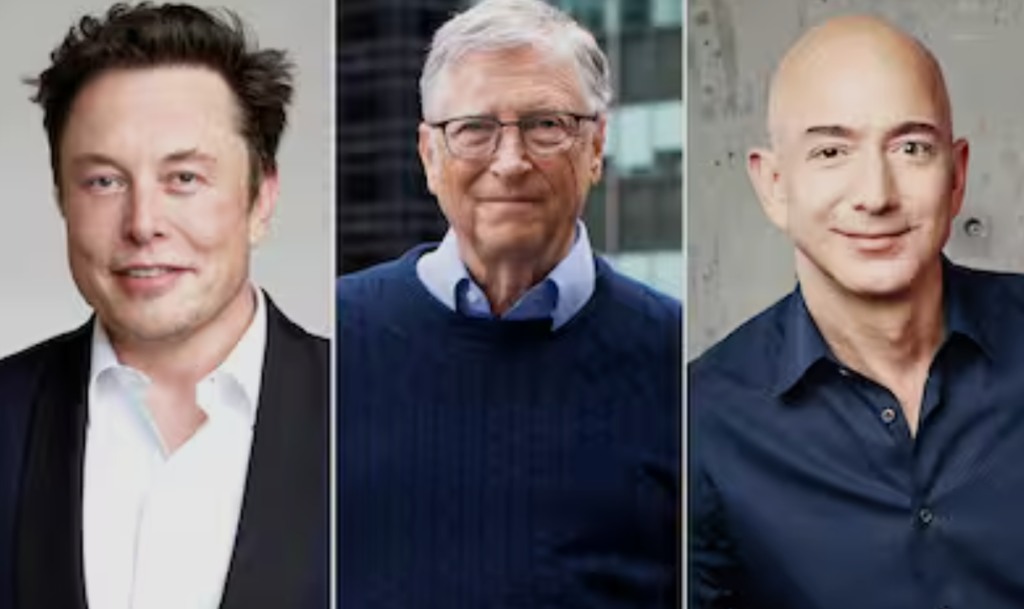
Musk’s journey to the top hasn’t exactly been a friendly game of golf. His rivalry with Jeff Bezos is legendary at this point; the media loves to paint them as the two “Space Barons” locked in a bitter duel for NASA contracts and orbital dominance. Elon hasn’t been shy about his feelings, famously calling out Bezos as a “copycat” over patent disputes. Then there’s Bill Gates. Elon didn’t hold back when he found out the Microsoft co-founder was shorting Tesla stock, essentially betting against the company’s success. But despite the public feuds and drama, Musk stays locked in on his own code. He approaches life through a scientific lens rather than a religious one, and his philosophy is surprisingly simple: be useful. He just wants to solve the big problems that actually matter for our future.
Conclusion
Let’s be real: Elon Musk is more than just a CEO or a billionaire with a weird Twitter habit. He’s a force of nature. When we look at where he is in 2026, with Gigafactories humming around the globe and Starships getting ready to touch Martian soil, it’s clear that he left a mark that isn’t going anywhere. He proves that the only real cap on innovation is how big you’re willing to dream. Whether he’s launching rockets, messing with brain chips, or stirring the pot on social media, Musk refuses to accept “business as usual”. You might love the guy, or you might question his methods, but one thing is certain: we are all living in the future he’s building.
FAQ’s
Where is Elon Musk from originally?
Elon was born and raised in Pretoria, South Africa, where he spent his first 17 years. He eventually left for Canada to study at Queen’s University and later made his way to the US, where he started his big ventures. He actually holds triple citizenship now: South African, Canadian, and American.
Is Elon Musk married?
As of 2026, no, he is divorced. He’s been married a few times, most notably to author Justine Wilson and then twice to actress Talulah Riley. He’s had high-profile relationships since, like his time with the musician Grimes, but he hasn’t tied the knot again.
Who exactly is Elon Musk?
In the simplest terms? He’s the guy running Tesla and SpaceX. But he’s also an investor and engineer who co-founded Neuralink and The Boring Company, and he was an early backer of OpenAI. Basically, if it involves electric cars, space, or futuristic tech, he’s probably involved.
Who actually owns Tesla?
This is a common mix-up. Elon didn’t technically start Tesla; he joined early on as chairman and lead investor in 2004 before taking over as CEO. Since it’s a public company, shareholders own it, but Elon is the biggest individual shareholder with about 17% of the pie, so he definitely calls the shots.
How many kids does he have?
Elon has seven surviving children. He had six sons with his first wife, Justine, though their first son, Nevada, tragically passed away as an infant. He also shares two young children, a son and a daughter, with the musician Grimes.
How much does he make in a day?
This is tricky because he doesn’t take a normal salary. His income is tied almost entirely to stock prices. On a really good day for Tesla stock, his net worth can jump by hundreds of millions of dollars. In 2026, some estimates say he’s gaining over $39 million a day on paper, but that number swings wildly.
What kind of phone does he use?
He’s an iPhone user. He’s mentioned using Apple products in interviews, though he’s been pretty vocal about not liking their App Store fees and policies.
What is he most famous for?
He’s best known for the “big three”: co-founding PayPal, turning Tesla into an EV giant, and founding SpaceX to get us to Mars. Oh, and buying Twitter (now X) and his ability to send cryptocurrency prices like Dogecoin soaring with a single tweet.
What is Elon Musk’s IQ?
He’s never released an official score, so any number you see is just a guess. That said, people often compare his brainpower to geniuses like Einstein or Stephen Hawking, estimating his IQ somewhere between 150 and 155. Regardless of the number, he’s clearly operating on a different level.
What is the point of Neuralink?
Neuralink is his brain-chip company. The short-term goal is genuinely noble: helping people with paralysis or brain disorders control computers with their minds. The long-term sci-fi goal? Merging human brains with AI so we don’t get left behind by the robots.
Read More on Newolt