
Android is stepping into a new spotlight. Google says the latest Android phones now deliver faster web browsing performance than the iPhone, marking a major shift in the mobile experience. For years, Apple devices were often seen as the benchmark for smooth browsing, quick page loads, and responsive web apps. Now Google is challenging that idea with fresh benchmark results and a clear message, modern Android phones are faster on the web.
This matters because web browsing is still one of the most common things people do on a phone every day. Whether users are reading news, opening shopping sites, searching on Google, checking travel pages, or filling out online forms, speed shapes the whole experience. Even small improvements can make a phone feel more fluid and more enjoyable to use.
Why Google Says Android Is Faster for Web Browsing
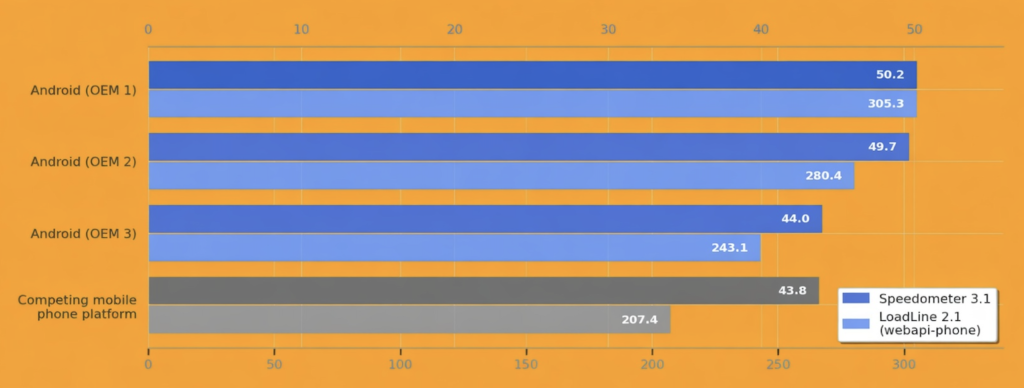
Google based its claim on two important performance tests: Speedometer 3.1 and LoadLine. These tools are designed to measure how quickly a device handles web-based tasks in real-world conditions.
Speedometer 3.1 Measures Browser Responsiveness
Speedometer 3.1 focuses on interaction speed. It simulates common actions such as tapping buttons, typing into fields, scrolling through content, and moving between elements on a web page. In simple terms, it measures how responsive a browser feels when people actually use it.
According to Google, several new Android devices posted higher Speedometer 3.1 scores than a competing mobile platform, which strongly suggests iPhone and iOS. A higher score means the browser responds faster, creating a smoother and more natural experience.
That kind of speed matters in everyday situations, such as:
- Typing a message in a web-based chat app
- Searching products on an online store
- Filling in checkout details on a shopping website
- Opening menus and tabs inside a web app
- Switching between articles on a news site
If a browser reacts quickly, users notice it right away. Pages feel alive. Inputs register faster. The entire phone feels more polished.
LoadLine Tracks How Fast Pages Appear
Google also highlighted LoadLine, an emerging benchmark created by the Chrome and Android teams. Unlike tests that focus only on interaction, LoadLine looks at the full process of opening a page after a user clicks a link.
This is a practical benchmark because page loading is something everyone experiences constantly. Google says Android phones scored up to 47 percent higher than non-Android rivals in this test. That suggests some flagship Android phones can display web content more quickly after a tap.
For users, that can mean less waiting when opening:
- Online articles
- Product pages
- Recipe websites
- Travel booking pages
- Search results
- Web-based productivity tools
In real life, shaving off even a fraction of a second can make browsing feel much more efficient.
What Helped Android Reach This Point
Google says these gains did not happen by accident. The company worked closely with chip makers and phone manufacturers to optimize performance across several layers of the mobile stack.
Deep Integration Played a Big Role
Google credits the speed boost to deep vertical integration across:
- Hardware
- The Android operating system
- Chrome
- Kernel scheduler policies
This means Google and its partners did more than tune the browser alone. They improved how the phone hardware, system software, and browser engine work together. That kind of coordination can unlock better speed without changing the way users browse.
It is similar to tuning an entire race car rather than upgrading just one part. When the processor, system scheduling, and browser engine all work in sync, browsing becomes faster and more consistent.
Year Over Year Gains Are Significant
Google says some Android flagship phones improved their Speedometer and LoadLine scores by 20 to 60 percent compared with last year’s models. That is a notable jump, especially in a product category where annual changes are often small and harder for users to notice.
More importantly, Google translated those benchmark gains into real user benefits. The company says the improvements lead to:
- Four to six percent faster page loads
- Six to nine percent faster high-percentile interactions
These numbers may sound modest, but on devices people use every hour, they add up quickly. Frequent web users are likely to feel the difference over time.
What This Means for Everyday Phone Users
For many buyers, benchmark scores alone are not enough. What matters is how a phone performs during normal daily tasks.
If Google’s claims hold up in broader use, Android users could notice a faster experience when they:
- Open links from social media apps
- Compare prices while shopping online
- Use browser-based email or work dashboards
- Read blogs, magazines, and sports updates
- Book rides, flights, or hotel rooms
- Access school portals or banking websites
The improvement is especially useful for people who rely heavily on web apps instead of native apps. Students, remote workers, online sellers, and frequent travelers often spend hours inside mobile browsers. For them, smoother loading and quicker response can improve productivity as well as comfort.
The Bigger Competitive Picture
Google’s announcement is not just about browser speed. It is also about perception. Mobile performance has become a key battleground, and web browsing is one of the easiest areas for users to feel the difference directly.
If Android is now leading in web performance on flagship devices, that gives Google and its partners a strong marketing advantage. It also puts pressure on rivals to respond with their own improvements.
At the same time, real-world experience still depends on more than benchmarks. Network quality, website design, background apps, and device temperature can all affect browsing speed. So while benchmark leadership is important, day-to-day consistency will matter even more to users.
Conclusion
Google’s latest claim signals an important moment in the smartphone race. Android has moved beyond keeping pace in mobile browsing, according to Google, it’s now setting the standard.
With stronger Speedometer 3.1 results, better LoadLine performance, and deeper optimization between hardware and software, Android appears to be pushing ahead in one of the most important parts of the mobile experience. For users, that could mean faster page loads, snappier interactions, and a smoother web experience throughout the day.
In the end, people do not buy benchmark charts. They buy phones that feel fast, reliable, and effortless to use. If Android delivers that experience consistently, Google’s claim may turn into a real advantage where it matters most, in the hands of everyday users.
Read Also: Safari 26.4 is Here: 44 New Features, 191 Bug Fixes, and What It Means for Developers