
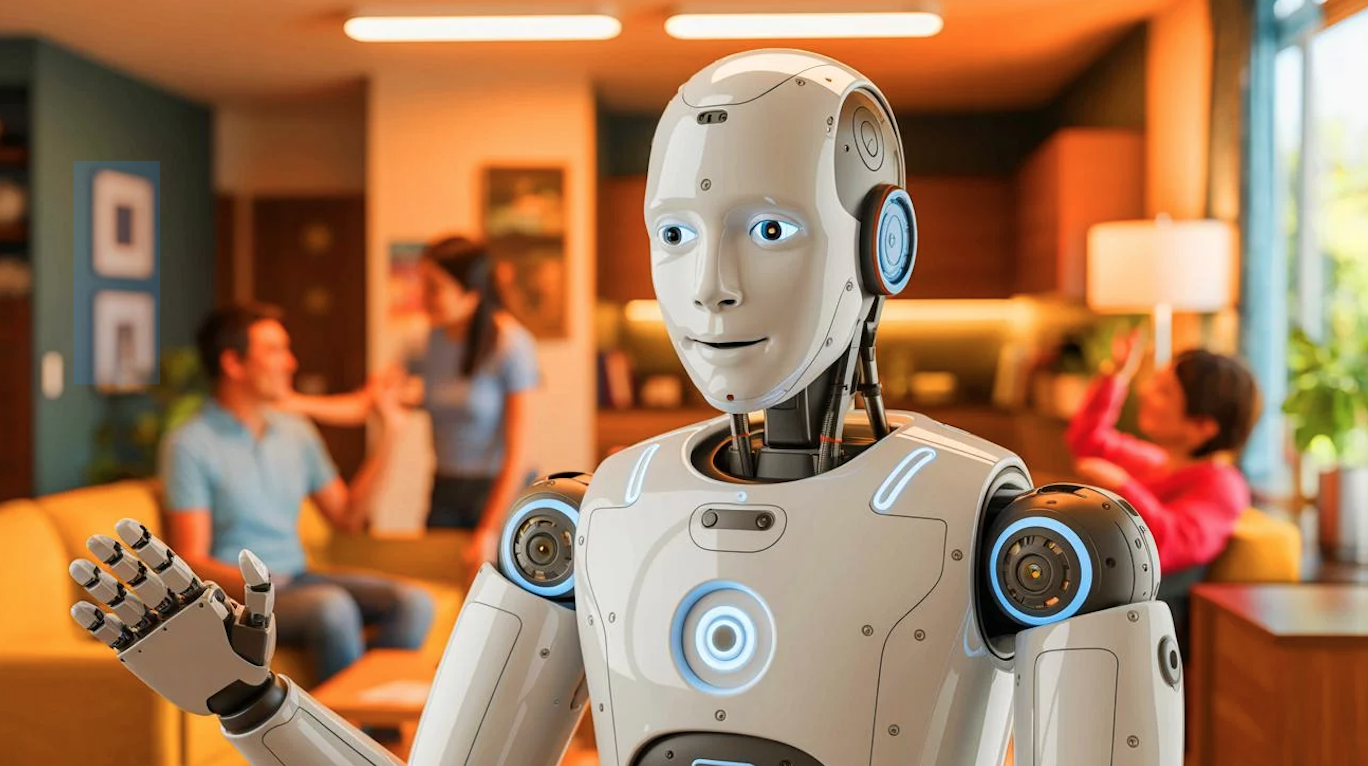
The year 2026 feels like a quiet revolution happening right inside our homes. Not loud, not flashy but deeply transformative. We’ve officially crossed a line where artificial intelligence is no longer trapped behind screens or hidden inside apps. It now walks, rolls, listens, observes, and helps. AI-powered home robots in 2026 are no longer experimental gadgets for tech enthusiasts; they’re becoming practical companions for everyday life.
Think about it for a second. Just a few years ago, asking a smart speaker to play music felt futuristic. Today, robots can fold your laundry, watch over elderly parents, help kids with homework, and even ask you if you’d like them to clean up a mess they noticed on their own. This is the era of Physical AI, and it’s changing how we live at home.
The Dawn of Physical AI in Everyday Homes
From Smart Speakers to Smart Bodies
Smart speakers taught us how to talk to machines. Physical AI teaches machines how to exist with us. The difference is massive. A robot with a body can understand space, objects, and movement. It doesn’t just hear commands, it sees context.
Instead of saying, “Clean the living room,” your robot notices spilled cereal, toys on the floor, and dust under the couch, then asks what to tackle first. That’s not automation. That’s collaboration.
Why 2026 Is the Tipping Point
So why now? Simple answer: convergence. Better AI models, cheaper sensors, faster chips, improved batteries, and widespread 5G connectivity finally clicked together. Robots can now process data locally, move safely around humans, and learn continuously without needing constant cloud instructions.
2026 is the year robots stopped feeling like machines and started feeling like helpers.
What Makes AI Home Robots Different in 2026
Context Awareness and Decision-Making
Modern home robots don’t just follow scripts. They understand context. If it’s late at night, they lower their movement noise. If a child looks frustrated, they adjust their tone. If an elderly person hasn’t moved for hours, they check in.
This awareness turns robots from tools into companions.
Agentic Behavior Explained
Reactive vs Proactive Robots
Older robots were reactive you told them what to do. Today’s robots are agentic. They observe, think, and suggest actions. Like a good assistant, they don’t wait to be asked. They notice.
That’s a huge psychological shift and honestly, a welcome one.
Top AI-Powered Home Robots Redefining Daily Life
1X NEO – The General-Purpose Humanoid Assistant
If there’s an “iPhone moment” for home robotics, 1X NEO is it.
Design Philosophy and Soft-Body Safety
NEO doesn’t look industrial or intimidating. Its soft exterior, rounded joints, and human-like proportions make it feel approachable. More importantly, it’s designed to be safe around kids and pets. If it bumps into someone, it yields not pushes.
Everyday Household Capabilities
NEO handles the boring stuff we all procrastinate on. Loading dishwashers, folding clothes, picking up toys, organizing shelves tasks that quietly steal hours from our lives.
Expert Teleoperation Mode
Here’s the clever part. When NEO encounters something new, a remote human operator can step in via VR and guide it. The robot learns from this interaction, meaning it gets better every time. It’s like teaching a helpful intern who never forgets.
Samsung Ballie (2026 Edition) The Mobile Home Hub
Ballie has finally grown up and it’s impressive.
Rolling Intelligence with Projection Power
Ballie follows you from room to room, projecting information exactly when you need it. Cooking? Recipe on the wall. Exercising? Stats on display. It’s like having a floating dashboard for your life.
Smart Home Control and Automation
Ballie isn’t just smart, it’s the brain of your smart home. Lights, thermostat, appliances, routines—it manages them all visually and verbally through Samsung’s SmartThings ecosystem.
Security, Pet Care, and Elderly Monitoring
While you’re away, Ballie patrols your home. It checks on pets, detects unusual activity, and monitors elderly family members. If something feels off, it alerts you instantly with live video.
Miko 3 The Educational and Emotional Companion
For families with kids, Miko 3 feels less like a robot and more like a learning buddy.
Personalized Learning with AI
Miko adapts to each child. It helps with homework, teaches languages, explains math, and tells interactive stories that change based on choices. Learning feels like play—not pressure.
Emotional Intelligence for Kids
What truly sets Miko apart is emotional awareness. It recognizes frustration, boredom, or excitement through facial expressions and voice tone. When a child struggles, Miko encourages rather than corrects.
Tesla Optimus (Gen 3 Consumer Alpha) The Powerhouse
Optimus is the muscle of the robot world.
Technology Borrowed from Self Driving Cars
Powered by Tesla’s Full Self-Driving tech, Optimus understands spaces with incredible accuracy. It maps homes just like Tesla maps roads.
Heavy-Duty Use Cases at Home
This robot is perfect for tasks humans hate or struggle with carrying heavy groceries, moving furniture, handling outdoor chores, or assisting on large properties.
At a targeted price under $25,000, Optimus aims to redefine labor at home.
Eufy X10 Pro Omni The Silent Floor Specialist
Not every robot needs arms and legs.
Hybrid Cleaning Intelligence
The Eufy X10 Pro Omni focuses on what it does best—cleaning floors. Vacuuming, mopping, self-emptying, self-cleaning it handles it all quietly and efficiently.
Low-Maintenance Living Benefits
For minimalists or apartment dwellers, this robot delivers freedom from daily cleaning without complexity.
2026 AI Home Robot Comparison Overview
Choosing the right robot depends on lifestyle. Families benefit from humanoids and social robots. Smart home enthusiasts love mobile hubs. Busy professionals appreciate specialized cleaners.
There’s no one size fits all and that’s a good thing.
Real Life Use Cases of AI Home Robots
Busy Families and Time Management
Robots give time back. Time to rest. Time to connect. Time to live.
Elderly Care and Assisted Living
AI robots monitor movement, detect falls, and provide companionship—offering peace of mind to families.
Smart Homes and Energy Efficiency
Robots optimize lighting, heating, and appliance usage automatically, saving energy and money.
Key Factors to Consider Before Buying an AI Home Robot
Privacy, Data Security, and Trust
Choose robots with on-device processing and transparent data policies.
Safety, Weight, and Softness
Look for pinch-proof joints and soft materials especially with kids or pets.
Cost, Maintenance, and Updates
Robots are long-term investments. Software updates matter as much as hardware.
The Future of AI Home Robots Beyond 2026
Emotional Bonds and Social Acceptance
People already name their robots. That tells you everything.
Will Robots Become Household Norms?
Just like smartphones did. Slowly. Then suddenly.
Conclusion
The dream of living with helpful robots is no longer science fiction. AI-powered home robots in 2026 are practical, empathetic, and incredibly capable. They don’t replace us they support us.
By welcoming these emerging gadgets into our homes, we’re not just upgrading technology. We’re upgrading our quality of life.
FAQs
1. Are AI home robots safe for children and pets?
Yes, modern robots use soft materials, safety sensors, and pinch-proof designs.
2. Do AI robots require constant internet access?
Most advanced models process data locally and only use the cloud when necessary.
3. Are home robots affordable in 2026?
Prices vary, but entry-level and mid-range options are now accessible for many households.
4. Can robots replace human caregivers?
No. They assist, monitor, and support, but human care remains essential.
5. Will robots get smarter over time?
Absolutely. Continuous learning and updates make them better companions every year.