A patient once told her doctor she’d tried every over-the-counter remedy for her constant bloating and nothing worked for longer than a few days. The doctor didn’t reach for another medication. Instead, the conversation turned to fiber intake, sleep, and stress three things that had nothing to do with digestion on the surface but everything to do with it underneath. That conversation reflects a broader shift in how digestive health gets approached: less about treating individual symptoms, more about supporting the trillions of microorganisms quietly running the show.
What the Gut Microbiome Actually Consists Of
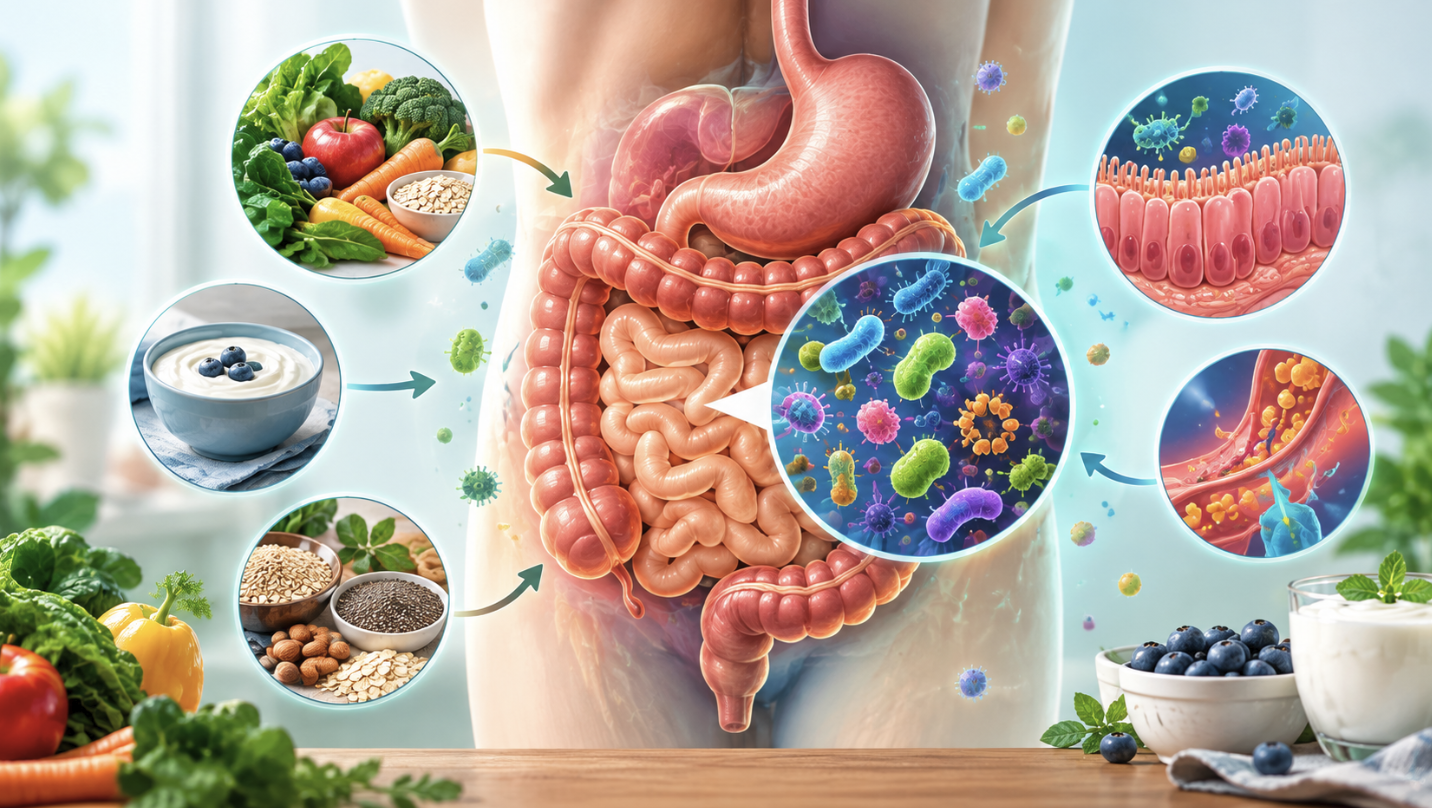
The gut microbiome refers to the trillions of bacteria, viruses, fungi, and other microorganisms living primarily in the large intestine. Far from being passive passengers, these microorganisms actively participate in digestion, immune regulation, and even the production of certain vitamins and neurotransmitters. Each person’s microbiome is distinct, shaped by genetics, diet, environment, and life history, which is part of why identical foods can affect two different people’s digestion in noticeably different ways.
How Gut Bacteria Actually Help Digest Food
Human digestive enzymes can’t break down certain types of fiber found in plant foods, but many gut bacteria can, fermenting that fiber into compounds the body absorbs and uses.
- Short-chain fatty acids produced through fiber fermentation, which feed the cells lining the colon
- Certain B vitamins and vitamin K, synthesized by specific gut bacteria strains
- Breakdown of complex carbohydrates that would otherwise pass through undigested
- Regulation of gut pH, which affects which other bacteria can thrive
This fermentation process is also the source of gas production during digestion, which explains why a sudden increase in fiber intake, even from healthy foods, can temporarily cause noticeable bloating as the microbiome adjusts to the new fuel source.
The Gut-Brain Connection and Why It Matters
The relationship between gut health and brain function runs through a communication pathway often called the gut-brain axis, involving the vagus nerve, immune signaling, and hormone production. A significant percentage of the body’s serotonin, a neurotransmitter closely tied to mood regulation, is produced in the gut rather than the brain itself. This connection helps explain why digestive issues so frequently accompany stress and anxiety, and why some people notice mood improvements after making significant changes to gut-supporting habits, even when the original goal was purely digestive comfort.
Foods That Support a Diverse, Healthy Microbiome
Microbiome diversity having a wide range of different bacterial species rather than a few dominant ones is generally associated with better digestive and overall health outcomes.
- Fiber-rich vegetables, legumes, and whole grains that feed beneficial bacteria
- Fermented foods like yogurt, kefir, sauerkraut, and kimchi containing live cultures
- A wide variety of plant foods rather than the same few vegetables repeated daily
- Foods containing prebiotic fibers, such as garlic, onions, and certain root vegetables
Variety matters as much as quantity here. Eating a large amount of fiber from only one or two sources supports far less microbial diversity than eating a smaller amount of fiber spread across many different plant foods.
How Antibiotics and Medications Affect Gut Bacteria
Antibiotics, while sometimes medically necessary, don’t distinguish between harmful bacteria causing an infection and beneficial bacteria supporting digestion, and a single course can significantly disrupt microbiome composition. Recovery time varies, but research suggests it can take anywhere from several weeks to several months for microbiome diversity to substantially recover after a course of antibiotics, and some changes may persist longer.
Certain other medications, including some pain relievers and acid reducers used long-term, have also been associated with shifts in gut bacteria composition, which is worth discussing with a doctor for anyone on long-term medication experiencing persistent digestive changes.
The Role of Sleep and Stress in Digestive Health
Digestive health doesn’t operate in isolation from the rest of the body’s systems, and sleep and stress are two of the most underrated factors affecting it. Chronic stress alters gut motility and increases intestinal permeability, sometimes described informally as a leaky gut, allowing substances to pass through the intestinal lining that normally wouldn’t. Poor or insufficient sleep has similarly been linked to reduced microbiome diversity in research, creating a cycle where digestive discomfort disrupts sleep, and disrupted sleep in turn worsens digestive function.
Addressing sleep quality and stress management often produces noticeable digestive improvements that diet changes alone don’t fully achieve.
Probiotics and Prebiotics: What the Difference Actually Is
These two terms get used interchangeably in casual conversation, but they refer to different things. Probiotics are live beneficial bacteria, found in fermented foods or supplements, introduced directly into the digestive system. Prebiotics, by contrast, are types of fiber that feed the beneficial bacteria already living in the gut, rather than introducing new bacteria at all.
Both play a role in supporting digestive health, but a diet lacking prebiotic fiber can undermine the benefit of probiotic foods or supplements, since the introduced bacteria have little to sustain themselves on without adequate fiber intake.
Signs That Digestive Health May Need Attention
Certain patterns suggest gut health may be worth addressing more directly rather than managing with over-the-counter remedies alone.
- Persistent bloating, gas, or discomfort that doesn’t resolve with dietary adjustments
- Irregular bowel patterns that have changed noticeably from a previous baseline
- Food sensitivities that seem to be increasing in number or severity over time
- Fatigue or skin issues that developed alongside digestive symptoms
Persistent or worsening symptoms, particularly ones involving unexplained weight change, blood, or severe pain, warrant a conversation with a doctor rather than continued self-management, since they can sometimes indicate conditions requiring specific medical evaluation.
How Exercise Independently Affects Gut Bacteria
Physical activity influences gut microbiome composition through pathways that operate somewhat independently of diet, which is part of why exercise gets increasingly discussed alongside food as a factor in digestive health. Research comparing the microbiomes of highly active individuals to more sedentary individuals with similar diets has found differences in microbial diversity, suggesting exercise itself, not just the dietary habits that often accompany an active lifestyle, plays a distinct role in shaping gut bacteria composition.
- Regular moderate exercise has been associated with increased production of beneficial short-chain fatty acids
- Physical activity appears to support greater overall microbial diversity independent of dietary factors
- Excessive, high-intensity exercise without adequate recovery has in some research been linked to increased intestinal permeability
- Consistency of activity over time appears more influential than occasional intense exercise sessions
This doesn’t mean exercise alone can compensate for a poor diet’s impact on gut health, but it does suggest that movement plays a independent role worth considering alongside dietary changes for anyone specifically focused on supporting digestive health, rather than treating diet as the only lever available.
The Difference Between a Food Intolerance and a True Allergy
These two terms get used interchangeably in everyday conversation, but they describe fundamentally different biological processes with very different levels of medical seriousness. A true food allergy involves the immune system, triggering a response that can range from mild symptoms to a severe, potentially life-threatening reaction, and even a small amount of the allergen can trigger symptoms.
A food intolerance, by contrast, typically involves the digestive system’s inability to properly process a specific food component, such as lactose, producing uncomfortable symptoms like bloating or gas, but generally without the immune involvement or severe risk profile of a true allergy.
- Food allergies can trigger rapid, sometimes severe reactions involving the immune system
- Food intolerances generally produce digestive discomfort without immune system involvement
- The amount of a trigger food matters more for intolerances, where small amounts may be tolerated
- Allergy testing through a medical professional can definitively identify true allergies, unlike most home intolerance testing
This distinction matters practically, since the appropriate response differs significantly. A true allergy generally requires strict avoidance and, in more severe cases, carrying emergency medication, while a food intolerance often allows for moderation or occasional consumption without the same level of risk, making an accurate diagnosis from a medical professional valuable rather than assuming either label based on symptoms alone.
How Fiber Type Affects Gut Bacteria Differently
Not all dietary fiber affects the gut microbiome the same way, and the distinction between fiber types helps explain why some high-fiber diets produce better digestive outcomes than others. Soluble fiber, found in foods like oats, beans, and certain fruits, dissolves in water and is readily fermented by gut bacteria, making it a particularly effective fuel source for beneficial microbial activity. Insoluble fiber, found in whole grains and vegetable skins, adds bulk to stool and supports regularity, but is fermented less readily by gut bacteria than soluble fiber.
- Soluble fiber ferments readily, directly feeding beneficial gut bacteria and supporting short-chain fatty acid production
- Insoluble fiber primarily supports digestive regularity through bulk rather than through bacterial fermentation
- Resistant starch, found in foods like cooled cooked potatoes and green bananas, is fermented similarly to soluble fiber
- A balanced intake of both fiber types generally supports better overall digestive function than favoring one exclusively
Most whole plant foods contain a mix of both fiber types in varying proportions, which is one more reason dietary variety tends to outperform a narrow focus on any single “high-fiber” food, since different foods contribute meaningfully different fiber profiles to overall gut health.
The Connection Between Gut Health and Skin Health
Emerging research has increasingly pointed to a connection between gut health and skin condition, sometimes referred to informally as the gut-skin axis, adding another dimension to why digestive health draws attention beyond purely digestive symptoms. Inflammation originating in the gut, whether from dysbiosis, food sensitivities, or chronic digestive stress, has been associated in various studies with skin conditions including acne, eczema, and rosacea, though the exact mechanisms are still being actively researched.
- Chronic gut inflammation has been associated with several inflammatory skin conditions in ongoing research
- Probiotic supplementation has shown mixed but sometimes promising results for certain skin conditions in clinical studies
- Elimination diets addressing specific food sensitivities have helped some individuals see improvement in both digestive and skin symptoms together
- The gut-skin connection remains an active area of research rather than a fully settled scientific consensus
This connection doesn’t mean every skin issue traces back to gut health, and skin conditions have many potential causes worth investigating through appropriate medical channels. But for anyone already working on digestive health for other reasons, noticing whether skin symptoms shift alongside digestive improvements is a reasonable thing to track, even without expecting a guaranteed connection in every individual case.
How Hydration Status Affects Digestive Function
Adequate hydration plays a more central role in digestive health than it’s often given credit for, working alongside fiber intake rather than as a separate, unrelated factor. Water helps fiber move through the digestive system effectively, and insufficient hydration can undermine the benefits of an otherwise well-planned, fiber-rich diet, sometimes producing symptoms like constipation that get mistakenly attributed to fiber intake itself rather than inadequate water consumption alongside it.
- Fiber requires adequate water intake to function properly within the digestive system
- Increasing fiber intake without also increasing water intake can worsen, rather than improve, digestive comfort
- Individual hydration needs vary based on activity level, climate, and overall diet composition
- Consistent hydration throughout the day tends to support digestion better than large amounts consumed infrequently
This connection is a useful thing to check first when a fiber-focused dietary change doesn’t produce the expected digestive improvement, since the missing piece is sometimes hydration rather than any flaw in the dietary approach itself.
The Historical Shift in How Digestive Health Gets Discussed Medically
Digestive health research has evolved considerably over the past two decades, moving from a narrower focus on isolated conditions toward a broader appreciation of the microbiome’s role across seemingly unrelated aspects of health. Where digestive complaints were once treated largely in isolation from other systems, current research increasingly frames gut health as interconnected with immune function, mental health, and even metabolic conditions.
This shift has changed how many healthcare providers approach persistent digestive complaints, often asking more broadly about diet, sleep, and stress patterns rather than moving straight to medication as a first response, reflecting a different, more holistic starting point than digestive health conversations commonly had a generation ago.
Reading Nutrition Labels With Gut Health in Mind
Nutrition labels rarely highlight fiber diversity or fermentable content the way they do calories or protein, which makes it easy to overlook this dimension of food choice even while reading labels carefully. Looking specifically at total fiber content per serving, and cross-referencing ingredient lists for whole food sources of fiber rather than isolated fiber additives, gives a more accurate sense of how a packaged food actually supports gut health compared to relying on marketing claims like “good source of fiber” printed prominently on the front of a package.
Final Thoughts
Digestive health rarely comes down to a single food, supplement, or fix it reflects an ongoing relationship between diet, sleep, stress, and the trillions of microorganisms quietly doing much of the underlying work. Supporting that relationship through consistent, varied fiber intake and attention to sleep and stress tends to produce steadier, more lasting digestive comfort than chasing symptom relief one product at a time.
Read more about Newolt
Frequently Asked Questions
How quickly can diet changes affect the gut microbiome?
Research has shown measurable shifts in gut bacteria composition within a few days of significant dietary changes, though building a stable, diverse microbiome takes considerably longer, generally requiring weeks to months of consistent dietary patterns rather than short-term changes.
Are probiotic supplements necessary for good gut health?
Not necessarily. A diet rich in diverse plant foods and fermented foods can support a healthy microbiome without supplementation for many people. Supplements may be more relevant for specific situations, such as after antibiotic use or for particular digestive conditions, ideally guided by a healthcare provider.
Can gut health affect the immune system?
Yes, significantly. A large proportion of immune tissue is located in the gut, and gut bacteria play an active role in training and regulating immune responses. Disruptions to microbiome balance have been associated with increased susceptibility to certain infections and inflammatory conditions.
Why do some healthy foods cause bloating in certain people?
Bloating from healthy, fiber-rich foods often reflects a microbiome that isn’t yet accustomed to processing that particular type of fiber, or a specific sensitivity to certain fermentable carbohydrates. Gradually increasing intake, rather than adding large amounts suddenly, generally reduces this effect over time.
Is it possible to test my own gut microbiome?
At-home microbiome testing kits exist and can provide a general snapshot of bacterial diversity and composition, though the clinical usefulness of these results is still debated among researchers. A conversation with a doctor or dietitian typically provides more actionable guidance than a standalone test result.
Does gut health differ significantly between individuals?
Yes, considerably. Genetics, early childhood exposures, diet history, geography, and even birth method have all been shown to influence microbiome composition, which is part of why identical dietary advice doesn’t produce identical results across different people.